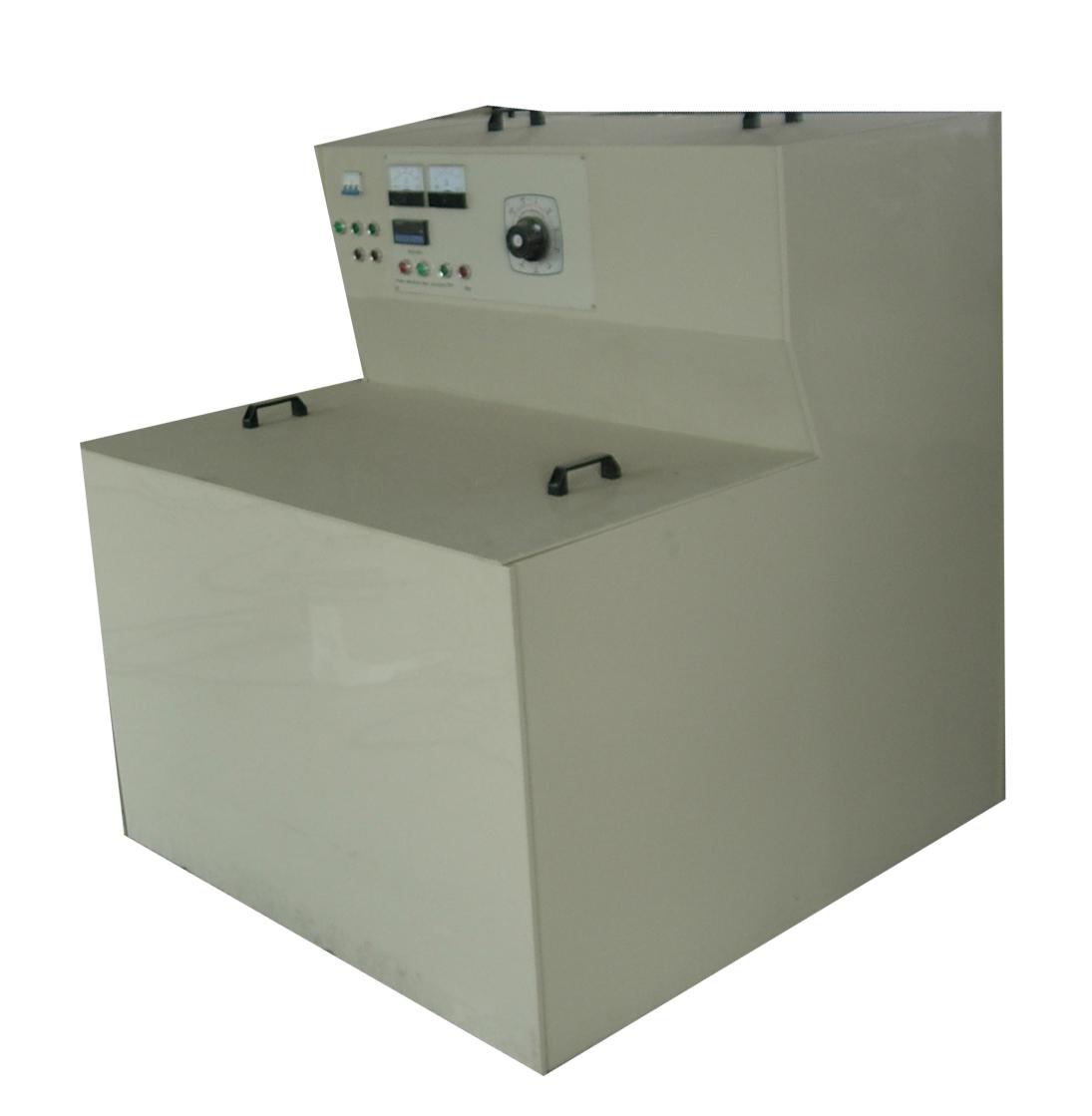
PCB Rosin Coating Machine — Conformal Flux & Resin Sprayer for Through-Hole and SMT Assembly
A conveyorized rosin/resin coating line for PCB conformal coating, flux deposition, and selective solder-mask application. The machine sprays liquid rosin, flux, or UV-curable resin through a programmable dual-head nozzle with width & stroke synchronized to the conveyor, delivering 0.05–0.3 mm uniform coating at line speed 0.5–4 m/min. Available in 400 mm and 650 mm working widths with optional UV-curing module and HEPA-filtered exhaust.
GE-RC650 rosin/resin coating machine, 650 mm working width, dual-head programmable spray.
What Is a Rosin Coating Machine?
A rosin coating machine is a selective wet-deposition system that applies a uniform layer of rosin, no-clean flux, or UV-curable resin onto a defined area of the PCB. It is used in three main applications: (1) conformal coating for harsh-environment electronics (automotive, marine, aerospace), (2) flux deposition before selective soldering of through-hole components, and (3) selective solder-mask touch-up after PCB fabrication. Compared to hand-spray booths, the conveyorized machine cuts coating time from 3–5 minutes per board to 30–60 seconds and delivers ±5% thickness variation across the panel.
The dual-head spray nozzle is the key component: a high-precision servo-driven X–Y gantry that moves 200 mm/s with 0.05 mm position repeatability. The width and stroke are programmed per board via the recipe menu; the conveyor indexes the board through the spray zone without stopping, so there is no throughput penalty versus a non-selective dip-coating process. For the upstream PCB cleaning and surface preparation see our PCB cleaning & drying line, and for the downstream UV-curing tunnel see the hot air circulation oven.
8-Stage Coating Process
Panels travel on a horizontal PP conveyor through eight sequential stages. The first stage is pre-heat, then the spray zone (3 stages), then flash-off, UV cure, and final cool-down.
01
Pre-heat.
IR pre-heat zone 50–60 °C, 30 s dwell to drive off surface moisture and improve coating adhesion.
02
Mask load.
Operator or pick-and-place loads the masking stencil/dam if selective coating is required (skip for full-panel coat).
03
Spray 1 — flood.
First pass at 0.15 mm wet film, fan-spray nozzle, conveyor speed 2 m/min for ~25 µm dry film.
04
Spray 2 — detail.
Second pass with narrower cone-spray nozzle for edges and component leads, 0.05–0.10 mm wet film.
05
Flash-off.
Solvent flash-off zone 80 °C, 60 s dwell to drive off carrier solvent before UV cure.
06
UV cure.
UV-LED flood cure 365 nm, 2000 mJ/cm², 60–90 s for full polymerization of UV-curable resin.
07
Cooling.
Forced-air cooling to 40 °C, prevents thermal stress on the freshly cured coating.
08
Unload.
Automatic rack-off or inline feed to the next process (AOI, ICT, or final assembly).
Technical Specifications
Item
Specification
Model
GE-RC400 (400 mm) / GE-RC650 (650 mm)
Power supply
380 V / 50 Hz / 3-phase
Working width
400 mm (GE-RC400) / 650 mm (GE-RC650)
Conveyor speed
0.5–4 m/min, variable frequency
Spray nozzle
Dual-head servo X–Y, 200 mm/s, 0.05 mm repeatability
Wet film thickness
0.05–0.30 mm per pass, multi-pass capable
Dry film thickness
25–80 µm (UV-cured resin) / 15–50 µm (rosin flux)
Pre-heat temperature
50–60 °C, IR radiant
UV cure
365 nm LED, 2000 mJ/cm², 60–90 s
Exhaust
HEPA-filtered, 800 m³/h, ≤10 mg/m³ VOC outlet
Control system
PLC + 10″ HMI, recipe menu (50+ programs), MES ready
Compressed air
0.5–0.7 MPa, 200 L/min
Machine dimension
4200 × 1300 × 1700 mm (L × W × H)
Why Choose Golden Eagle Rosin Coating Machine?
Same supplier as your etching and exposure lines. The coating line, the etching machine, the exposure machine, and the developing machine are all from Golden Eagle. One commissioning engineer, one warranty, one set of spare parts, one shipping container.
Dual-head servo X–Y spray. 0.05 mm position repeatability at 200 mm/s speed. Single-head Chinese competitors are 0.2 mm accurate at 100 mm/s — too slow and too coarse for fine-pitch BGA under-coat.
UV-LED flood cure 365 nm. Mercury-lamp alternatives take 5–8 minutes and run 100 °C hot; our UV-LED cures in 60–90 seconds at 40 °C, saving energy and protecting heat-sensitive components.
HEPA-filtered exhaust. Built-in HEPA + activated-carbon filter keeps VOC outlet below 10 mg/m³, meeting EU and US environmental regulations without an external scrubber.
Recipe menu with MES interface. 50+ program slots, each storing nozzle path, conveyor speed, UV dose, and pre-heat temperature. MES upload/download for traceability.
Frequently Asked Questions
What is the difference between rosin coating and conformal coating?
Rosin coating is a thin layer (15–50 µm) of natural rosin or modified rosin flux applied for solderability, primarily used in selective soldering flux deposition. Conformal coating is a thicker (25–80 µm) layer of acrylic, urethane, silicone, or UV-curable resin applied as a moisture and chemical barrier for the entire board. The same GE-RC machine can do both — the recipe menu lets you switch between rosin flux, acrylic, and UV-curable resin by changing the spray viscosity, nozzle size, and cure parameters.
Can the line apply different coating thicknesses on different areas of the same board?
Yes — the dual-head X–Y gantry supports programmable path control, so the spray can apply 80 µm on the main PCB area, 30 µm on connector pads, and 0 µm (skip) on test points and keep-out zones. The path is defined in the recipe menu as a list of X–Y coordinates with associated wet-film thickness; the gantry interpolates between waypoints at 200 mm/s with 0.05 mm repeatability. For complex keep-out patterns, a CAD file (DXF or Gerber) can be imported directly.
What chemistry can the machine spray?
The GE-RC handles any low-to-medium viscosity (50–5000 cP) liquid coating: rosin flux (RMA, no-clean), acrylic conformal coating, polyurethane, silicone, epoxy, UV-curable resin, and selective solder mask. High-viscosity pastes (>5000 cP) require a heated nozzle and heated hose, available as an upgrade. The spray system is stainless steel and PTFE-lined, so it is compatible with most acid-free, base-free coatings. For chemistry supply see our chemicals catalogue.
How is the coating thickness controlled?
Wet film is controlled by 3 parameters: (1) nozzle flow rate (0.1–5 mL/min, digitally set), (2) conveyor speed (0.5–4 m/min, VFD), and (3) number of passes (1–5, programmable). The dry film thickness is approximately 60% of the wet film for solvent-based coatings (acrylic, urethane) and 95% for UV-curable resin. For closed-loop thickness control, an optional in-line laser confocal sensor (200 kHz, 0.1 µm resolution) can be added at the exit to measure dry film and feed back to the recipe.
What is the throughput of the line?
A standard GE-RC650 with 2-meter conveyor and 60 s cure zone delivers 80–120 panels/hour at 2 m/min conveyor speed (typical 400 mm × 300 mm panel, 0.15 mm wet film, single pass). For higher throughput up to 240 panels/hour, the conveyor speed can be raised to 4 m/min if the UV cure zone is extended to 4 m. The bottleneck for most shops is the upstream PCB loading (operator or pick-and-place), not the coating line itself.