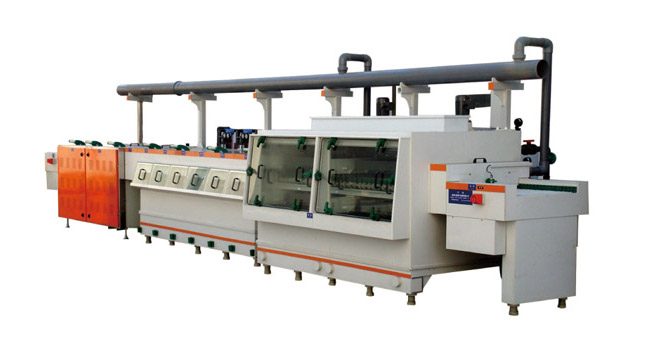

Alkaline vs Acidic PCB Etching
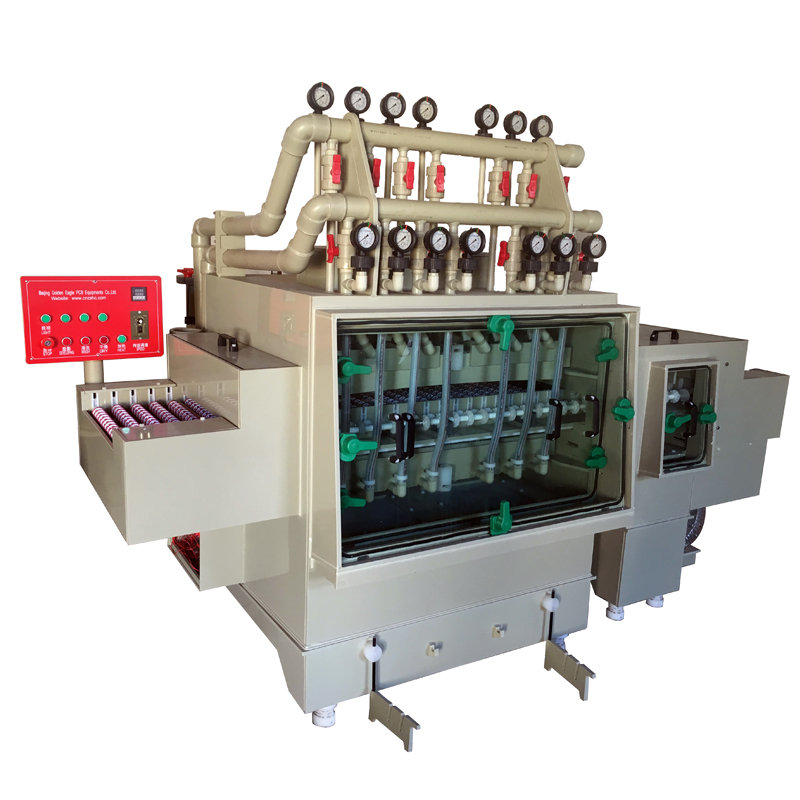
Alkaline ammonia, cupric chloride, and ferric chloride each have distinct advantages for PCB etching. The right choice depends on your feature size, volume, and operating budget. This guide compares all three chemistries on 9 criteria, shows when to use each, and provides a 1-year operating cost comparison.
Three PCB Etching Chemistries Compared
| Property | Ferric Chloride (FeCl3) | Cupric Chloride (CuCl2) | Alkaline Ammonia |
|---|---|---|---|
| Etch rate on Cu (25°C) | 25-50 μm/min | 30-60 μm/min | 20-40 μm/min |
| Sidewall control | Moderate (8-12° taper) | Good (5-8° taper) | Best (≤5° taper) |
| Minimum line/space | 100 μm | 50-75 μm | 25-50 μm |
| Regenerable? | No (spent etchant sent to Cu recovery) | Yes (Cl2 or NaClO injection) | Partially (Cu precipitation) |
| Chemical cost saving with regen | N/A | 40-60% | 20-30% |
| Equipment cost | Lowest ($) | Medium ($$) | Higher ($$$) |
| Wastewater treatment | Standard pH + precipitation | Standard pH + precipitation | More complex (NH3 stripper required) |
| Best for | General PCB, prototype, small batch | High-volume production, fine-line | HDI fine-line, flex PCB |
| Operator skill | Low | Medium | Higher |
When to Choose Each Chemistry
Choose Ferric Chloride (FeCl3) If...
- You're etching standard PCB (≥100 μm features) for prototype or small-batch production
- Capital budget is limited — FeCl3 is the lowest-cost entry point
- Throughput is <100 panels/hr
- You don't have an etchant regeneration system and send spent etchant to a metal recycler
Choose Cupric Chloride (CuCl2) If...
- You're running high-volume production (≥200 panels/hr)
- You want to minimize chemical operating cost — regeneration cuts it 40-60%
- You need finer features (50-75 μm) than FeCl3 can deliver
- You have a continuous flow line with proper tank management
Choose Alkaline Ammonia If...
- You're etching HDI PCB with 25-50 μm line/space
- You need ≤5° sidewall taper for impedance control or fine-pitch QFN/BGA
- You're etching flex PCB (polyimide) where acidic chemistry attacks the substrate
- You have the higher capital budget and skilled operators for NH3 handling
Cost Comparison: 1 Year of Operating Chemistry
For a mid-size PCB etching line (300 panels/hr, 8 hours/day, 250 days/year):
| Cost Item | FeCl3 | CuCl2 with Regen | Alkaline |
|---|---|---|---|
| Annual etchant consumption | ~$18,000 | ~$8,000 (after regen) | ~$12,000 |
| Wastewater treatment | ~$6,000 | ~$6,000 | ~$9,000 (NH3 stripper) |
| Equipment depreciation (5yr) | ~$2,500 | ~$5,000 (regen skid) | ~$4,000 |
| Total annual operating cost | ~$26,500 | ~$19,000 | ~$25,000 |
CuCl2 with regeneration has the lowest annual operating cost despite higher capital cost — payback period for the regeneration skid is typically 12-18 months for a high-volume line.
Can a Single Machine Handle All Three Chemistries?
Yes — Golden Eagle multi-chemistry etching machines (GE-JM650 series) support all three chemistries with quick-change tank design. Typical chemistry switch time: 30-45 minutes. This is ideal for job shops and contract manufacturers who run diverse projects.
Get Expert Help Choosing the Right Etching Equipment
Tell us your material, throughput, and feature size requirement. Our engineering team responds with a tailored recommendation and price within 24 hours — no obligation.
Request Quotation