Metal Etching Machine Price: What Affects the Cost and How to Budget
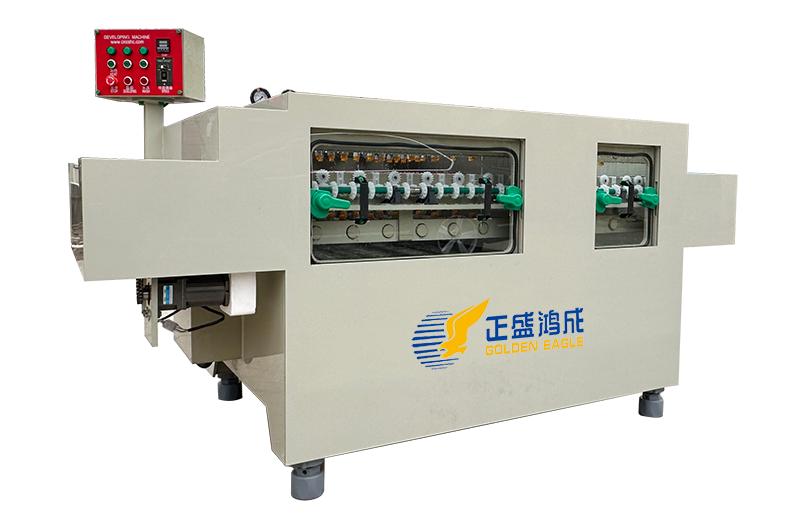
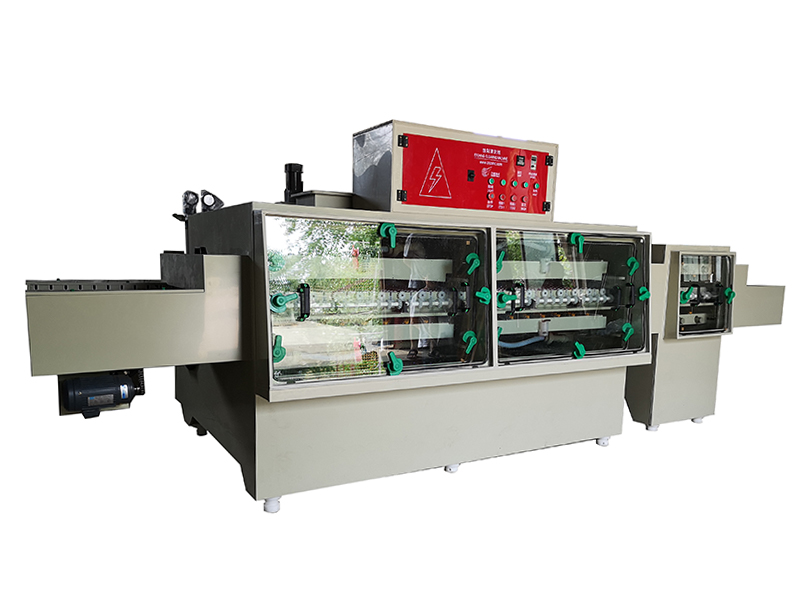
"Metal etching machine price" is one of the most common searches from people setting up an etching shop, and one of the most misleading numbers on a website. There is no single price for a metal etching machine, because the equipment ranges from a small bench-top unit for a few hundred dollars to a full production line in the hundreds of thousands. The number on a quotation depends on the conveyor width, the chemistry, the regeneration system, the fume treatment and a dozen smaller options. Without a clear scope, a price comparison is meaningless.
"Metal etching machine price" is one of the most common searches from people setting up an etching shop, and one of the most misleading numbers on a website. There is no single price for a metal etching machine, because the equipment ranges from a small bench-top unit for a few hundred dollars to a full production line in the hundreds of thousands. The number on a quotation depends on the conveyor width, the chemistry, the regeneration system, the fume treatment and a dozen smaller options. Without a clear scope, a price comparison is meaningless.
This article breaks down what a metal etching machine actually costs, what drives the price, and how to budget for the whole installation including chemistry, fume treatment and commissioning.
Quick Answer
- Small / bench-top metal etching machine: low single-digit thousand USD range. For prototype, R&D and very small batch work.
- Mid-size production line (600 mm conveyor): tens of thousands USD. The workhorse for most job shops.
- Large production line (800–1100 mm) with regeneration and scrubber: high tens to low hundreds of thousands USD. For high-volume PCB or metal panel production.
- What drives the price: conveyor width, double-sided capability, automation, regeneration system, fume treatment, and the material of construction.
Why "Metal Etching Machine Price" Is a Hard Question to Answer
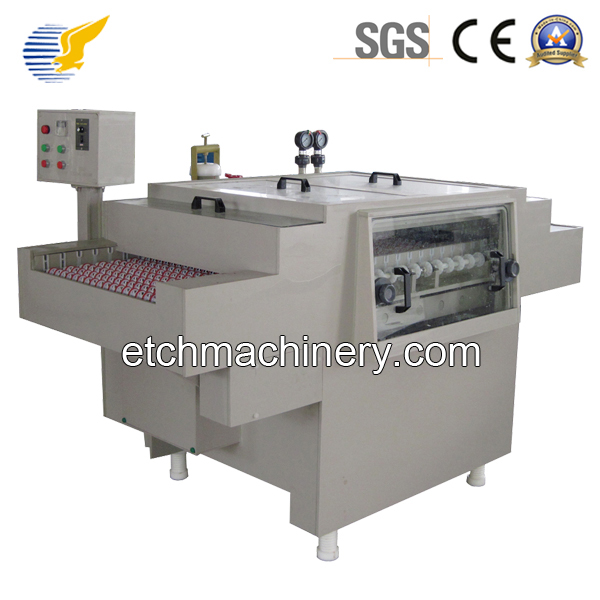
Three reasons. First, "metal etching machine" covers equipment that ranges from a small bench-top tank the size of a domestic dishwasher to a 12-metre conveyor line that occupies half a factory floor. Second, the price depends on whether the quotation is for the machine alone, the machine plus regeneration, or the machine plus regeneration plus fume treatment plus commissioning. Third, "price" in a quote usually means the ex-works price, not the landed cost at the buyer's factory. Shipping, import duty, installation and commissioning can add 20–40% on top of the ex-works price.
The most useful number to compare is the "installed, commissioned, ready-to-run" price. That is the only number that lets you compare one manufacturer's line to another fairly.
Metal Etching Machine Price Bands (2026)
These are ballpark ex-works price bands for a conveyorised spray etching line. Real quotes vary by region, specification and supplier. Use these as a starting point, not a final answer.
| Size / class | Conveyor width | Typical use | Approx. price band (USD, ex-works) |
|---|---|---|---|
| Bench-top / lab | ≤ 300 mm | Prototype, R&D, sample making | Low thousands |
| Small production | 400–500 mm | Small job shop, sample production | Mid thousands to low tens of thousands |
| Mid production | 600 mm | Standard job shop, PCB fab | Tens of thousands |
| Large production | 800–1100 mm | PCB fab, large nameplate, decorative panel | High tens of thousands |
| Heavy production | 1200 mm+ | Aluminium PCB, large format metal panel | Low hundreds of thousands |
Add 20–40% for shipping, installation and commissioning, depending on your region. Add the regeneration system and the fume scrubber if they are not already in the quotation. Add the first fill of chemistry.
What Drives the Price Up
Several specifications each have a meaningful impact on the metal etching machine price. They are worth understanding because the same job can be done at very different price points depending on how they are configured.
Conveyor width
Conveyor width is the dominant price driver. A 400 mm line is meaningfully cheaper than a 600 mm line, and a 600 mm line is meaningfully cheaper than an 800 mm line. The chamber, the conveyor, the pump set and the frame all scale with width. When sizing, remember the rule from the PCB etching machine buyer's guide: pick the width that fits your largest panel plus a margin, not the width that fits your current job.
Single-sided vs double-sided
A double-sided metal etching line needs matched top and bottom spray, alignment fixtures, and more sophisticated control. For the same conveyor width, expect 30–50% more than the single-sided version. If your application is single-sided only, do not pay for the double-sided capability.
Material of construction
Polypropylene (PP) is the standard chamber material and is included in the base price. PVC, CPVC and PVDF are used for hot, aggressive chemistry and add cost. If you are etching aluminium in hot alkaline chemistry, PVDF is worth the extra cost; for ferric chloride work, PP is usually fine.
Automation and control
A manual control panel (start / stop, basic speed control, analog temperature) keeps the price down. A PLC + HMI with recipe storage, data logging and remote diagnostics adds 10–20% to the price but pays back quickly in a production environment. For R&D and very small batch work, manual is fine; for any kind of regular production, PLC is worth the extra.
Etchant regeneration system
Inline regeneration with oxidant dosing, ORP control and water makeup is one of the most expensive single items in a full production line, but it is also one of the items that pays back the fastest. Without regeneration, you dump the bath; with regeneration, you use 30–50% less chemistry and the etch rate stays flat through the shift. For any production line, regeneration is not optional.
Fume treatment
A packed-tower scrubber sized for the line is a meaningful part of the total package. Some manufacturers include it in the quotation, others quote it separately. Always check. A scrubber sized too small will not meet environmental rules; a scrubber sized too large is wasted money.
Heaters and chillers
Heating the etchant to the working temperature is straightforward. Cooling it (which is sometimes needed for cupric chloride where the etch reaction is exothermic) requires a chiller and adds cost. Not every line needs a chiller — confirm with the supplier.
Total Cost of Ownership
The ex-works price of the machine is only the start. Over the life of the line, chemistry, power, maintenance and labour are usually several times the purchase price. A few rough numbers, per year, for a 600 mm production line running one shift:
- Chemistry: depends on volume and regeneration. For ferric chloride, the makeup is typically 5–15% of the machine price per year; for cupric chloride with regeneration, less.
- Power: pumps, heaters, scrubber. Roughly 3–7% of the machine price per year.
- Maintenance and spares: budget 3–5% of the machine price per year for routine spares (nozzles, pump seals, probes) and 1–2% per year for larger wearing parts (heaters, conveyor parts) on a multi-year cycle.
- Labour: one operator per shift for a conveyor line. Not specific to the etching machine, but the machine's automation level decides how much of their time is on this equipment.
Over 10 years, the total cost of ownership of a mid-size metal etching machine is typically 3–5 times the purchase price. That ratio is useful when comparing two quotes — the cheaper machine with higher chemistry and power consumption can easily be the more expensive one in the long run.
Used vs New
A used metal etching machine is meaningfully cheaper, sometimes 40–60% of the new price. There are good reasons to consider used equipment and good reasons to be cautious.
- In favour. The chamber and frame have decades of life left. The control system can be upgraded. Used equipment is the fastest way to get into production.
- Caution. The pump, the heater, the probes and the lining are all wearing parts. A machine that was 5 years into a heavy production cycle may need 30–50% of the used price in refurbishment before it is reliable again.
- Risk. Used equipment often comes with no warranty and limited support. The previous owner may have already taken the spares.
A reasonable rule of thumb: only buy used from a supplier who will fully refurbish the line, give a written warranty, and commit to a spare parts schedule. The price saving evaporates fast if the line is down for two months waiting for a part.
How to Get a Fair Quote
To get comparable quotes from multiple suppliers, send each one the same scope of supply. A useful checklist:
- Panel size (max width and max length)
- Material to be etched (stainless steel, copper, aluminium, etc.)
- Sheet thickness range
- Etch depth required (through-etch or partial)
- Monthly volume in m²
- Single-sided or double-sided
- Chemistry preference (ferric chloride, cupric chloride, alkaline, other)
- Regeneration system: yes / no
- Fume scrubber: yes / no, included or separate
- Installation and commissioning: included or separate
- Warranty period and what is covered
- Spare parts list and price
- Lead time and shipping terms (EXW, FOB, CIF, DDP)
If a supplier refuses to give you a written quotation on this scope, treat that as a red flag.
Budgeting for a Metal Etching Machine?
Send us your panel size, material, monthly volume and target chemistry. We will give you a complete installed-cost estimate, including machine, regeneration, fume treatment and commissioning.
Get a Budget EstimateConclusion
Metal etching machine price depends almost entirely on the specification. A clear scope — conveyor width, single or double-sided, regeneration, fume treatment, commissioning — is the only way to compare quotes fairly. Get the scope right, and the cheapest line that meets it is usually the best value. Get the scope wrong, and a "bargain" machine becomes a very expensive installation.