Golden Eagle GE-SX650 metal plaque etching machine: 20+ years manufacturer, ±0.02mm tolerance, double spray system for stainless steel, brass, copper & aluminum signs. CE-certified. Request a quote.
CE Certified 24h Quotation 1-Year Warranty Worldwide Delivery
⚡ Quick Answer
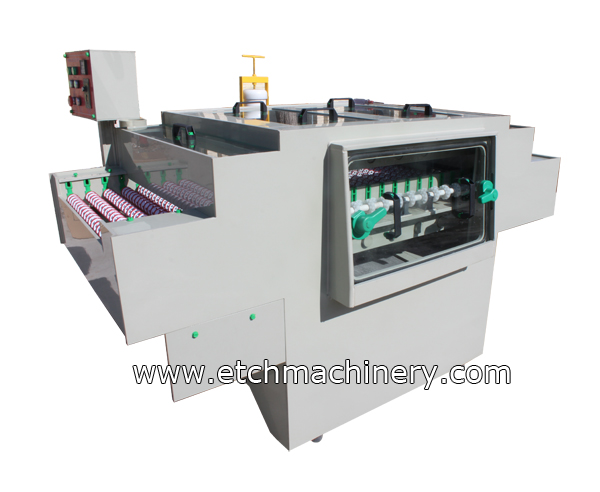
A metal plaque etching machine is a chemical etching system that selectively removes metal from brass, aluminum, copper, and stainless steel sheets using acid or alkaline etching chemistry. The GE-SX650 uses a photoresist film as the etch mask (laminated, exposed, developed) and a double-spray conveyor process to produce plaques, nameplates, signs, and decorative panels. It is a chemical etching line — not a laser etching system.
Metal Plaque Etching Machine | GE-SX650 Precision Chemical Etching Equipment
Professional metal plaque etching machine for stainless steel, brass, copper, and aluminum. Double spray precision etching system with ±0.02mm tolerance. CE-certified industrial etching solutions from Golden Eagle — trusted manufacturer since 2003.
GE-SX650 Metal Plaque Etching Machine — Industrial Double Spray Chemical Etching Solution
Product Overview: The GE-SX650 metal plaque etching machine is an advanced double-spray photochemical etching system engineered for precision industrial metal plaque and nameplate manufacturing. This plaque etching machine performs high-accuracy chemical etching on plaques, nameplates, labels, steel sheets, TV shadow masks, grids, shims, washers, sieves, meshes, SMT components, choppers, encoders, and discs. Industries served include signage manufacturing, architectural metal decoration, PCB prototyping, and chemical milling production.
With over 20 years of etching machine manufacturing experience, Golden Eagle delivers reliable, CE-certified equipment exported to more than 30 countries worldwide.
Metal Plaque Etching Process Flow
The complete plaque etching production line uses a 7-stage process. The GE-SX650 is the chemical etching stage (stage 4); photoresist lamination, exposure, developing, and stripping are performed by upstream and downstream equipment in the line.
Complete Production Flow: Photoresist Lamination → Exposure → Developing → Chemical Etching → Rinsing → Photoresist Stripping → Finishing
This streamlined metal plaque etching machine process delivers consistent etching depth, clean edge definition, and efficient throughput for high-volume nameplate and plaque production. The continuous conveyor system eliminates manual handling between stages.
GE-SX650 Metal Plaque Etching Machine — Technical Specifications
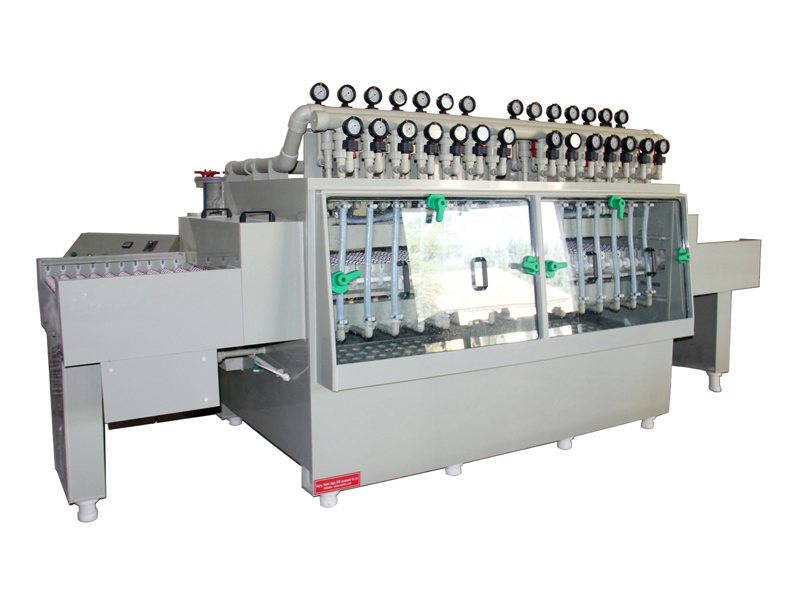
Speed Adjust System — Precise conveyor speed control for optimal etching depth and uniformity
Pressure Adjust System — Variable spray pressure settings for different metal types and thicknesses
Temperature Control System — Integrated heater and cooler for precise chemical process management
Network Filter System — Continuous chemical filtration maintains clean etching solution quality
High Temperature Resistant PP Construction — Chemical-resistant build withstands up to 100℃
Continuous Operation Capability — Designed for high-volume industrial production runs
Metal Plaque Etching Machine — Working Demonstration Video
Watch our GE-SX650 metal plaque etching machine in action, demonstrating the full chemical etching process for stainless steel medals and metal plaques with the double spray system.
Industrial Applications of the Metal Plaque Etching Machine
Metal Plaque and Nameplate Etching
Professional metal plaque etching, nameplate manufacturing, custom sign etching, and label production for industrial and commercial applications requiring durable, high-detail output.
Architectural Decoration Panel Etching
Precision decorative metal panel etching for elevator interiors, architectural cladding, interior design metalwork, and artistic stainless steel surfaces.
PCB Prototyping and Electronics
High-frequency PCB prototyping with tight precision tolerances for electronics R&D, prototype manufacturing, and small-batch circuit board production.
Precision Chemical Milling Production
Low-to-medium volume precision chemical milling for aerospace, automotive, medical device, and industrial precision component manufacturing sectors.
Metal Plaque Etching Machine — Application Sample Gallery
Quality results produced by Golden Eagle precision chemical etching equipment
Brass Metal Sign — Etching Sample
Photo chemical etching brass sign with intricate fine-line detail reproduction using the GE-SX650 metal plaque etching machine
Decorative Stainless Steel Panel
Architectural decorative stainless steel sheet etching for elevator panels and interior design applications
Stainless Steel Print — Precision Sample
High-precision stainless steel etching prints demonstrating fine detail resolution at ±0.02mm tolerance
Metal Signage — Industrial Nameplate
Industrial stainless steel signage and nameplate etching for durable, long-lasting commercial applications
Why Choose the Golden Eagle Metal Plaque Etching Machine?
✓
High precision etching down to 50 microns (0.05mm) for intricate patterns and fine details
✓
Double-side spray technology for uniform, consistent etching depth across the entire workpiece
✓
Chemical regeneration system integration for reduced chemical waste and lower operating costs
✓
Independent adjustable spray pressure and temperature control for flexible multi-material processing
✓
Robust PP chemical-resistant construction rated to 100℃ for harsh industrial environments
✓
CE certified, manufactured by Golden Eagle — 20+ years specialist etching machine manufacturer
Frequently Asked Questions — Metal Plaque Etching Machine
What is a metal plaque etching machine?
A metal plaque etching machine is industrial chemical etching equipment that uses acid or alkaline etching chemistry with controlled chemical spray systems to selectively remove metal from stainless steel, brass, copper, or aluminum sheets, creating precise plaques, nameplates, signs, and decorative panels. The GE-SX650 model achieves a dimensional accuracy of ±0.02 mm.
What chemicals does the metal plaque etching machine use?
The GE-SX650 metal plaque etching machine is compatible with both acid and alkaline etching solutions. Commonly used chemicals include ferric chloride (FeCl3), cupric chloride (CuCl2), hydrochloric acid with hydrogen peroxide, and ammonia-based alkaline etchants.
What metal materials can the plaque etching machine process?
The GE-SX650 metal plaque etching machine processes stainless steel, brass, aluminum, copper, iron, and nickel alloys. Material thickness range is 0.05mm to 2mm.
What is the minimum etching precision of the GE-SX650?
The GE-SX650 metal plaque etching machine achieves a dimensional accuracy of ±0.02 mm. Fine-line etching down to 0.05 mm line width is possible for detailed nameplate and signage artwork. Material thickness range is 0.05 mm to 2 mm.
What sizes are available for the metal plaque etching machine?
The GE-SX650 metal plaque etching machine is available in etching widths of 650mm, 1000mm, 1220mm, and 1550mm. Custom sizes can be manufactured to your specific production requirements.
Is the GE-SX650 metal plaque etching machine CE certified?
Yes, the GE-SX650 metal plaque etching machine is CE certified and manufactured by Beijing Golden Eagle Electronic Equipment Co., Ltd., a professional etching machine manufacturer with 20+ years of experience based in Beijing, China.
Request a GE-SX650 Quote
Provide the following details so our sales team can match the right machine configuration to your application. All fields are optional except a contact method.
High precision metal etching machine for stainless steel, brass, copper, and aluminum. Perfect for chemical milling, precision filters, and industrial metal parts manufacturing.
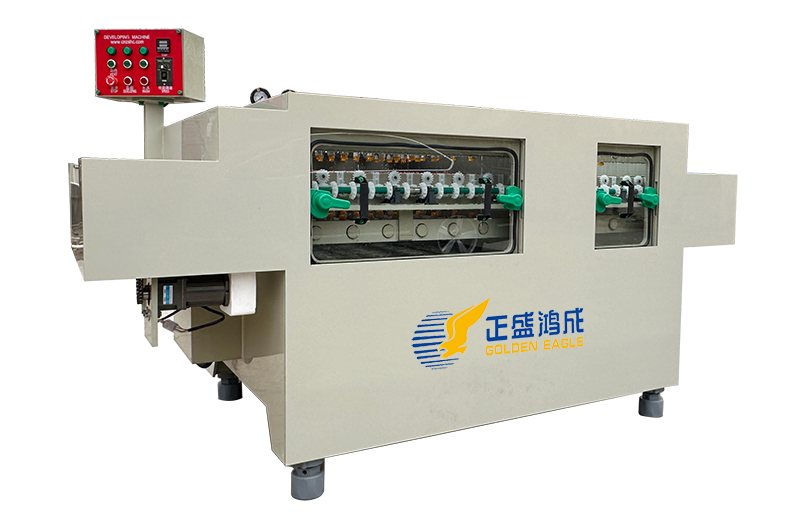
Control system: Temperature, Speed, Pressure, Network Filter
Machine dimension :20500*2300*1850mm
This Etching machines can be used to Etching whole size (1219*2438mm,or1500*3000mm) Decorative stainless steel sheet ,etching works for lift mirror hairline colored metal sheet.Materials can be stainless steel, copper, aluminium and so on.
Chemical etching is a precision manufacturing process that uses acid or alkaline etching solutions — such as ferric chloride (FeCl3), cupric chloride (CuCl2), hydrochloric acid with hydrogen peroxide, or ammonia-based alkaline etchants — to selectively remove metal from sheet stock. The process creates complex and highly accurate parts. This technology is essential for producing printed circuit boards (PCBs), metal nameplates, signage, and precision metal components across various industries.
Key Features of Modern Etching Systems:
Today's advanced chemical etching machines incorporate precision spray nozzles, temperature-controlled solutions, and efficient waste management systems. Modern equipment offers uniform material removal, minimal chemical consumption, and high throughput. The most sophisticated systems feature automated conveyor speeds, solution concentration monitoring, and integrated quality control.
Applications of Chemical Etching:
PCB Manufacturing: Creating circuit patterns on copper-clad laminates
Metal Nameplates & Signage: Producing decorative and informational plates
Industrial Filters & Screens: Manufacturing precision meshes and sieves
Stamping & Cutting Dies: Preparing tools for manufacturing processes
Medical & Aerospace Components: Creating precision parts with complex geometries