
Learn how metal etching technology works for stainless steel and copper. Discover the process, advantages, applications and industrial metal etching machines used in precision manufacturing.

Metal etching technology is widely used in modern manufacturing to produce precise and complex metal components. The process removes material from metal surfaces using controlled chemical reactions, allowing manufacturers to create detailed patterns without mechanical cutting.
Metal etching technology is widely used in modern manufacturing to produce precise and complex metal components. The process removes material from metal surfaces using controlled chemical reactions, allowing manufacturers to create detailed patterns without mechanical cutting.
Compared with traditional machining methods, metal etching provides higher precision and better surface quality. Because the process does not apply mechanical force or high heat, the original properties of the metal are preserved.
Today, metal etching is commonly used in industries such as electronics, industrial manufacturing, aerospace, decorative architecture and precision engineering.
Metal chemical etching is a manufacturing process that selectively removes material from a metal surface using chemical solutions. A protective resist layer is applied to the metal sheet to protect certain areas while exposed metal is dissolved by an etchant.
The process allows manufacturers to produce complex shapes, fine holes and intricate patterns that are difficult to achieve using traditional cutting techniques.
Metal etching is particularly effective when working with thin metal sheets or parts requiring very precise features.
Chemical etching can be applied to many types of metal materials. Two of the most commonly etched metals are stainless steel and copper.
Stainless steel is widely used in metal etching because of its strength, corrosion resistance and clean surface finish. Etched stainless steel parts are commonly used for industrial nameplates, filters, decorative panels and precision mechanical components.
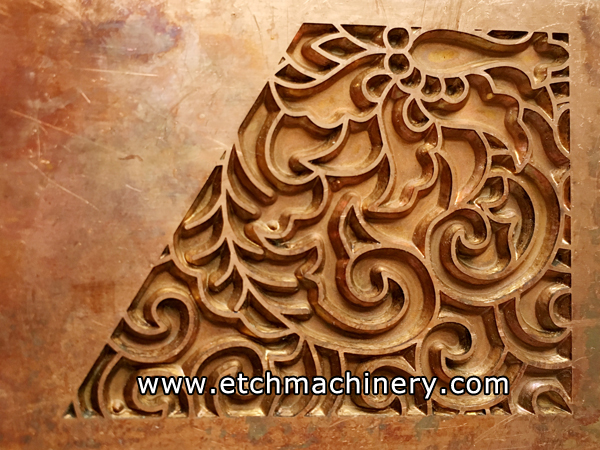
Copper is widely used in electronics manufacturing due to its excellent electrical conductivity. Copper etching is commonly used in circuit boards, shielding components and precision electrical contacts.
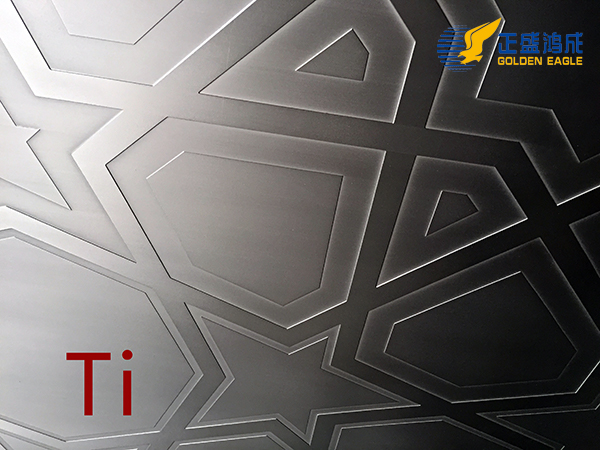
Titanium is highly valued in metal etching for its exceptional strength-to-weight ratio, outstanding corrosion resistance, and excellent biocompatibility. Etched titanium parts are commonly used for aerospace components, medical implants, decorative trim, and lightweight mechanical filters.
The metal sheet must first be cleaned to remove oil, dust and oxidation. Proper cleaning ensures that the resist layer adheres evenly to the metal surface.
A photoresist layer is applied to the metal sheet. This protective coating prevents certain areas from being etched.
A photomask containing the desired design is placed over the metal sheet. Ultraviolet light transfers the pattern onto the resist layer.
The exposed resist is developed, leaving selected metal areas unprotected and ready for etching.
The sheet enters a metal etching machine where an etching solution removes the exposed metal.
Common etchants include ferric chloride and cupric chloride depending on the material being processed.
After the etching stage, the remaining resist is stripped away and the finished metal parts are cleaned and inspected.
Metal etching technology is widely used in many industrial applications including:
Modern metal etching production lines use automated spray etching machines to achieve consistent results and high production efficiency.
Industrial metal etching machines typically include features such as double-side spray systems, conveyor speed control, temperature regulation and chemical filtration systems.
Metal etching technology provides a reliable and efficient solution for producing precise metal components. By using controlled chemical reactions, manufacturers can create complex patterns on stainless steel, copper and other metals without mechanical stress.
With the development of automated etching equipment and improved chemical processing technology, metal etching continues to play an important role in modern industrial manufacturing.