
Ferric Chloride vs Cupric Chloride Etchant: Which Is Better?
Ferric chloride and cupric chloride are the two most widely used etchants in chemical etching and PCB manufacturing. Both dissolve copper and many other metals, but they behave very differently when it comes to etch rate, regeneration, cost, and process control. Choosing the right one has a direct effect on quality, throughput, and operating cost.
Ferric chloride and cupric chloride are the two most widely used etchants in chemical etching and PCB manufacturing. Both dissolve copper and many other metals, but they behave very differently when it comes to etch rate, regeneration, cost, and process control. Choosing the right one has a direct effect on quality, throughput, and operating cost.
This guide compares ferric chloride and cupric chloride side by side and explains which etchant suits PCB production, metal etching, and small-batch work.
Quick Answer
- Ferric chloride is simple, versatile, and great for metal etching and prototyping. It etches stainless steel, copper, brass, and aluminium.
- Cupric chloride is the choice for high-volume PCB production because it can be continuously regenerated for stable, low-cost operation.
What Is Ferric Chloride Etchant?
Ferric chloride (FeCl3) is a dark brown acidic solution that etches copper and ferrous metals through an oxidation reaction. It is the most common general-purpose etchant because it is easy to mix, works at moderate temperatures, and attacks a wide range of metals. It is the standard etchant for stainless steel etching as well as copper, brass, and nickel alloys.
Its main limitation is that it gradually loses strength as dissolved metal builds up. In small or medium operations the spent solution is simply replaced, but in large operations the disposal and replacement cost adds up.
What Is Cupric Chloride Etchant?
Cupric chloride (CuCl2) is an acidic etchant used mainly for copper, which makes it the workhorse of high-volume PCB etching. Its biggest advantage is regeneration: as the solution etches copper it can be continuously re-oxidised (with chlorine, hydrogen peroxide, or air plus acid) so that etching strength stays constant. This gives a very stable etch rate and low chemical consumption over long production runs.
The trade-off is complexity. Cupric chloride lines need accurate control of acidity and oxidation-reduction potential, plus a regeneration system, so they are best suited to dedicated, continuous production.
Ferric Chloride vs Cupric Chloride: Side-by-Side Comparison
| Factor | Ferric Chloride (FeCl3) | Cupric Chloride (CuCl2) |
|---|---|---|
| Best for | Metal etching, prototypes, mixed metals | High-volume PCB / copper etching |
| Metals etched | Copper, stainless steel, brass, nickel, aluminium | Mainly copper |
| Regeneration | Difficult; usually replaced | Continuous regeneration possible |
| Etch-rate stability | Falls as metal load rises | Very stable when regenerated |
| Process control | Simple | Requires acidity / ORP control |
| Setup complexity | Low | Higher (regeneration system) |
| Operating cost (high volume) | Higher (chemical replacement) | Lower (recycled chemistry) |
| Undercut / edge control | Good with proper spraying | Excellent, very consistent |
Which Etchant Should You Choose?
Choose Ferric Chloride If…
- You etch a variety of metals such as stainless steel, brass, or nickel.
- You run prototypes, samples, or small-to-medium batches.
- You want a simple, low-investment process that is easy to set up and control.
Choose Cupric Chloride If…
- You etch copper at high volume, especially printed circuit boards.
- You need a constant etch rate and tight, repeatable line widths.
- You can invest in a regeneration system to lower long-term chemical cost.
Safety and Handling
Both etchants are corrosive acids and must be handled with proper protective equipment, ventilation, and trained operators. Spent etchant contains dissolved metals and must be treated or recycled in line with local environmental regulations rather than poured to drain. Always follow the supplier's safety data sheet.
Equipment Matters as Much as Chemistry
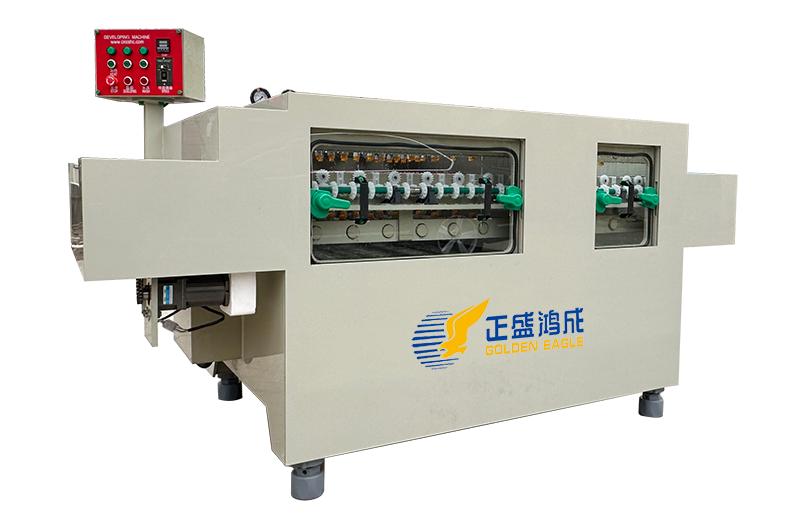
Whichever etchant you use, results depend on the etching machine. A well-built spray chemical etching machine controls spray pressure, temperature, and conveyor speed so the etchant performs consistently, while the right etching chemicals and a regeneration option keep the process stable and economical.
Not Sure Which Etchant Line Fits Your Production?
Tell us your material and volume — Golden Eagle will recommend the right etchant and etching machine.
Talk to an EngineerConclusion
There is no single "best" etchant — only the best one for your job. Ferric chloride wins on versatility and simplicity, making it ideal for metal etching and lower volumes. Cupric chloride wins on regeneration and stability, making it the standard for high-volume copper and PCB production. Match the chemistry to your metal, your volume, and the etching equipment you run, and you will get clean, repeatable results.


