
Stainless Steel Etching: Process, Methods & Applications
Stainless steel etching is a photochemical process that removes metal from a stainless steel sheet using a controlled chemical reaction, leaving behind precise patterns, openings, or surface details. Because no cutting tools, heat, or mechanical pressure are involved, the process produces clean, burr-free parts without changing the hardness or grain structure of the metal.
Stainless steel etching is a photochemical process that removes metal from a stainless steel sheet using a controlled chemical reaction, leaving behind precise patterns, openings, or surface details. Because no cutting tools, heat, or mechanical pressure are involved, the process produces clean, burr-free parts without changing the hardness or grain structure of the metal.
This makes stainless steel etching ideal for thin, complex, and high-precision components used in electronics, filtration, medical devices, signage, and decorative applications. In this guide we explain how the process works, which grades are suitable, what etchants are used, and where etched stainless steel parts are applied.
Key Takeaways
- Stainless steel etching is a tool-free, stress-free way to make precise thin-metal parts.
- Grades 304, 316 and 430 are the most commonly etched.
- Ferric chloride is the standard etchant for stainless steel.
- Typical uses include filters, meshes, EMI shielding, nameplates and decorative panels.
Why Etch Stainless Steel?
Stainless steel is strong, corrosion-resistant, and visually attractive, but it is also hard and difficult to machine into fine features by conventional methods. Stamping creates tooling costs and burrs, while laser cutting can leave heat-affected zones on very thin material. Chemical etching avoids these problems and offers several advantages:
- No mechanical stress or burrs – parts stay flat and clean.
- No heat-affected zone – the corrosion resistance of stainless steel is preserved.
- Fine detail – features down to a fraction of a millimetre are achievable.
- Low tooling cost – the photo tool is inexpensive, so design changes are cheap and fast.
- Many parts per sheet – complex layouts are etched in a single pass.

The Stainless Steel Etching Process Step by Step
1. Cleaning
The stainless steel sheet is thoroughly degreased and cleaned. Any oil, oxide, or fingerprint can stop the photoresist from bonding evenly, so surface preparation is critical to a good result.
2. Photoresist Coating
A light-sensitive photoresist (a dry film or liquid laminate) is applied to both sides of the sheet. This layer protects the areas that should remain after etching.
3. Image Transfer (Exposure)
A photo tool carrying the part design is placed over the coated sheet, and ultraviolet light hardens the resist in the exposed areas. The pattern is registered on both sides for accurate through-features.
4. Developing
The unhardened resist is washed away, leaving bare stainless steel exactly where the etchant should attack and a protective resist everywhere else.
5. Etching
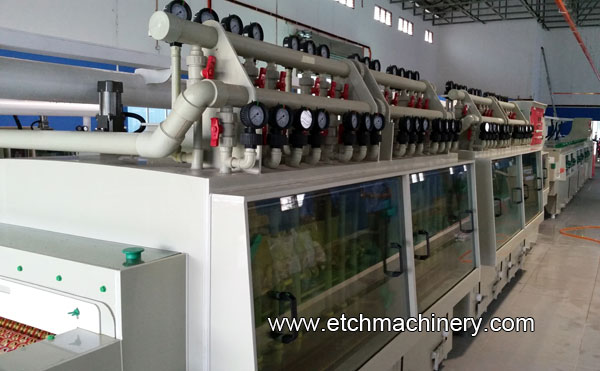
The sheet passes through a spray metal etching machine, where a heated ferric chloride solution is sprayed under pressure onto both faces. The etchant dissolves the exposed stainless steel until the pattern is fully formed.
6. Stripping and Passivation
Finally the remaining resist is stripped off and the parts are rinsed. A passivation step restores the protective chromium-oxide layer, returning the stainless steel to its full corrosion resistance.

Stainless Steel Grades Suitable for Etching
| Grade | Typical Properties | Common Etched Applications |
|---|---|---|
| 304 | General-purpose, good corrosion resistance, easy to etch | Filters, screens, nameplates, decorative panels |
| 316 / 316L | Superior corrosion and chemical resistance | Medical, marine and chemical-industry components |
| 430 | Ferritic, magnetic, lower cost | Trim, decorative and appliance parts |
| 301 / 631 | Spring-temper, high strength | Spring contacts and flexible parts |
Etchant Used for Stainless Steel
The standard etchant for stainless steel is ferric chloride (FeCl3). It etches stainless steel quickly and predictably, is comparatively safe to handle, and can be filtered and reused. Etch rate and edge quality are controlled by adjusting the solution's concentration, temperature, and spray pressure. To understand how ferric chloride compares with the cupric chloride used in many PCB lines, see our guide on ferric chloride vs cupric chloride etchant.
Applications of Etched Stainless Steel
Precision Filters and Meshes
Etching produces filter screens and meshes with thousands of identical, precisely sized holes — something that is difficult and expensive to drill or punch. Typical examples include speaker grilles, fuel-cell flow plates, and pharmaceutical mesh.
Nameplates and Signage
Durable etched stainless steel nameplates resist scratching, weather, and chemicals, making them ideal for industrial labels and outdoor signage and plaques.
EMI/RFID Shielding and Electronics
Thin etched stainless and other metals are used for shielding cans, lead frames, and connector parts in electronic assemblies.
Decorative Panels
Architectural and consumer products use etched stainless steel for textured, patterned, and logo finishes on decorative stainless steel sheets.
Medical and Surgical Components
Grade 316L parts such as surgical blades, dental tools, and implant meshes are etched to tight tolerances with clean, biocompatible edges.
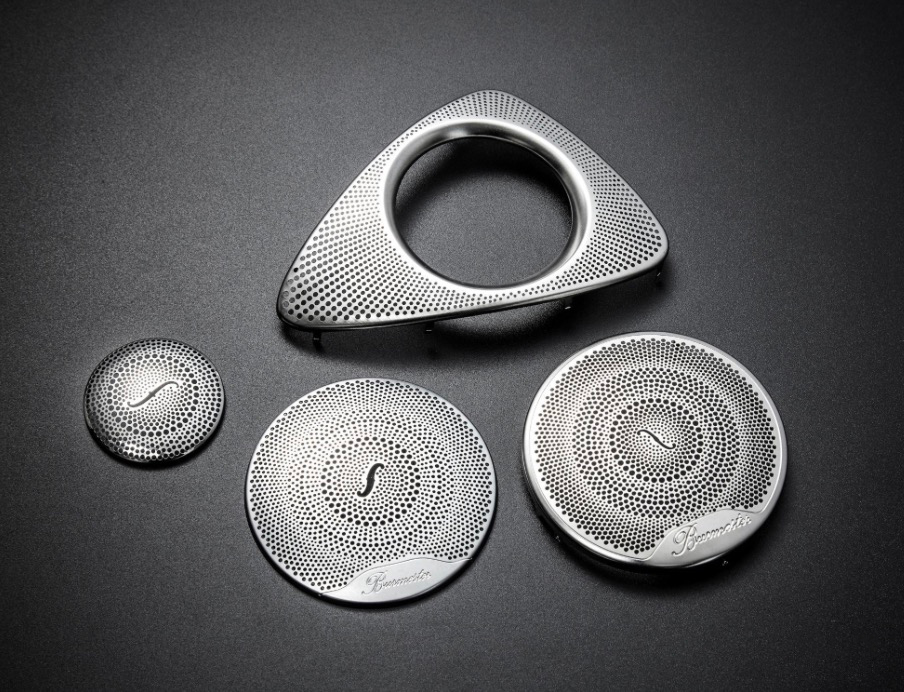
Precision Filters & Speaker Grilles
Photo-etched stainless steel filters deliver uniform aperture size and burr-free edges — hard to achieve with stamping or drilling. Common in audio, fuel-cell, and pharmaceutical mesh.

Signage & Nameplates
Etched stainless steel signage uses deep, sharp recesses that hold paint cleanly or remain as bare-metal logos for outdoor and industrial labels.

Architectural Decorative Panels
Chemically etched gold-mirror stainless steel panel — the typical finish for architectural feature walls and elevator interiors.
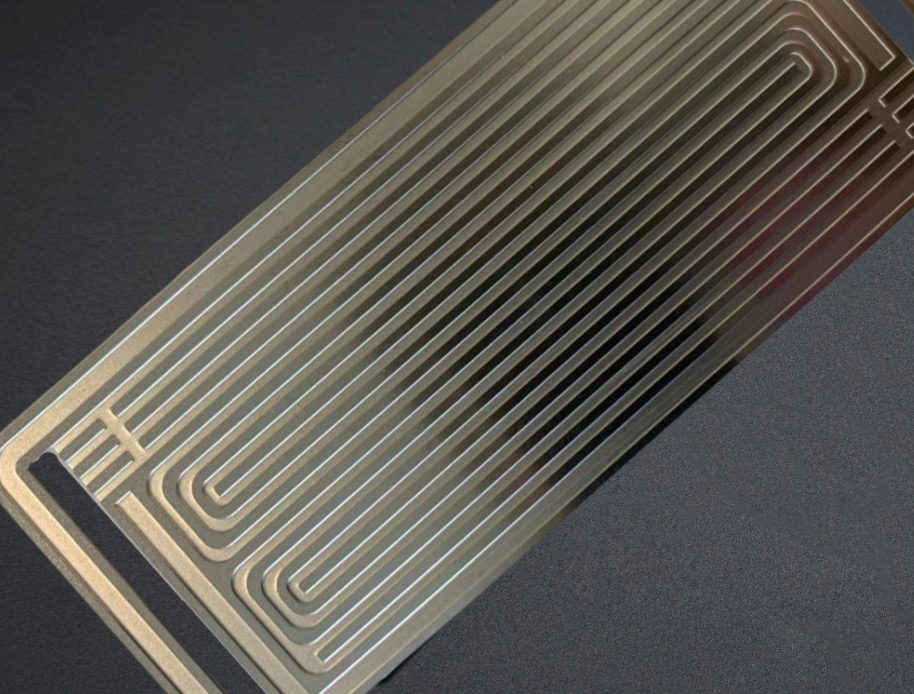
Medical & Precision Parts
Etched stainless steel precision components keep their passivation layer because there is no heat-affected zone, burr, or tool pressure — ideal for 316L surgical and implant parts.
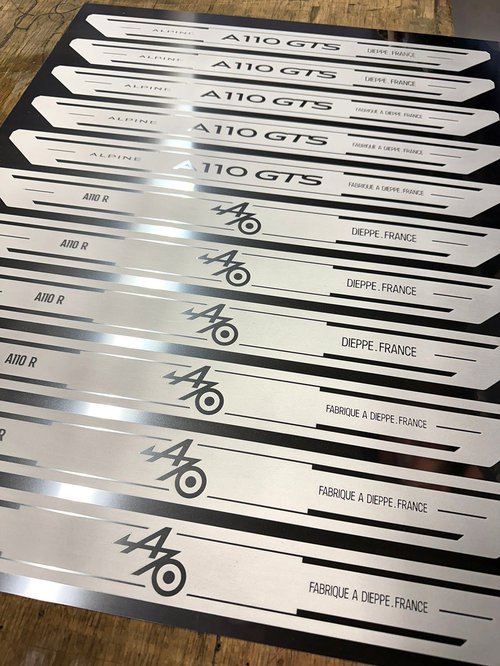
Automotive Components
Etched stainless steel automotive parts deliver identical geometry across thousands of pieces per sheet — ideal for high-mix, mid-volume production runs.
Equipment for Stainless Steel Etching
Consistent results depend on a well-controlled spray etching line. A modern chemical etching machine regulates etchant temperature, spray pressure, and conveyor speed so that every sheet is etched to the same depth and tolerance. For higher volumes, etchant regeneration and filtration systems keep the solution active and reduce chemical consumption.
Need a Stainless Steel Etching Machine?
Golden Eagle designs and builds spray etching equipment for stainless steel, copper, and aluminium parts of every scale.
Get a QuoteRelated Stainless Steel Etching Equipment
Production equipment used for the photochemical stainless steel etching workflow described above:
-
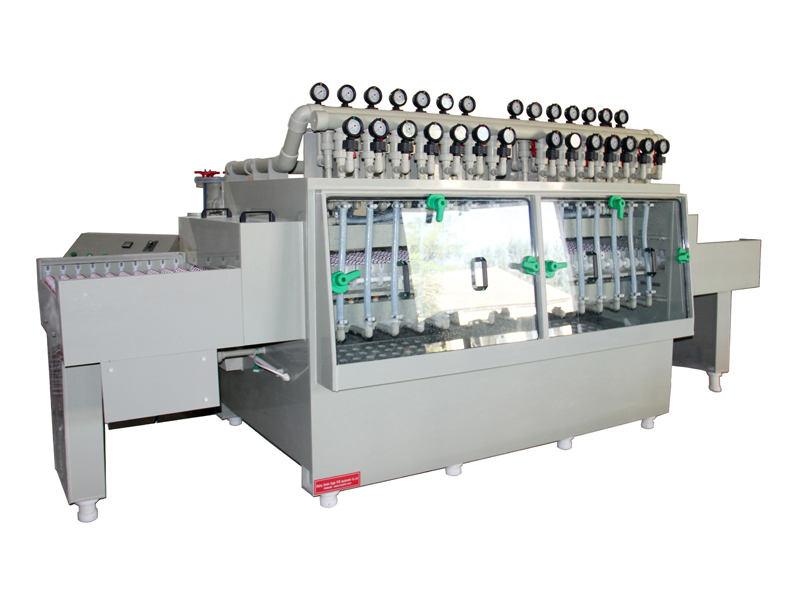 Etching
Stainless Steel Etching Machine
GE-ME series, conveyor spray line
Etching
Stainless Steel Etching Machine
GE-ME series, conveyor spray line
-
 Filter Mesh
 Etching Machine
GE-FM series, precision apertures
Filter Mesh
Filter Mesh Etching Machine
GE-FM series, precision apertures
-
 Signage
Metal Plaque Etching Machine
GE-SX650, deep recesses for paint
Signage
Metal Plaque Etching Machine
GE-SX650, deep recesses for paint
-
 Decorative
 Sheet Etching Machine
Architectural panels & reflectors
Decorative
Decorative Sheet Etching Machine
Architectural panels & reflectors
-
 Nameplate
 & Signage Etching Machine
GE-SX650, deep recesses for paint fill
Nameplate
Nameplate & Signage Etching Machine
GE-SX650, deep recesses for paint fill
Conclusion
Stainless steel etching is a precise, cost-effective, and stress-free method for producing thin, complex metal parts without sacrificing the corrosion resistance that makes stainless steel valuable. With the right grade, the correct ferric chloride process, and a properly controlled etching machine, manufacturers can make everything from micro-filters to large decorative panels with repeatable quality.