
Quick-drying photosensitive etch-resist ink for chemical etching of stainless steel, copper, brass and aluminium. Spray or screen-print application, 6-8 grid exposure, 10% NaOH developer, 80-90 °C ...
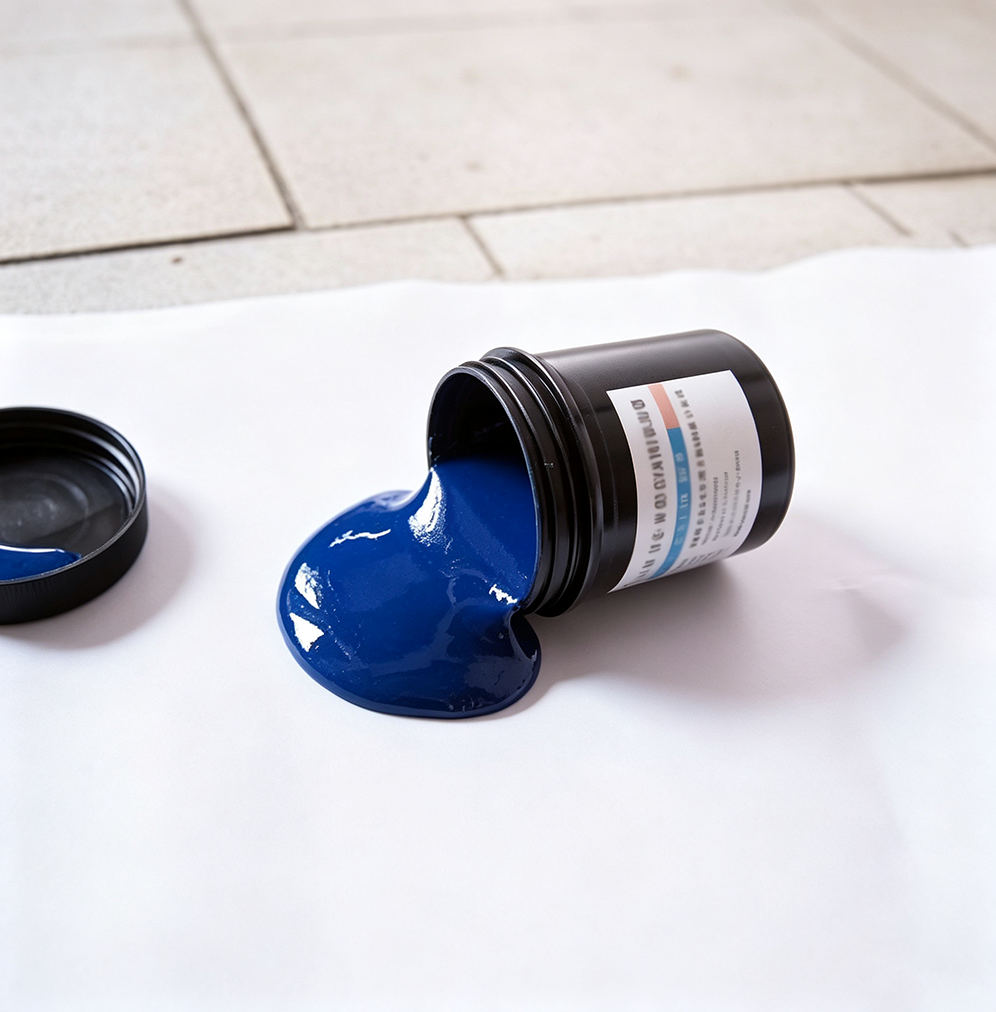
A negative-working, photoimageable resist developed for high-precision chemical etching. Spray or screen-print application, fast pre-bake, 6–8 grid exposure, sharp 0.8–1.2% Na2CO3 development, and clean 10% NaOH stripping — all on one ink that works on stainless steel, copper, brass and aluminium.
Photosensitive etch-resist ink is a light-curable coating used in chemical etching to protect the areas of a metal sheet that should remain after the etch. The metal is first cleaned, then coated with a thin film of the ink. After exposure through a phototool and development in dilute sodium carbonate, the unexposed ink washes away and the exposed ink hardens into a tough, acid-resistant mask. The sheet is then put through an etching line — ferric chloride for copper, cupric chloride for production PCB work, or a hot alkaline bath for aluminium — and only the bare metal is dissolved.
This particular ink was developed by Golden Eagle's process engineering team in 1998 and has been refined over more than 20 years of in-house production. It is widely used for watch parts, jewellery, eyeglass frames, mobile phone shells, decorative panels, industrial templates, electronic components, filter mesh and hardware keypads. It is one of the most versatile ways to put a high-resolution resist on a metal sheet when dry film or a phototool-only workflow is not the right fit.
The full process from bare metal to stripped finished part is nine steps. The same sequence applies whether the ink is sprayed or screen-printed, and whether the part ends up as a thin decorative panel or a deep-etched mould.
* Post-bake at 150 °C for 30 minutes is required for deep etching only. For through-etching thin sheet, the post-bake can be skipped.
| Item | Standard value | Notes |
|---|---|---|
| Viscosity | 120–150 Pa·s @ 25 °C | Adjust with the ink's own thinner only — typical dilution 1 : 0.7 |
| Fineness | ≤ 15 µm | Particle size, controls screen-print resolution and edge sharpness |
| Exposure energy | 6–8 grid (21-grid exposure scale) | Higher grid = longer exposure; fine features tend to the high end |
| Hardness | ≥ H (Mitsubishi pencil, 700 g load) | Resist hardness after full cure |
| Adhesion | 100 / 100 (3M medium-tack tape) | No lift after cross-hatch + tape pull |
| Strip | 10% NaOH at 80–90 °C, 5–8 min | 1–3 min in an ultrasonic tank at 90 °C |
| Recommended dry film | 20–30 µm | Spray; 77T–100T mesh for screen print |
| Shelf life | ~6 months | Sealed, < 25 °C, dark, dry storage |
Because the ink can be applied by spray or screen-print and tolerates a wide range of etch chemistries, it shows up across the parts of a fab that need a high-resolution resist but do not justify dry film lamination. Common uses include:
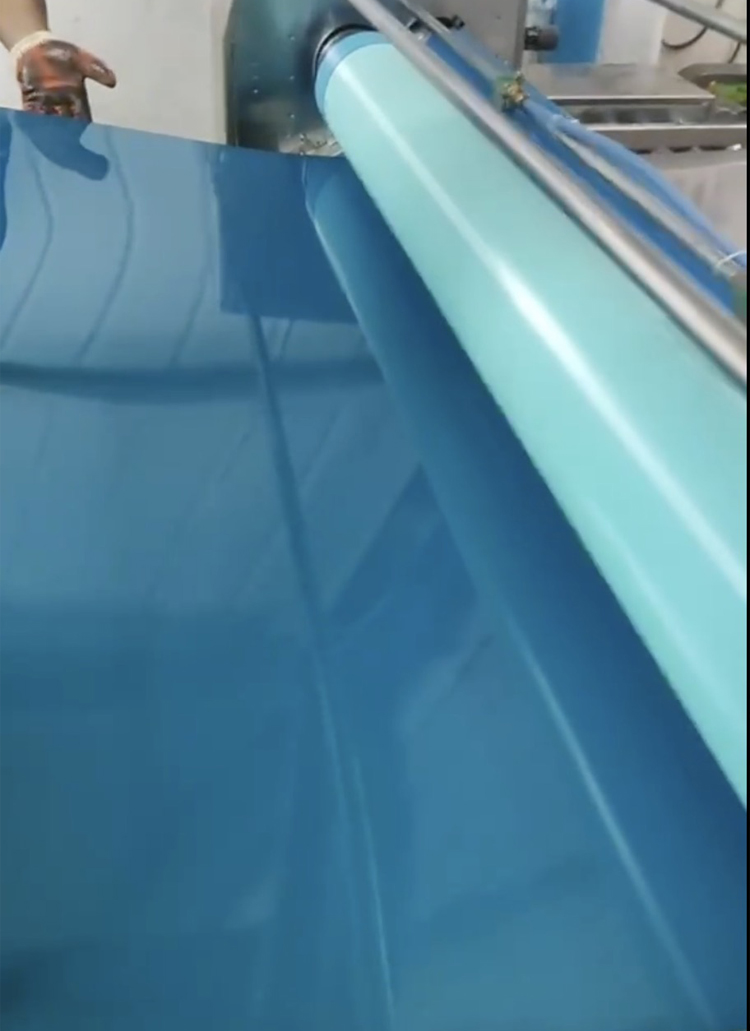
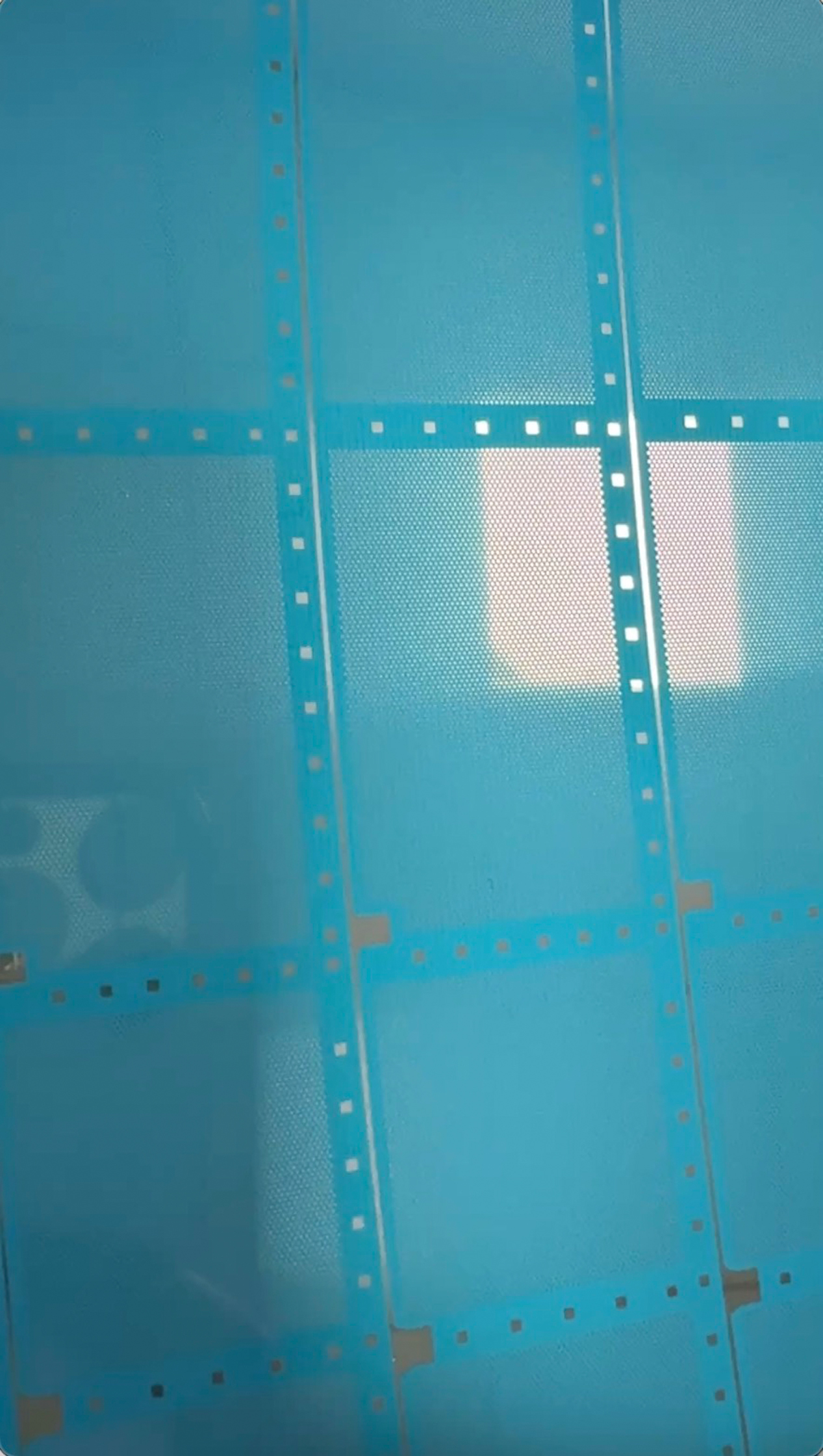
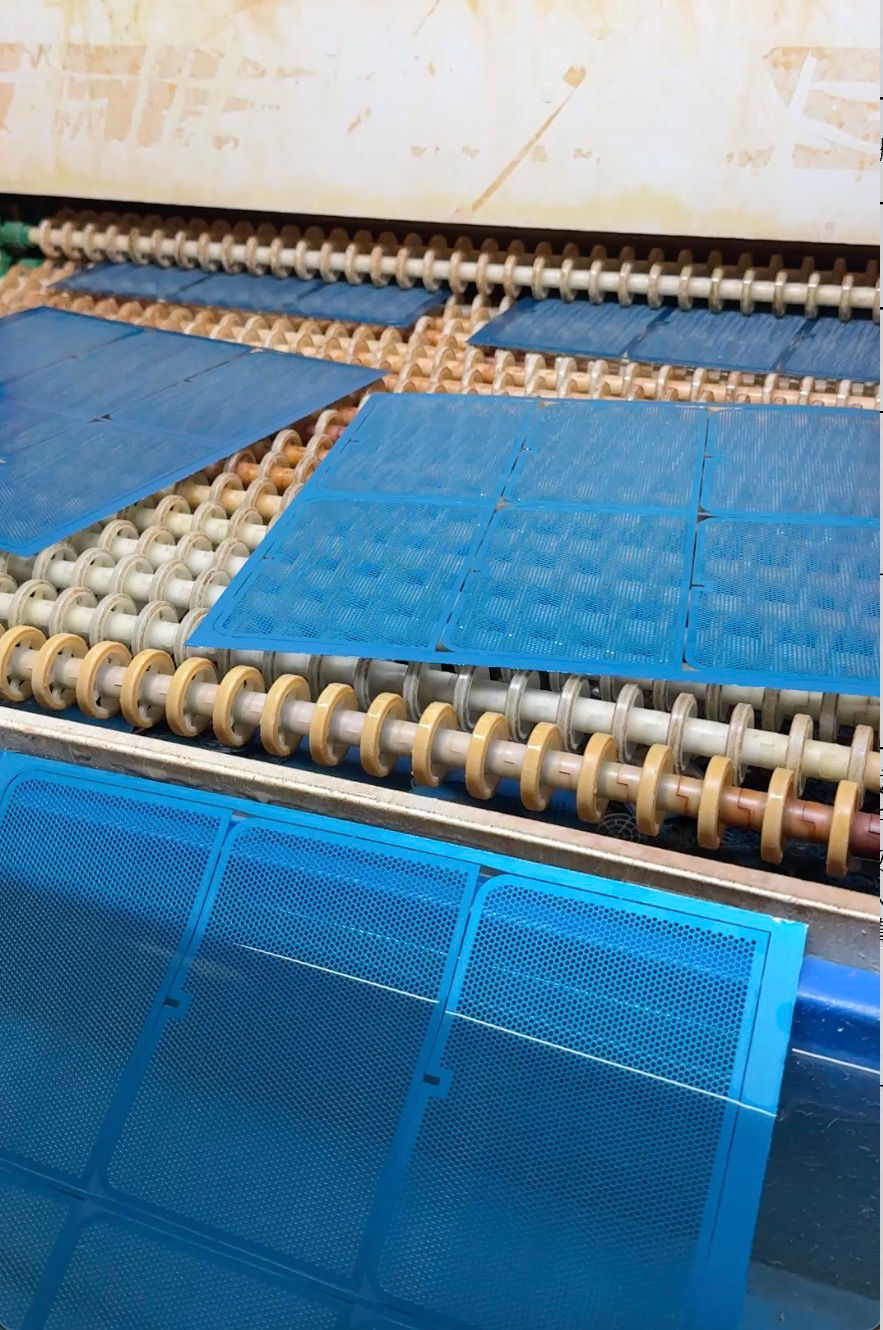
Each batch of photosensitive etch-resist ink is tested in our own pilot line before it ships. Below: typical adhesion, exposure and development checks on production test panels.
Send us your substrate, panel size and the etchant you plan to use. We will send a small sample for trial and a quotation for production volumes.
Stainless steel, copper, brass, aluminium and most other etchable metals. It is widely used in watch parts, jewellery, eyeglass frames, mobile phone shells, decorative panels, industrial templates, electronic components, filter mesh and hardware keypads. The substrate must be thoroughly degreased and oxide-free before coating.
Both. Spray coating gives a uniform 20–30 µm dry film and is the most common method for flat panels. Screen printing uses a 77T–100T mesh and is preferred for selective coverage on already-cut blanks. A dry film thickness of 20–30 µm gives the best combination of resolution and acid resistance.
Pre-bake at 80–90 °C for 10–15 minutes. Expose at 6–8 grid on a 21-grid exposure scale. Develop in 0.8–1.2% Na2CO3 solution at 30 °C ± 2 with spray pressure around 2 kg/cm². Post-bake at 150 °C for 30 minutes when deep etching is required.
Immerse the part in 10% NaOH at 80–90 °C for 5–8 minutes, or in 10% NaOH at 90 °C in an ultrasonic tank for 1–3 minutes. The resist lifts off cleanly without attacking the underlying metal when the developer and stripper concentrations are kept within the recommended ranges.
Store sealed in a cool, dry, dark room below 25 °C. Shelf life is approximately six months in the original sealed container. Do not expose to white light or sunlight for long periods during use or storage. The product is flammable — keep away from open flames during storage and use.
Not recommended. The ink is formulated for a specific solvent system; an off-the-shelf thinner can cause phase separation, scum, or loss of resolution. If you have to use a different thinner for any reason, run a small compatibility test on a sample panel before committing to a production batch.
Yes. A full technical data sheet covering all of the specifications on this page, and an MSDS covering handling, first aid, transport and disposal, are available on request. The MSDS also covers the recommended thinner and the NaOH stripper.