
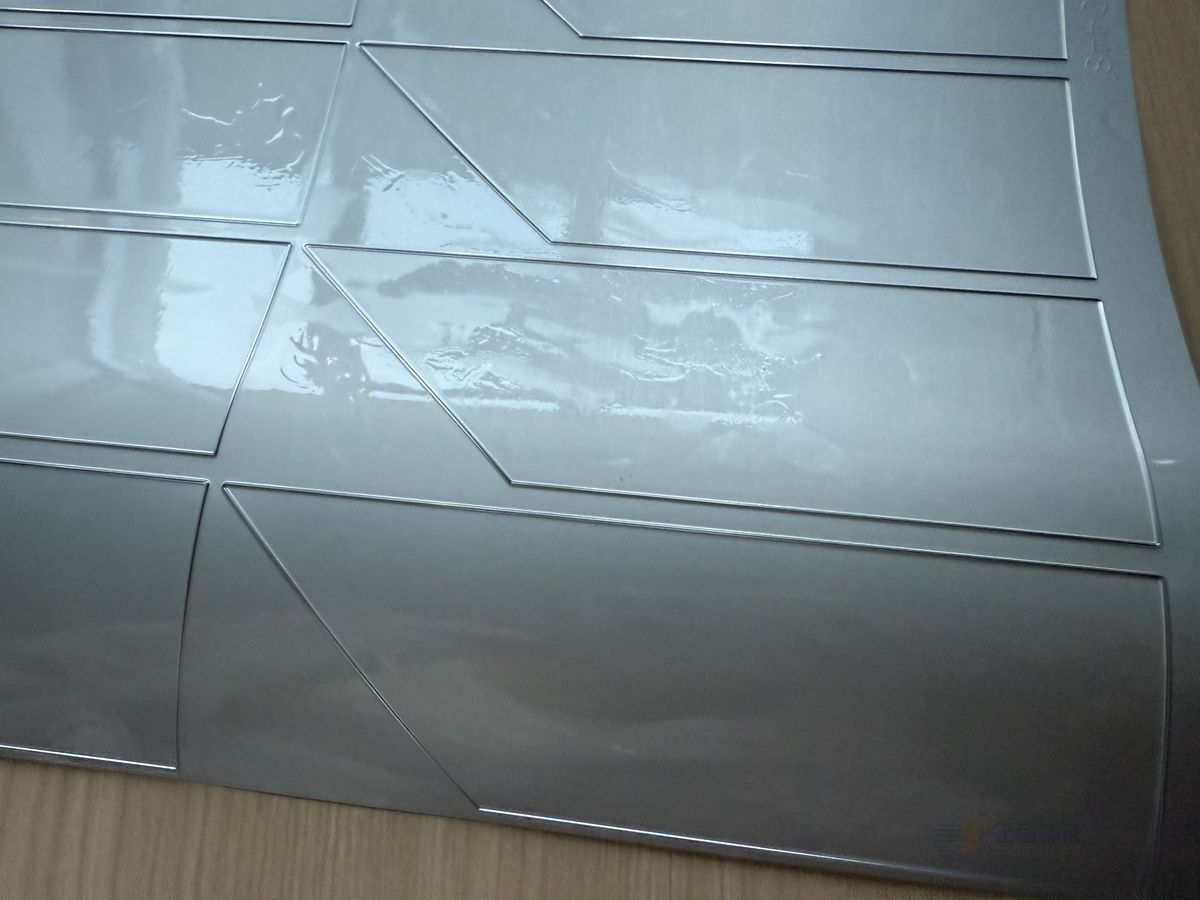
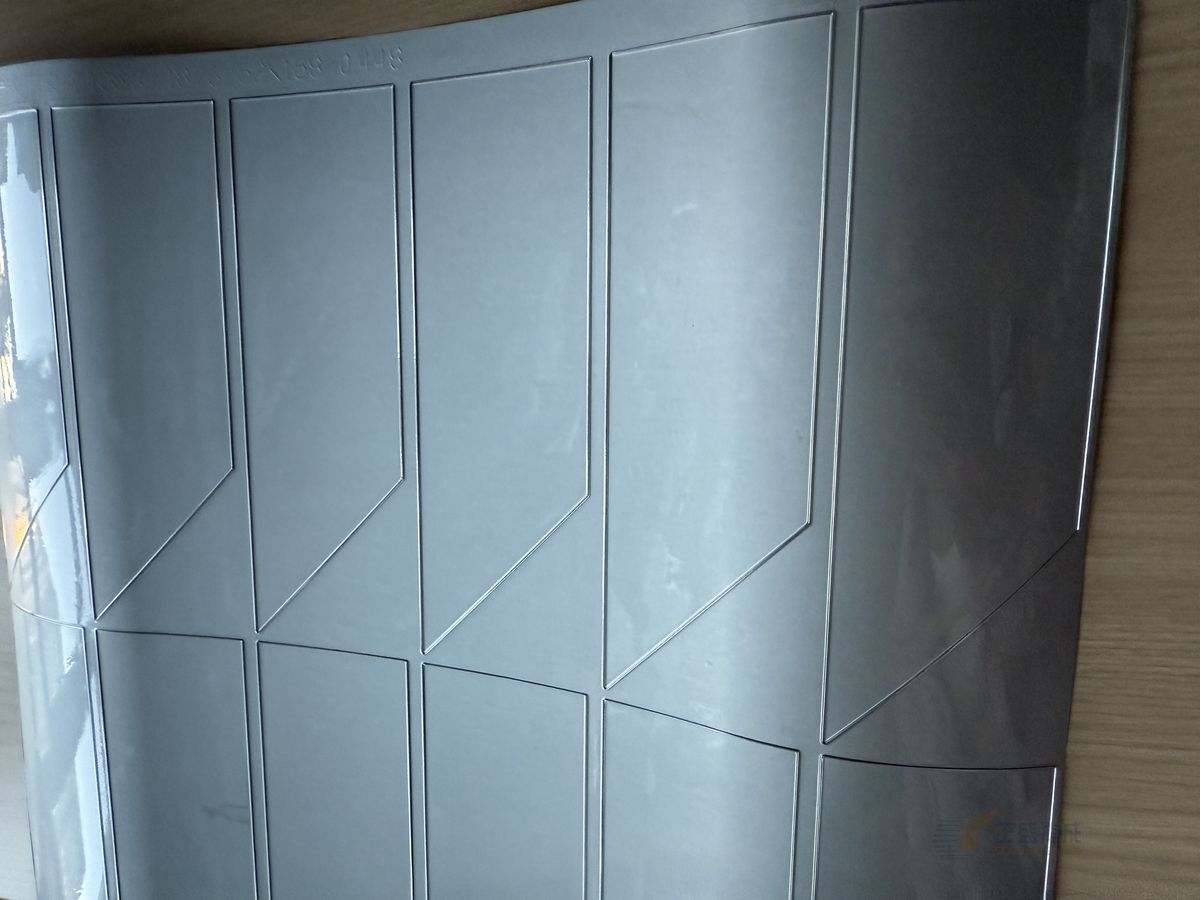
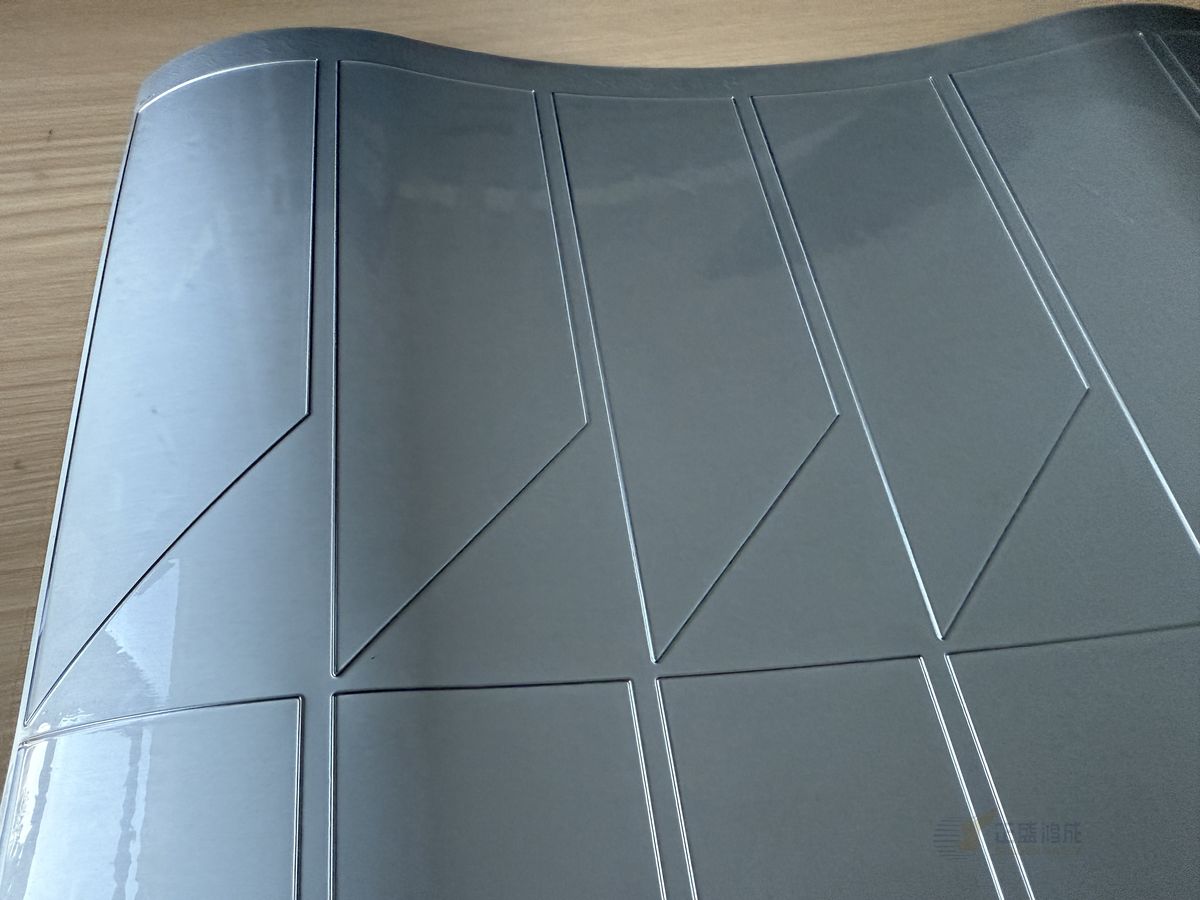
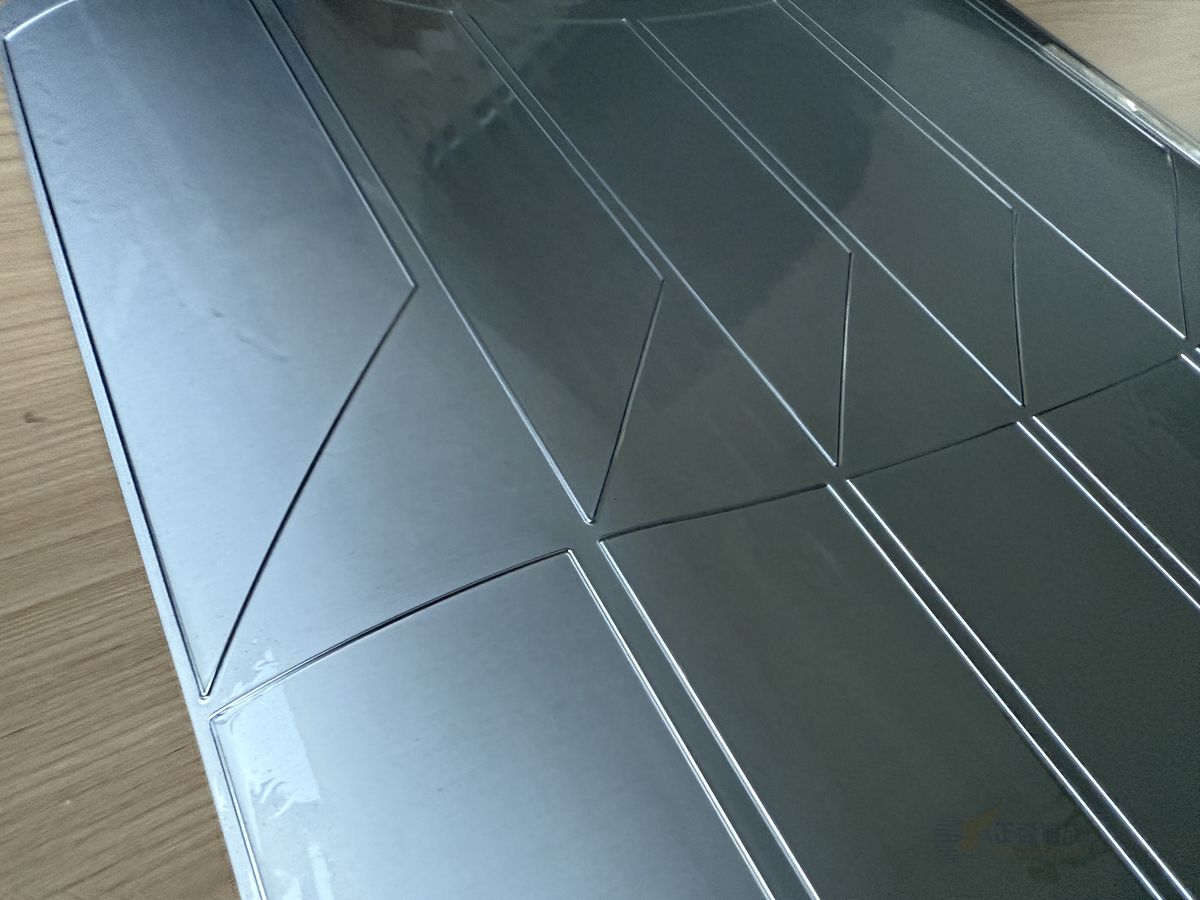
52 workshop photographs of flexible dies etched on a GE-DB5060 cutting-die etching machine — shown next to the labels, tags and strips they cut.
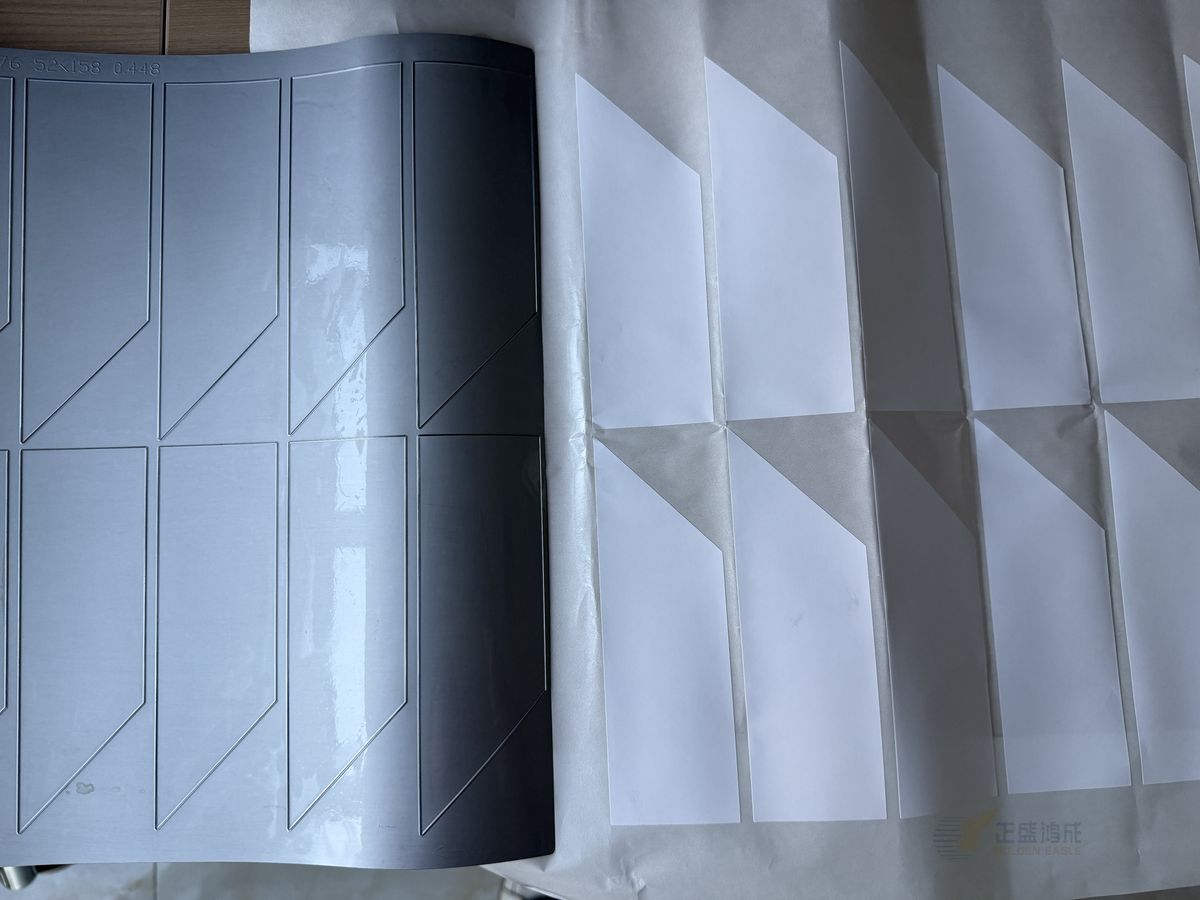
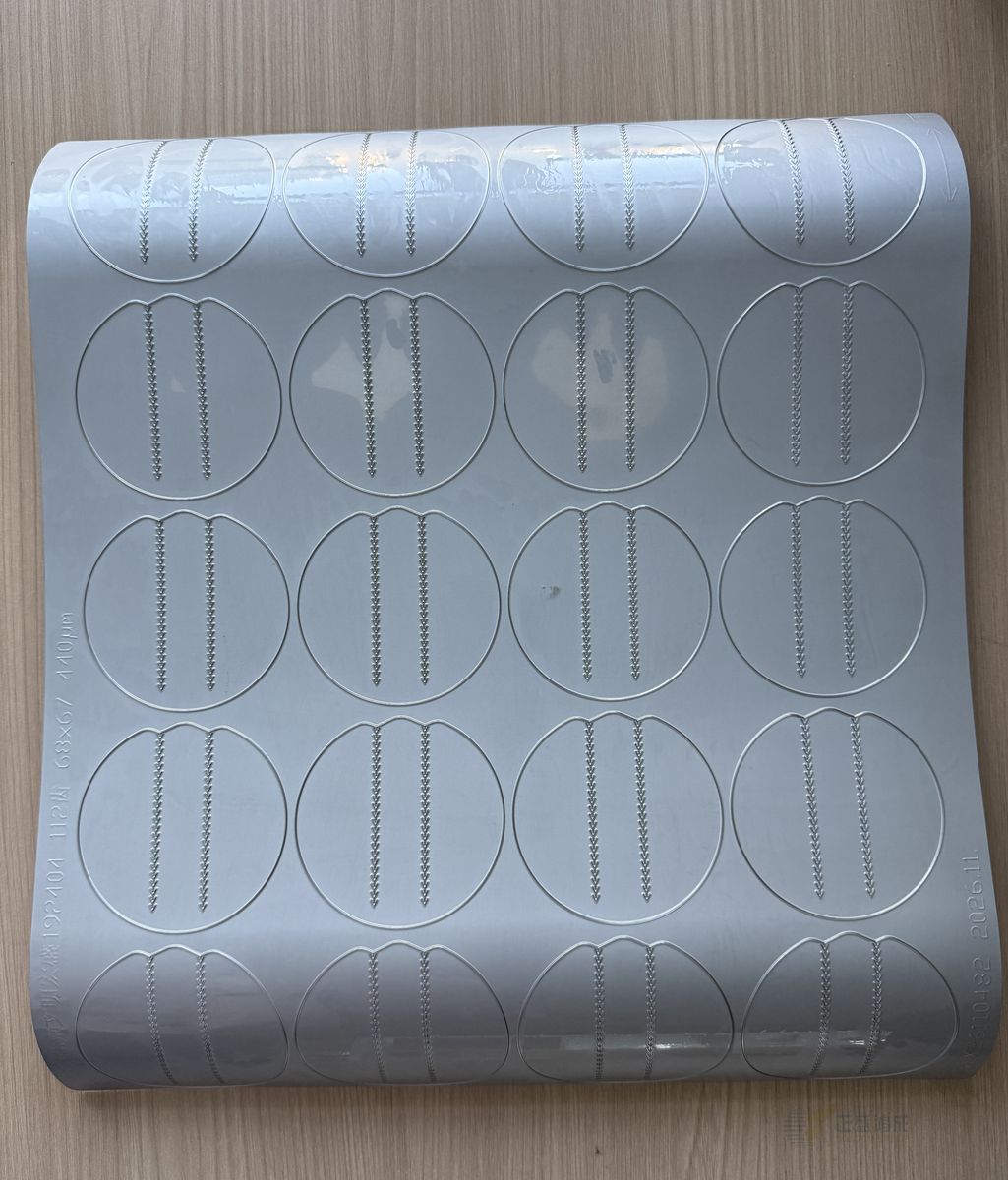
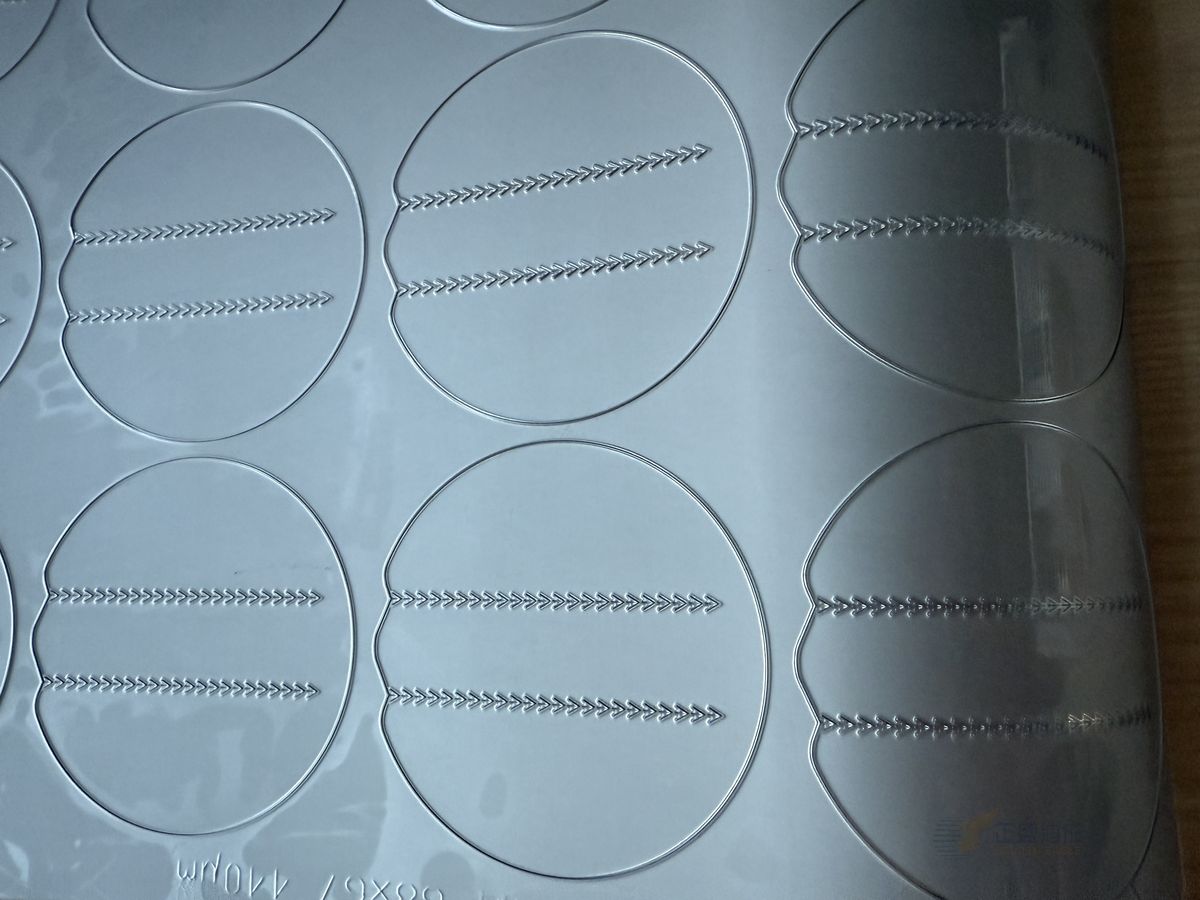
Every die on this page was etched in our own workshop on a Golden Eagle GE-DB5060 cutting-die etching machine. They are not catalogue renderings and not customer property — they are sample runs we make to prove what the line produces. Flexible die stock runs 0.4 – 1.5 mm (a rigid cutting die runs 0.4 – 5 mm); the dies photographed here are etched from 0.44 mm (440 µm) stock; on several sheets that figure is etched into the margin next to the job number and the repeat size.
In a chemically etched flexible die the outline blade, the dashed perforation teeth and the micro-ties that hold the waste matrix together are all formed in a single etching pass. That is why the blade height stays even across the whole sheet, and why an awkward contour costs no more to produce than a plain rectangle. The finished die is a thin steel sheet, so it wraps onto a magnetic cylinder and stores flat.
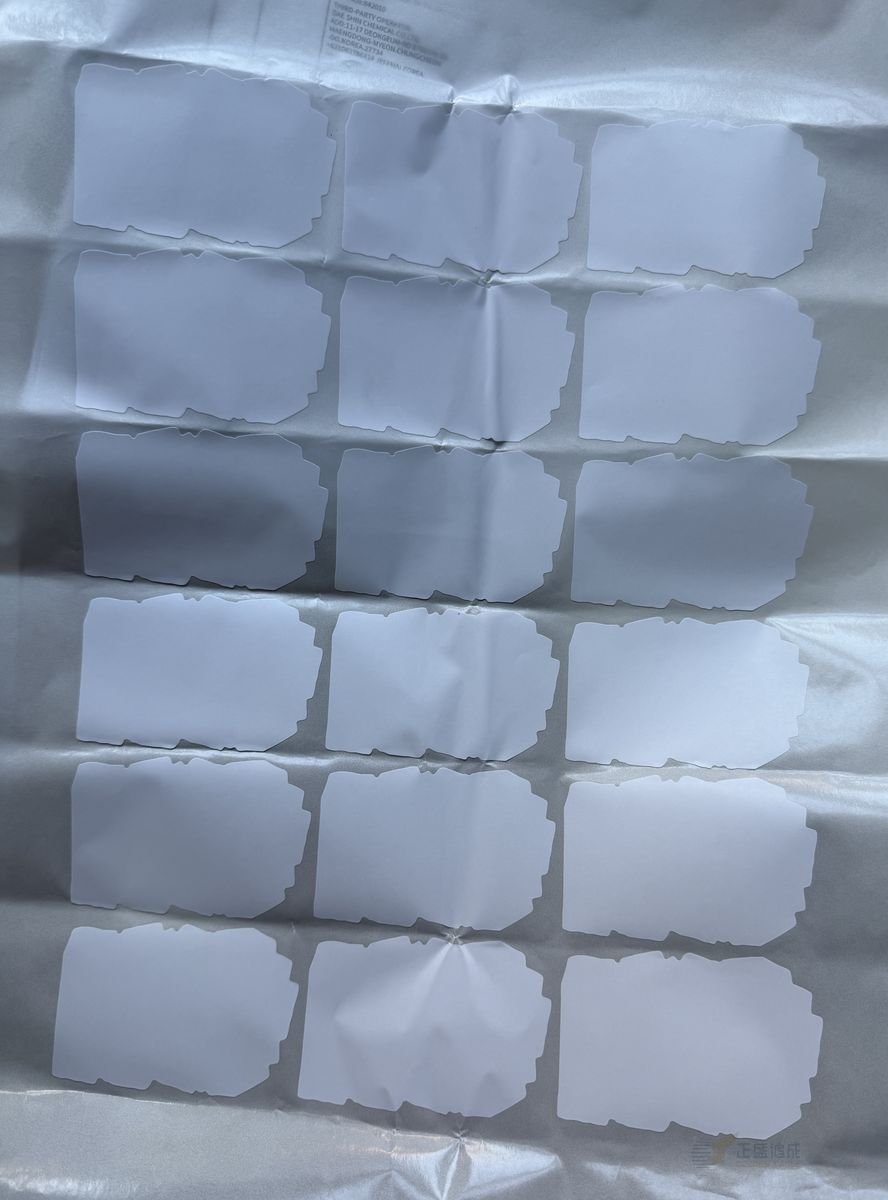
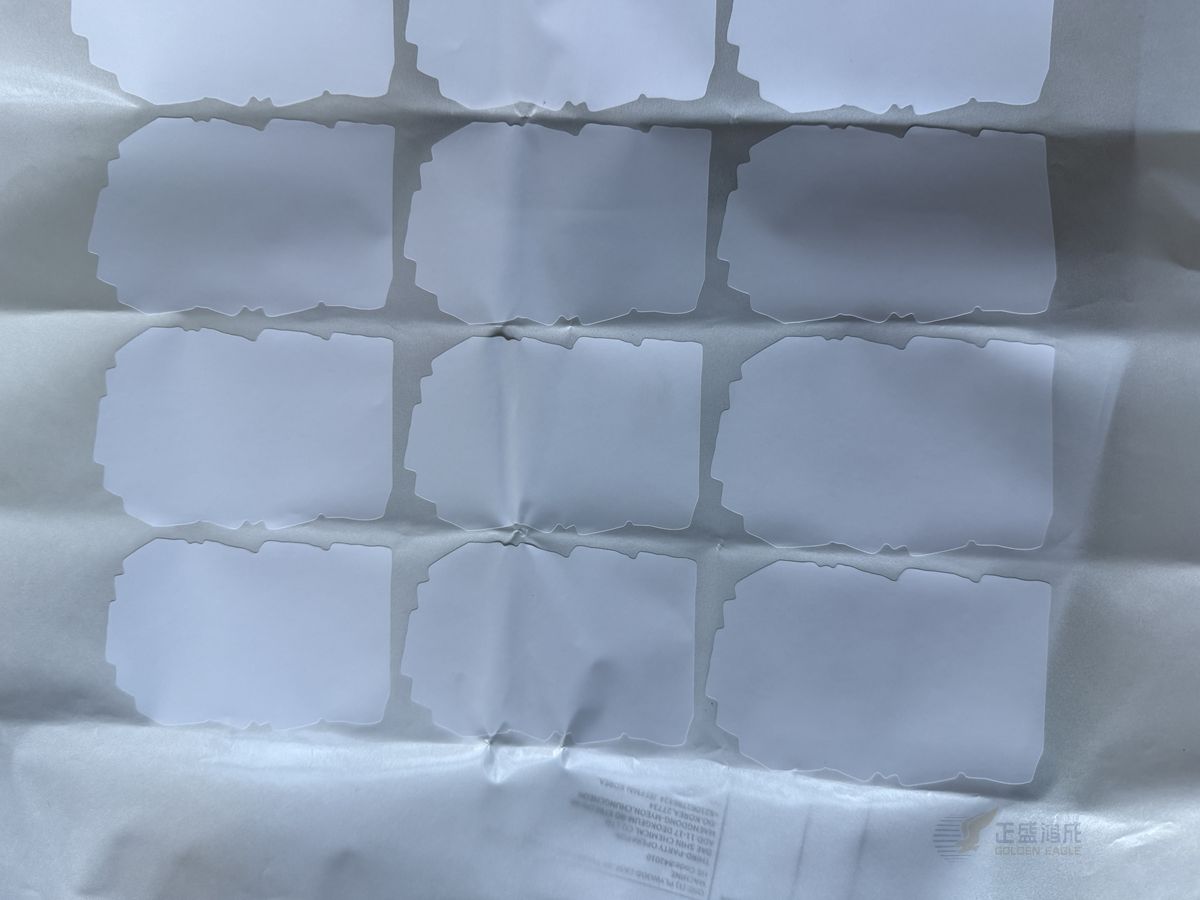
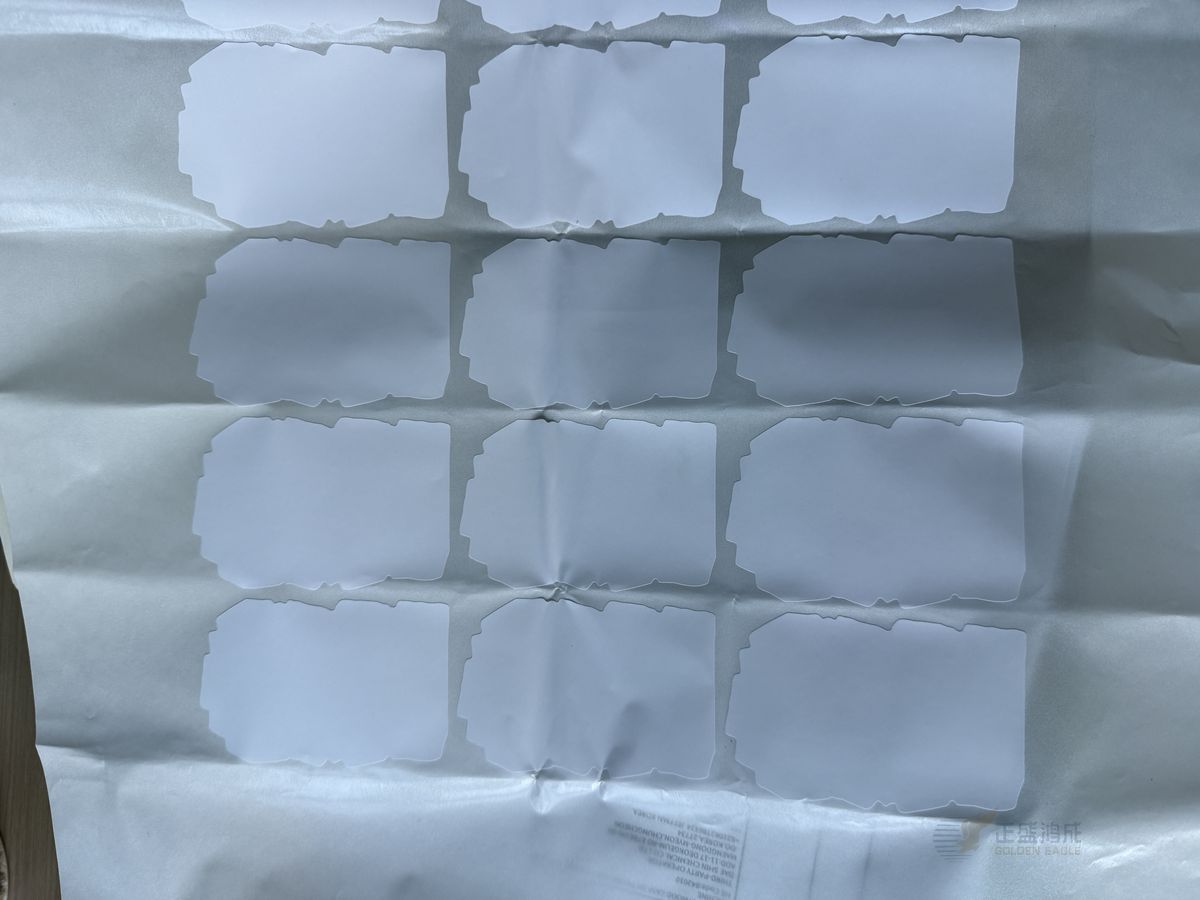
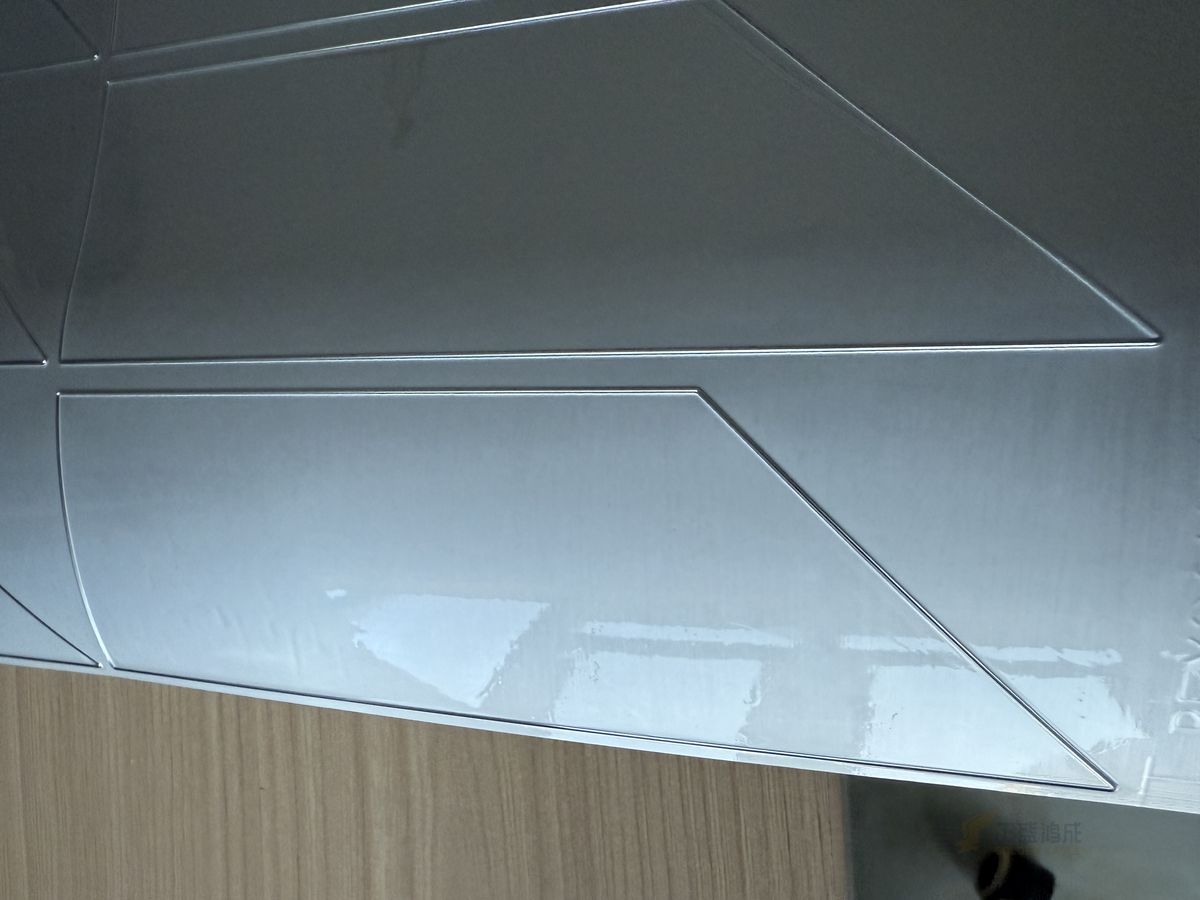
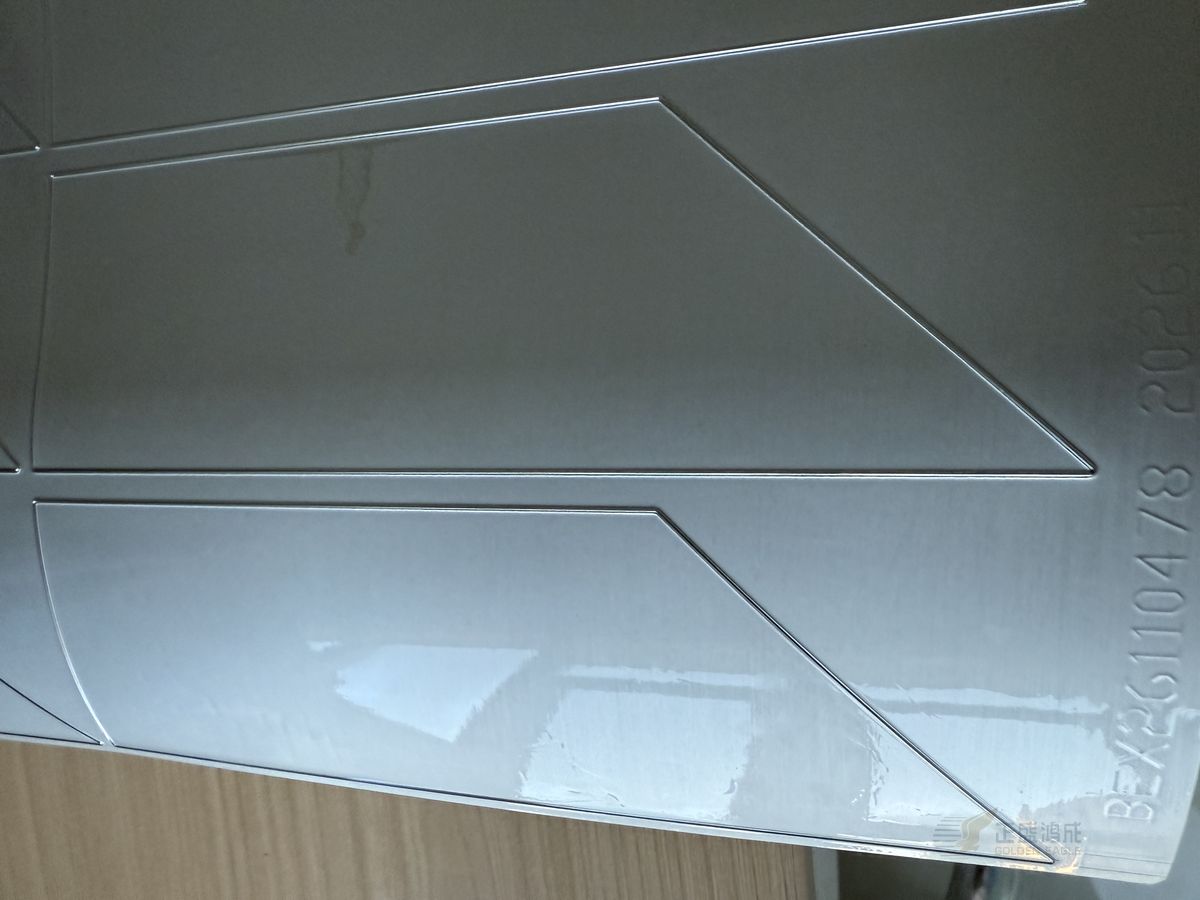
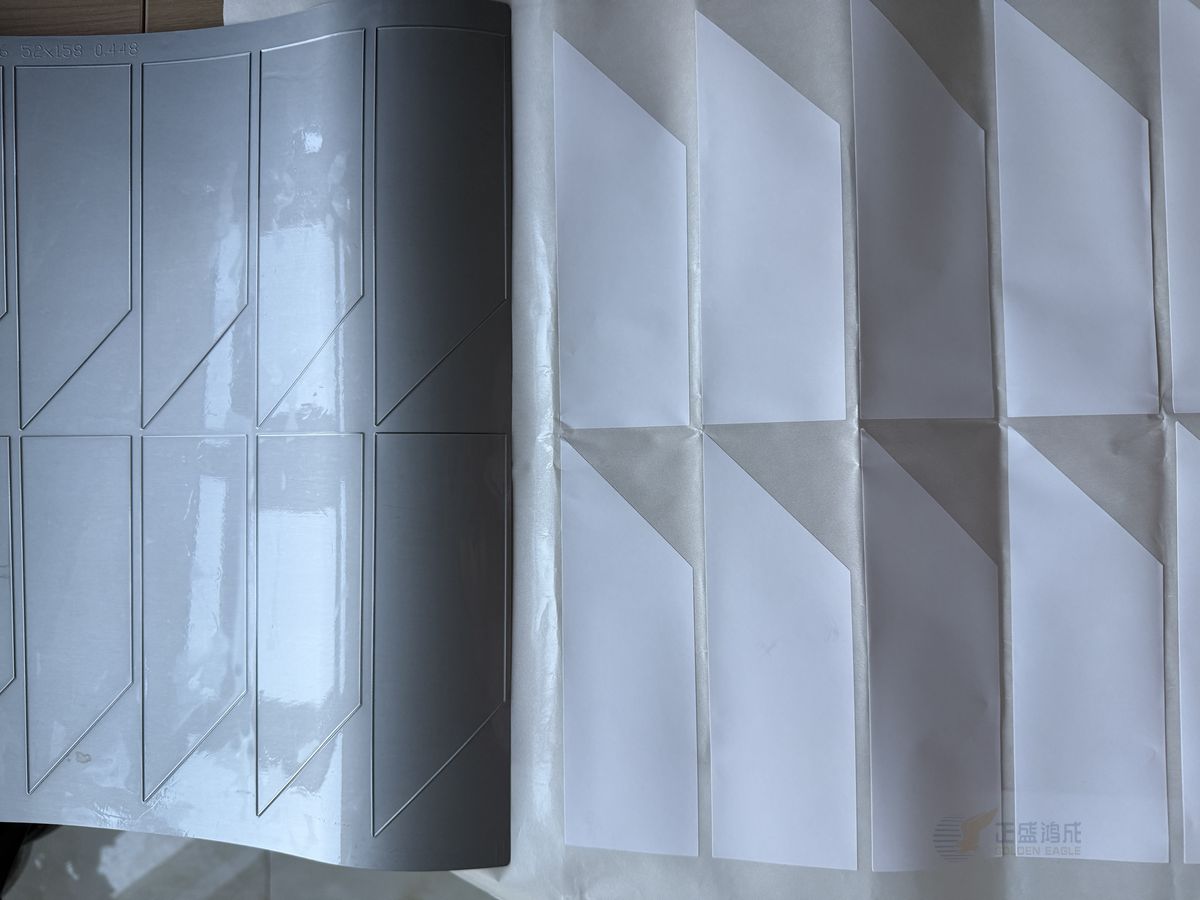
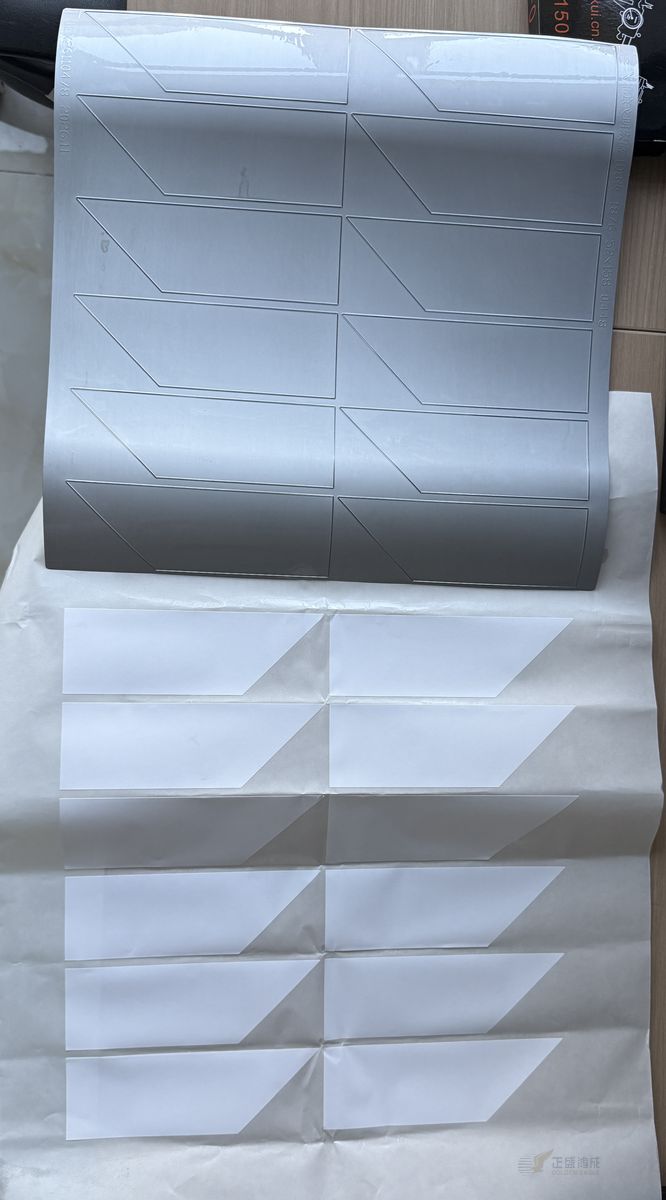
Where a photograph shows a die next to white paper shapes, that paper was cut by the die beside it. Those pairs are the fastest way to judge any die: the cut profile should follow the blade outline exactly, with clean corners and no tearing at the perforations.
Jump to: Curved-Blade Flexible Dies · Tag and Label Dies with Perforation · Ornate and Irregular Contours · Round and Oval Dies · Tapered Strip Dies · Angled and Chevron Shapes
Long, continuous curved blade lines — the hardest profile to hold at an even height on a mechanically ground die, and the clearest demonstration of what chemical etching does well. Several photographs show the sheet flexed by hand: the blade does not chip or crack.
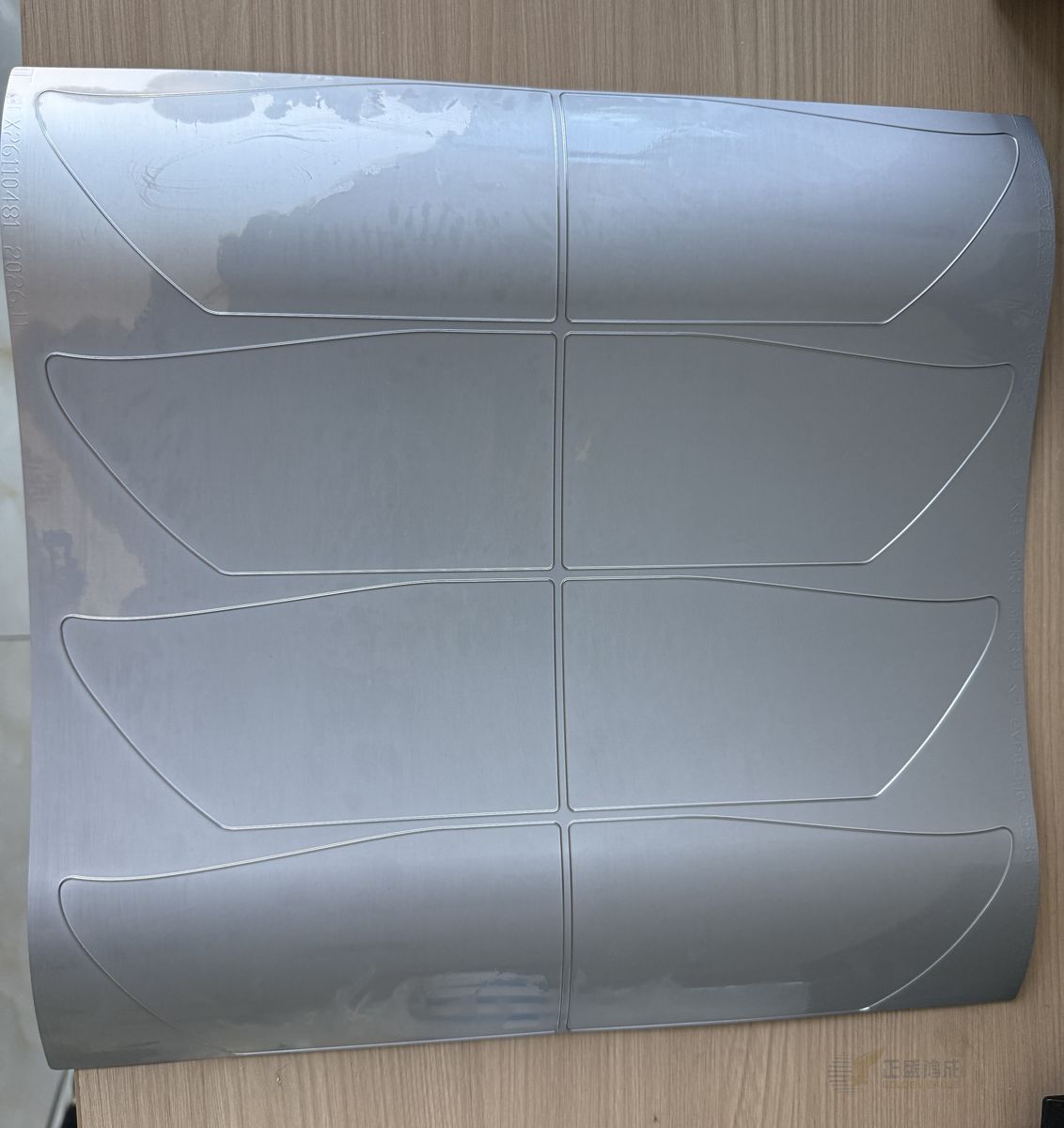
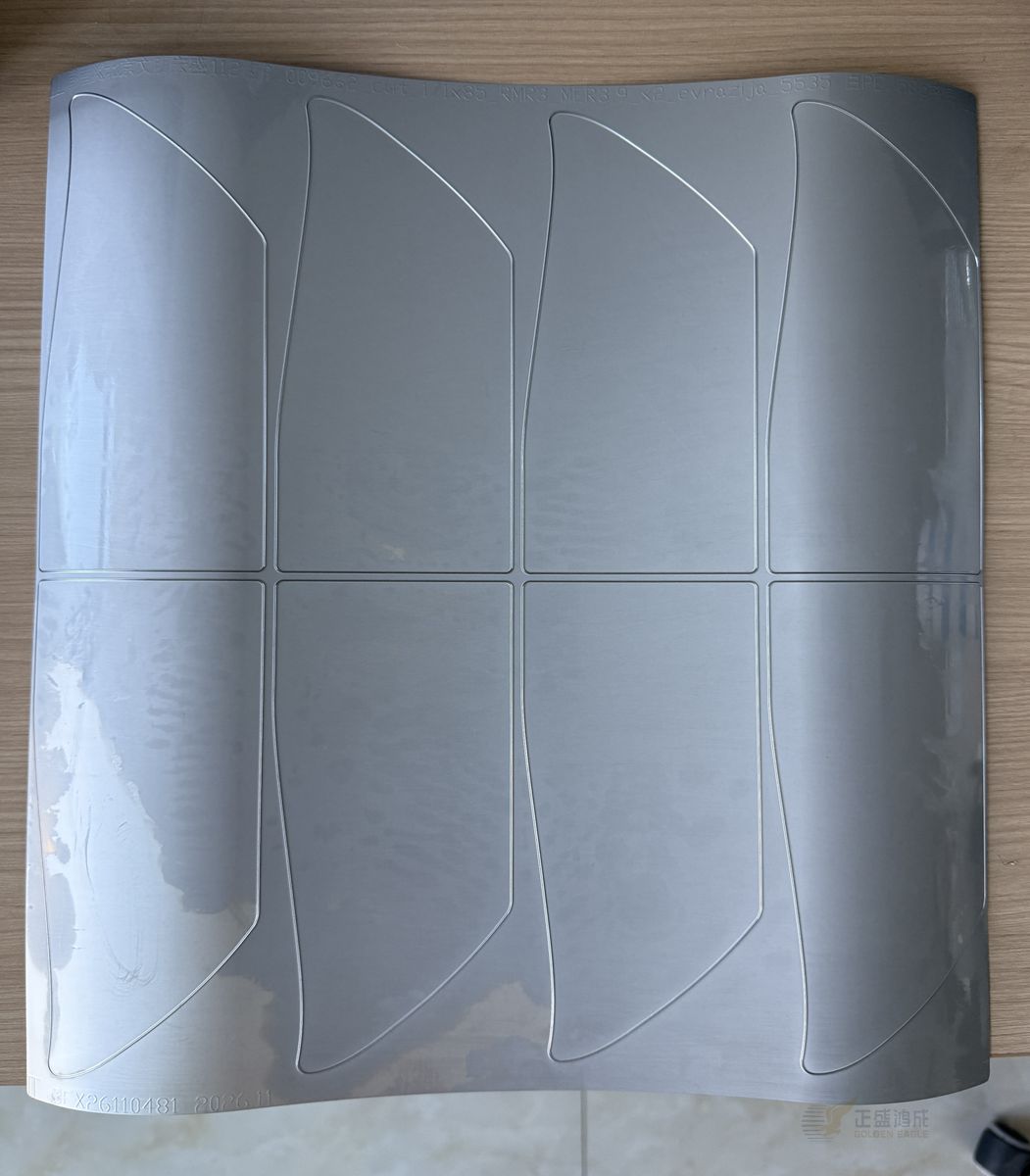
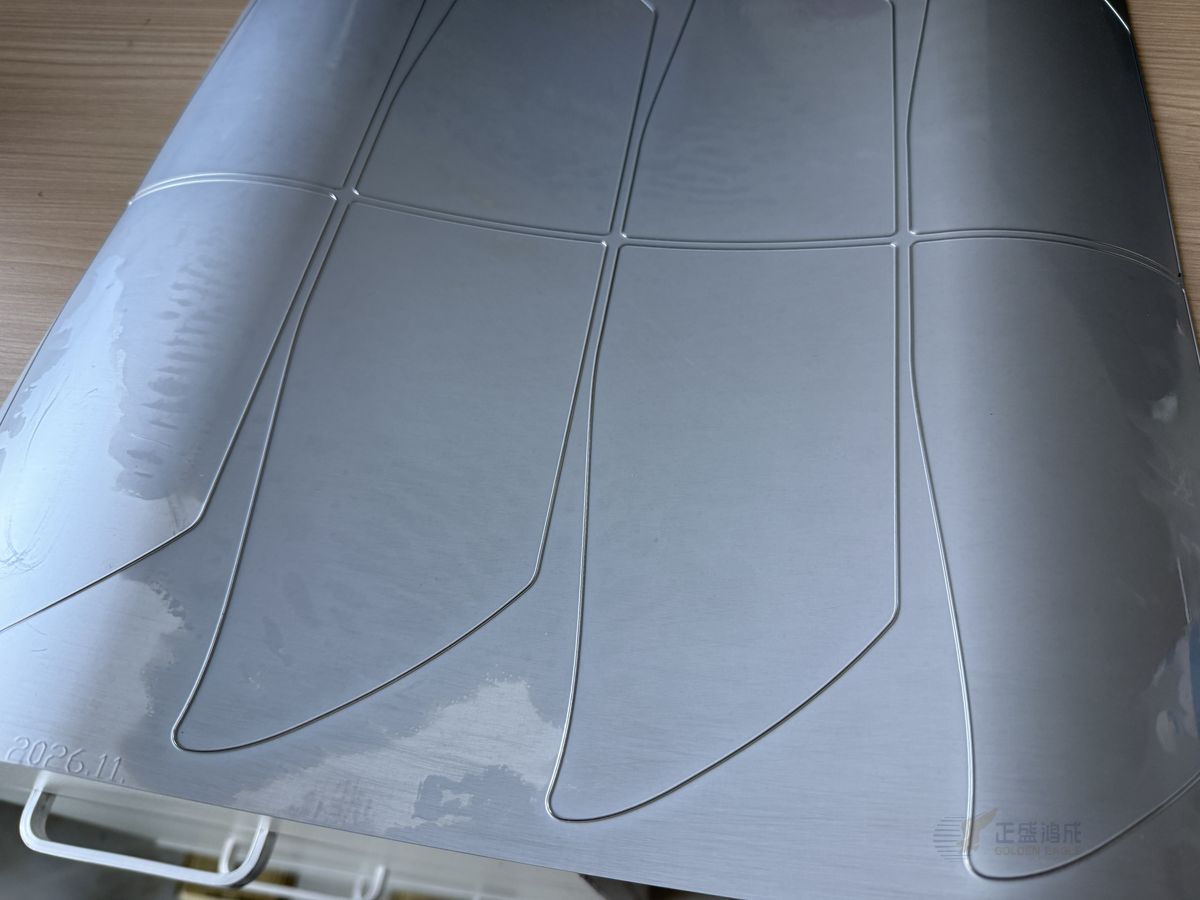
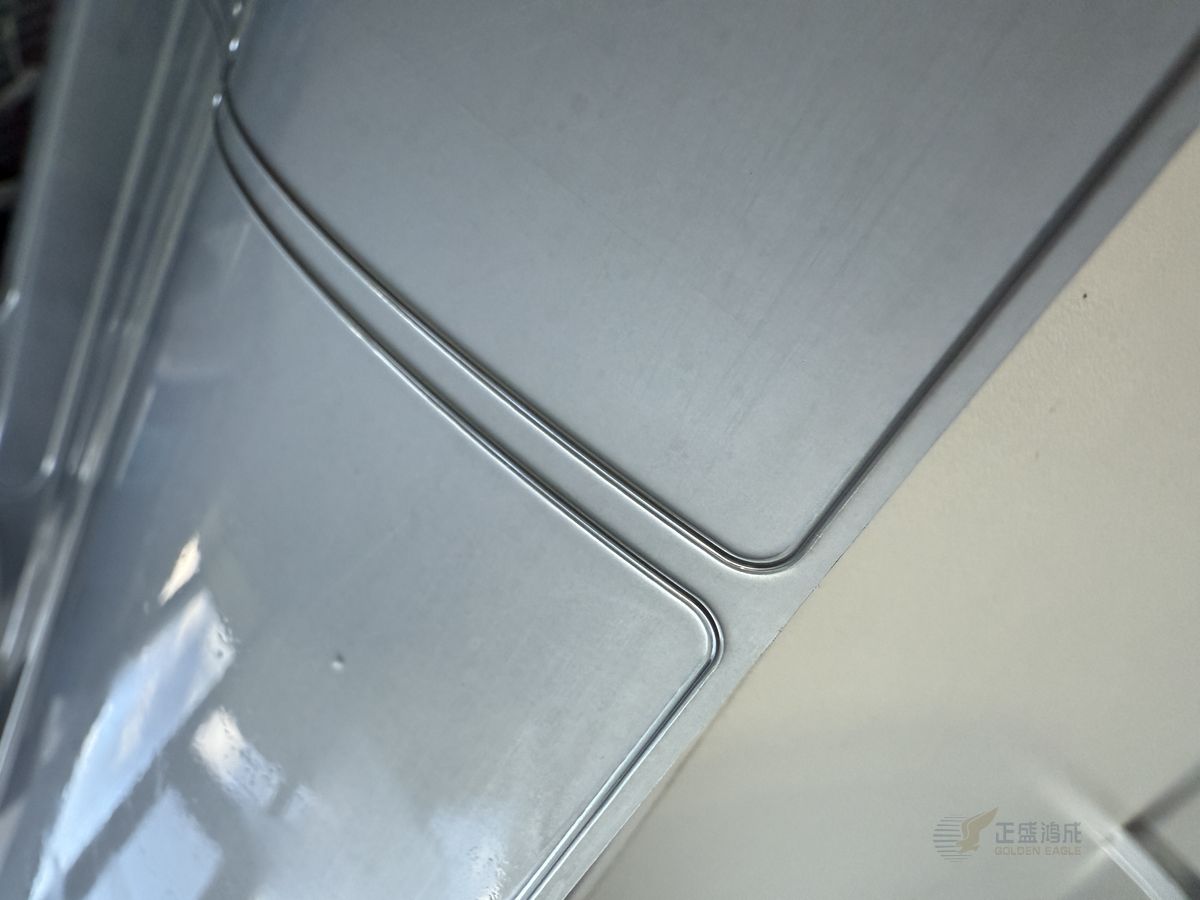
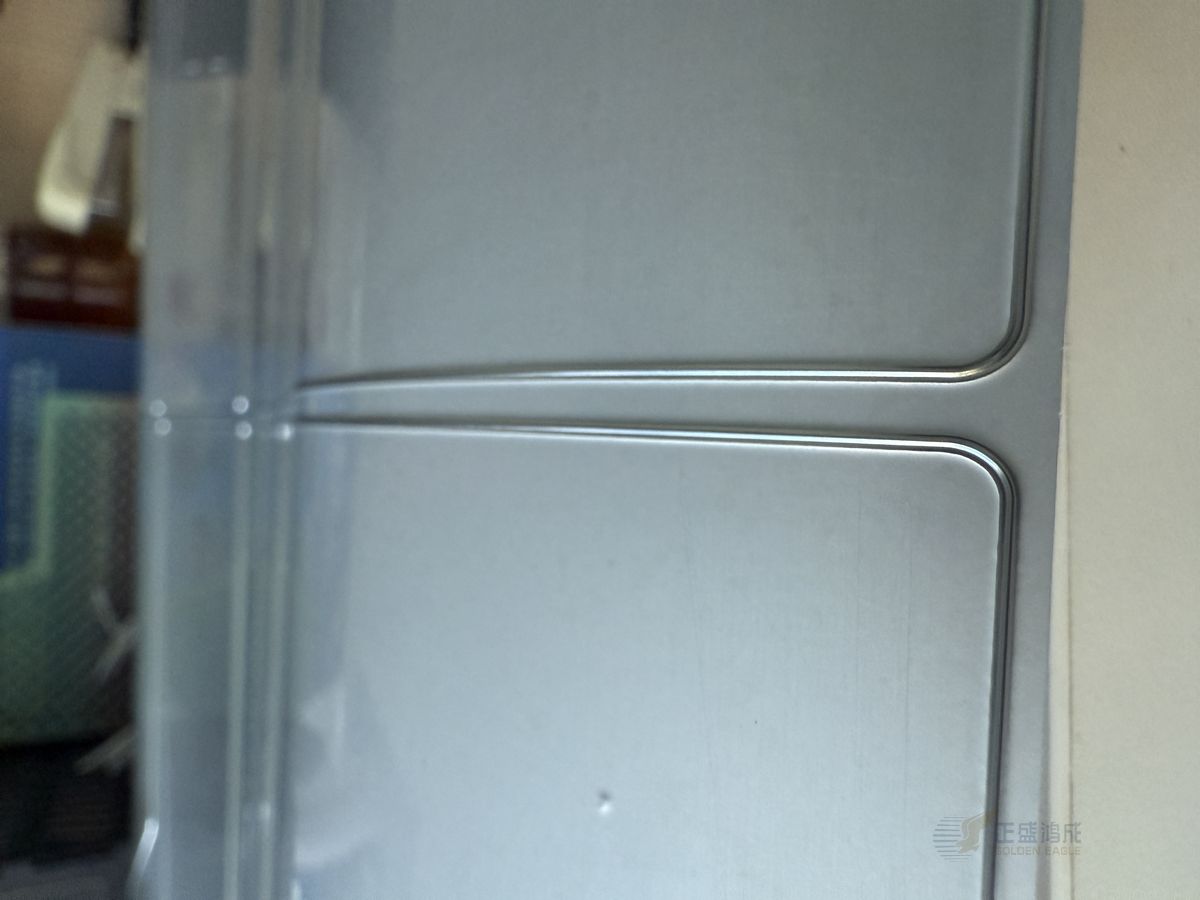
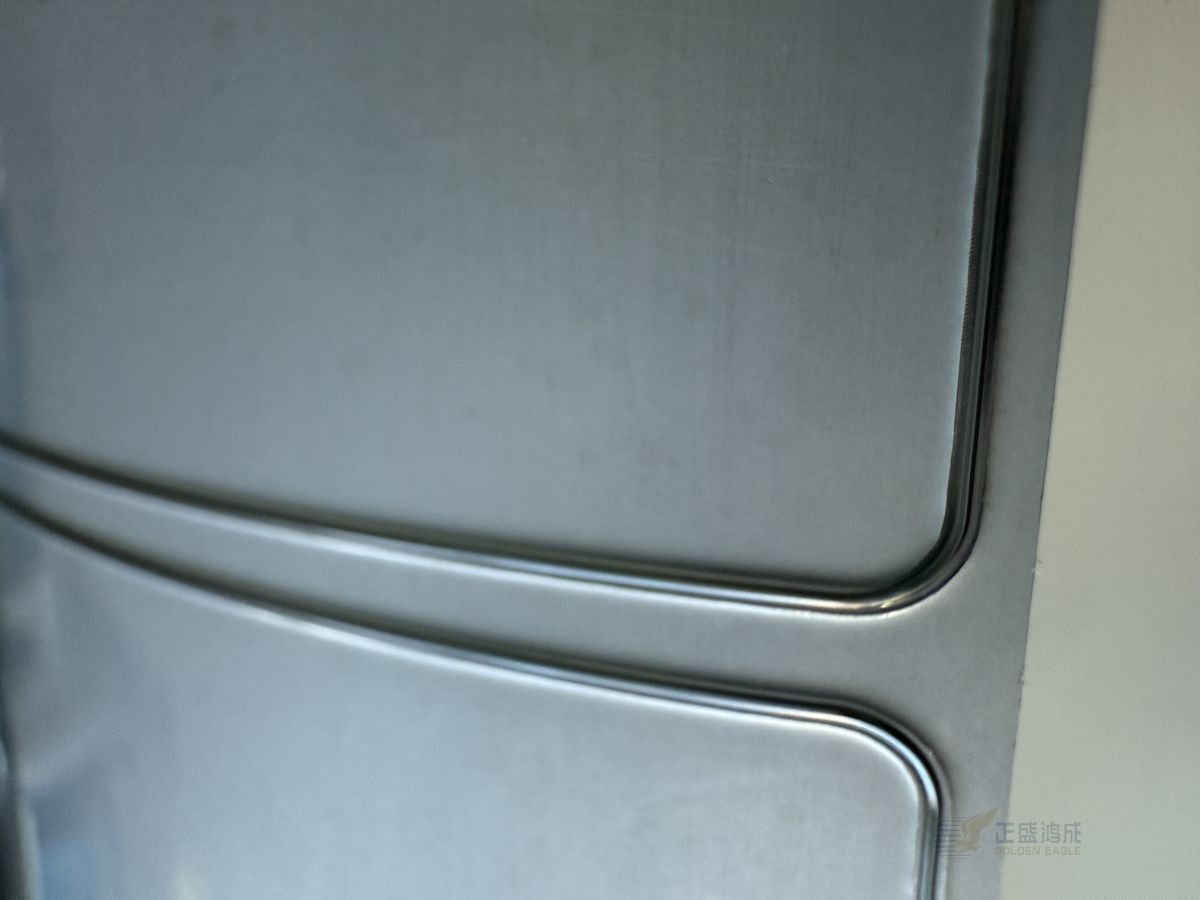
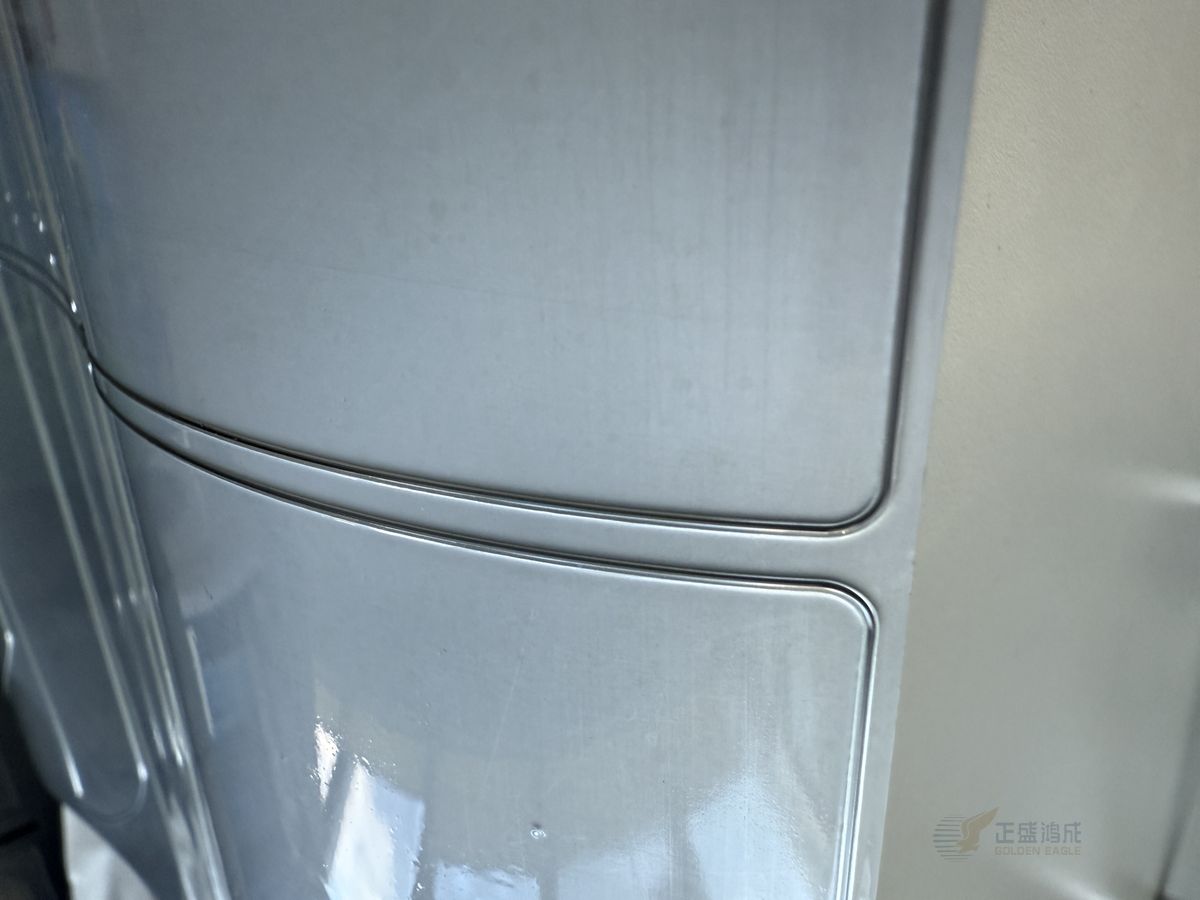
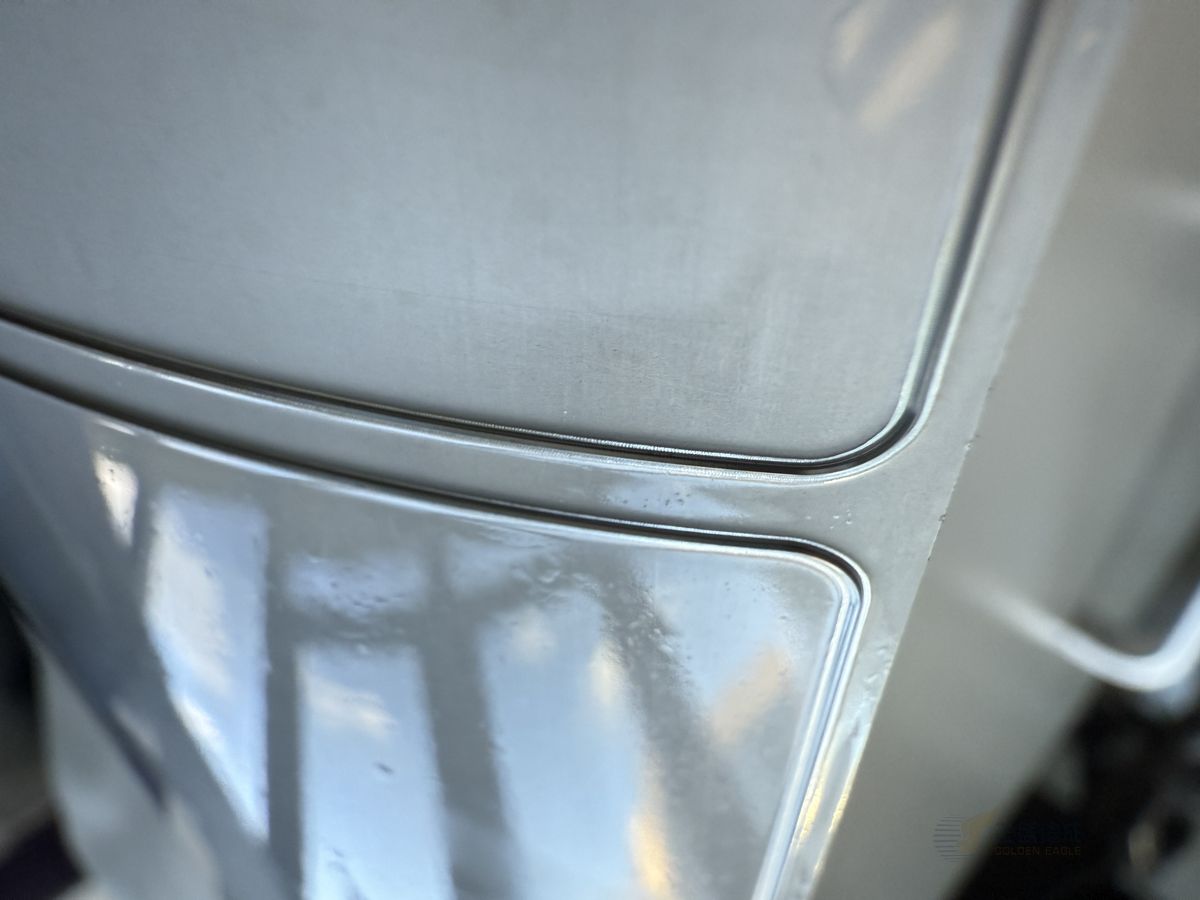
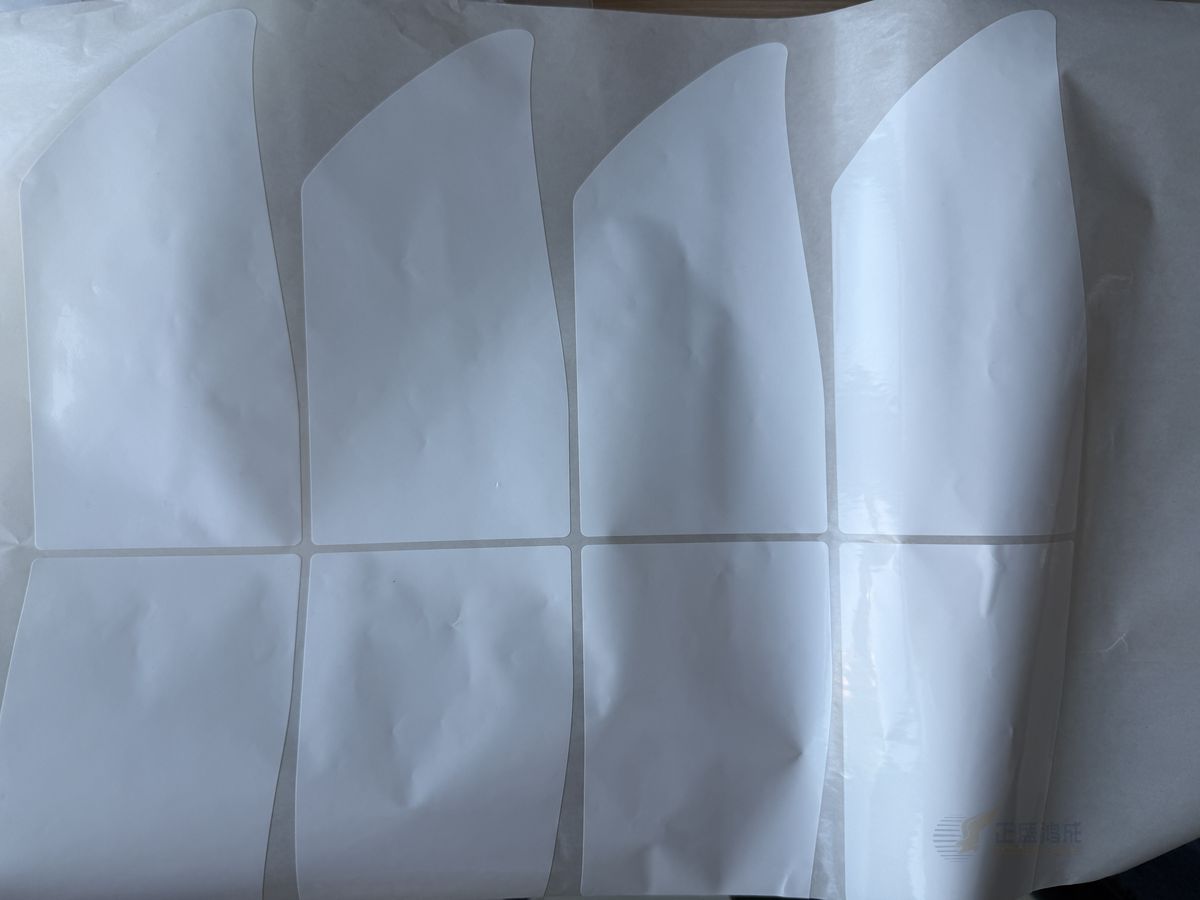
Outline blade, dashed perforation teeth and the micro-ties that hold the waste matrix together are all etched in the same pass. On a ground die each of those features is a separate operation.
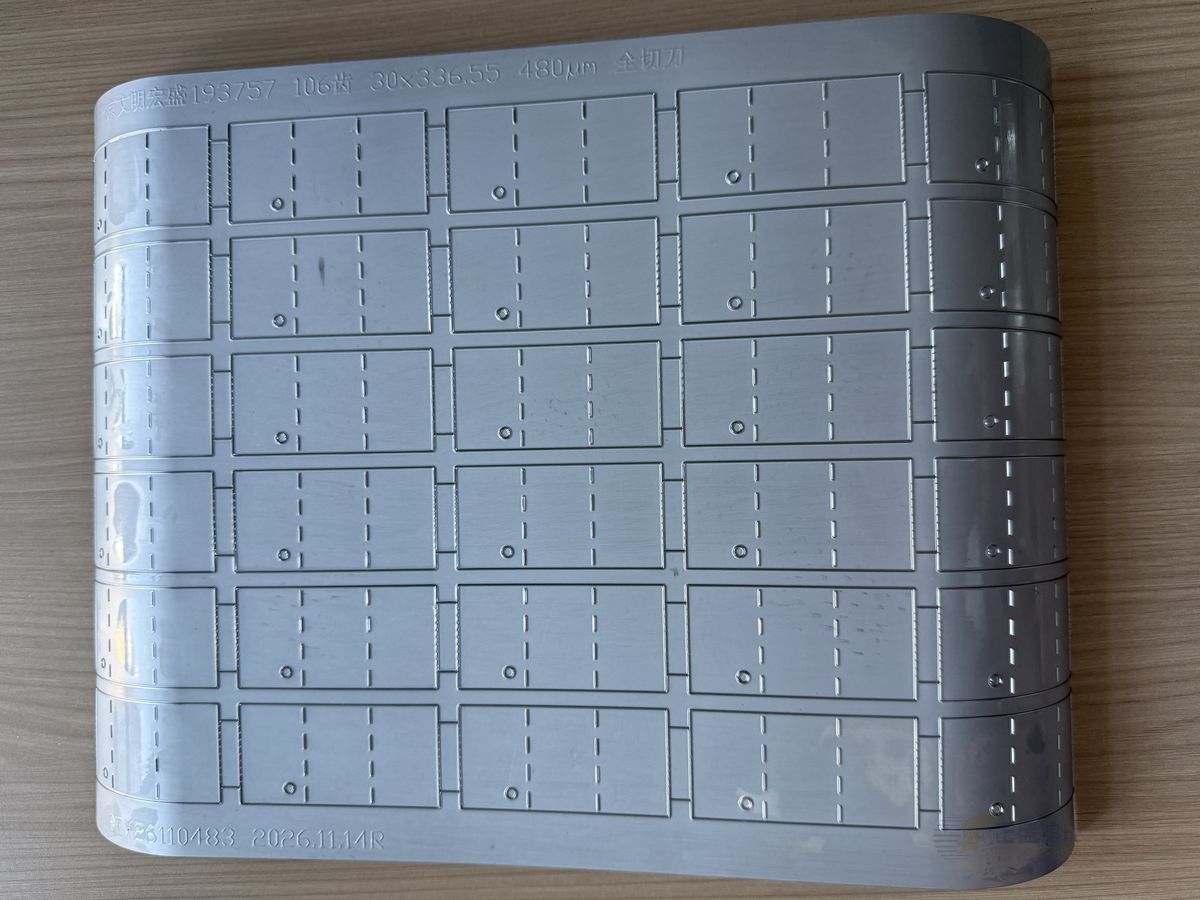
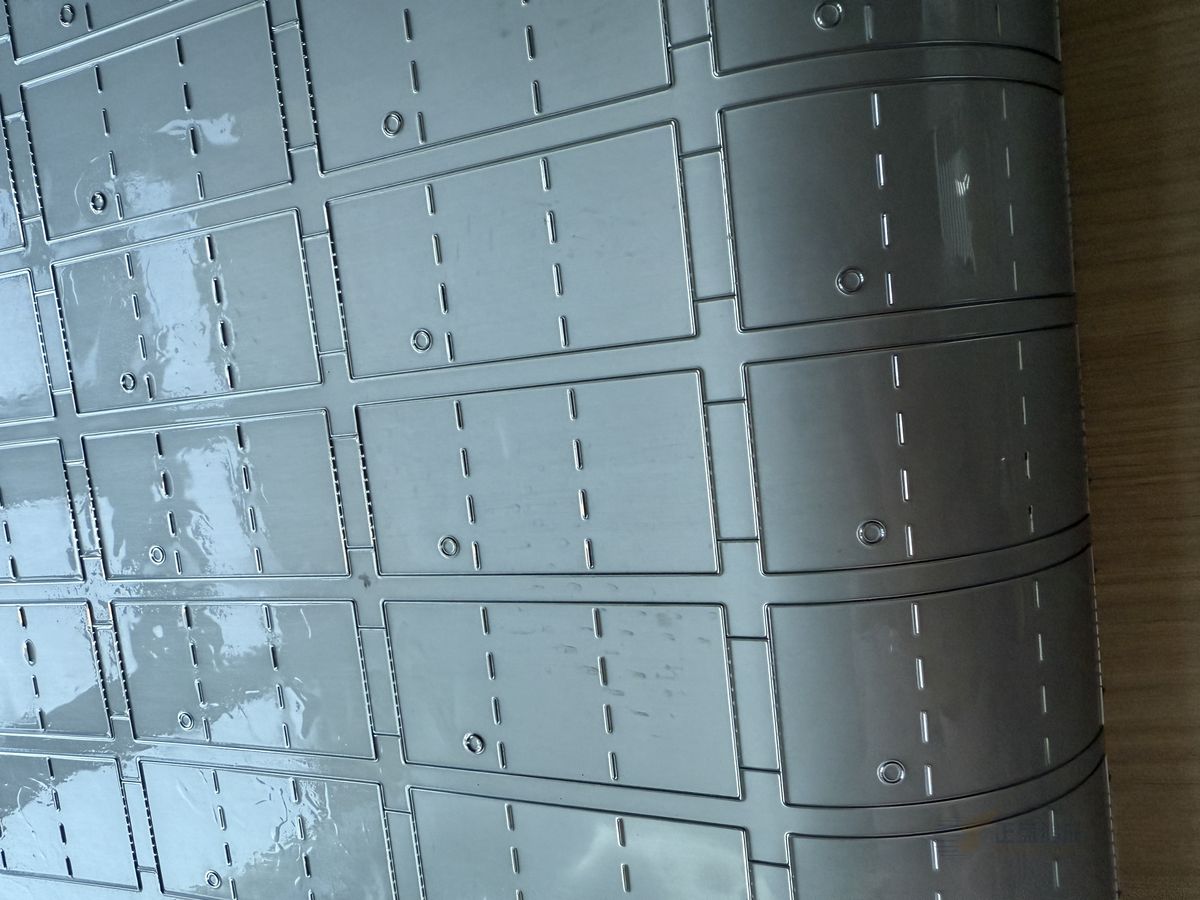
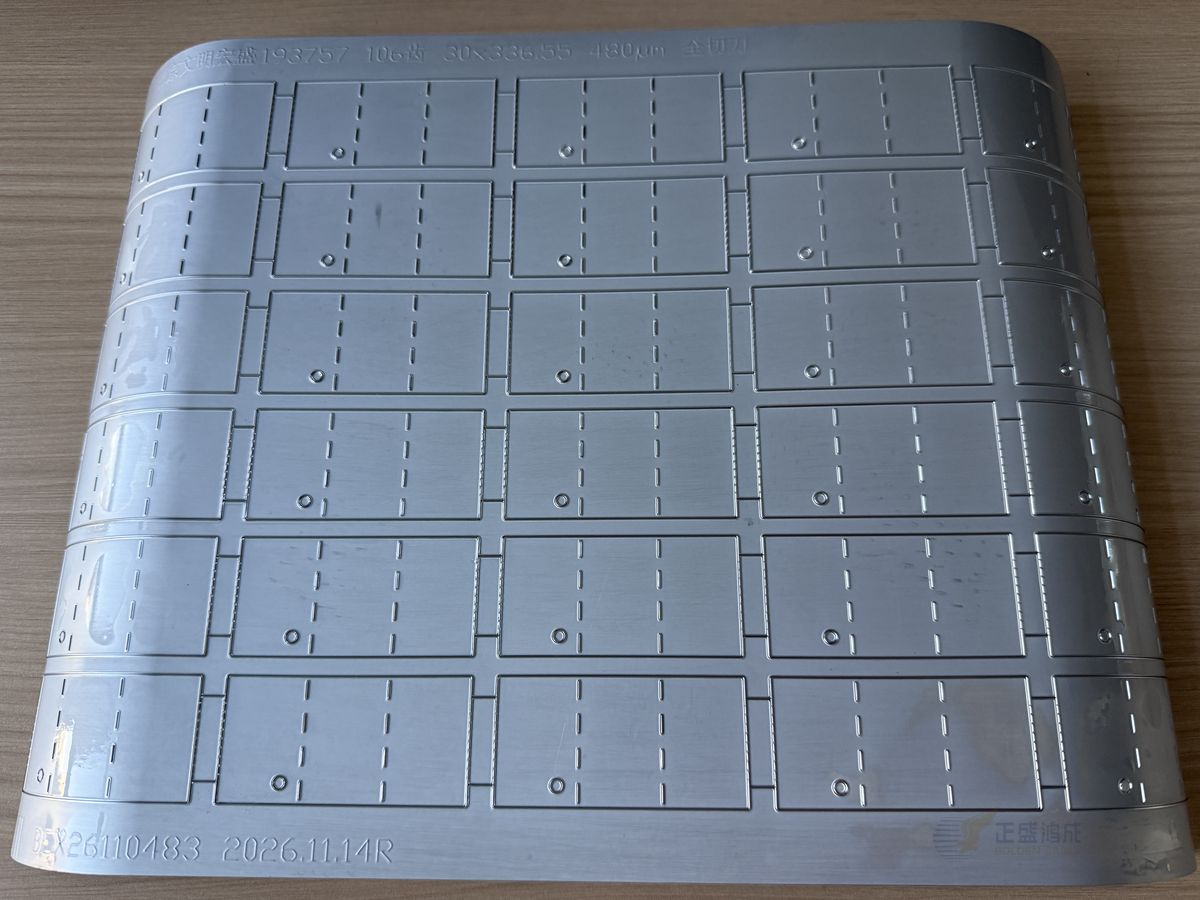
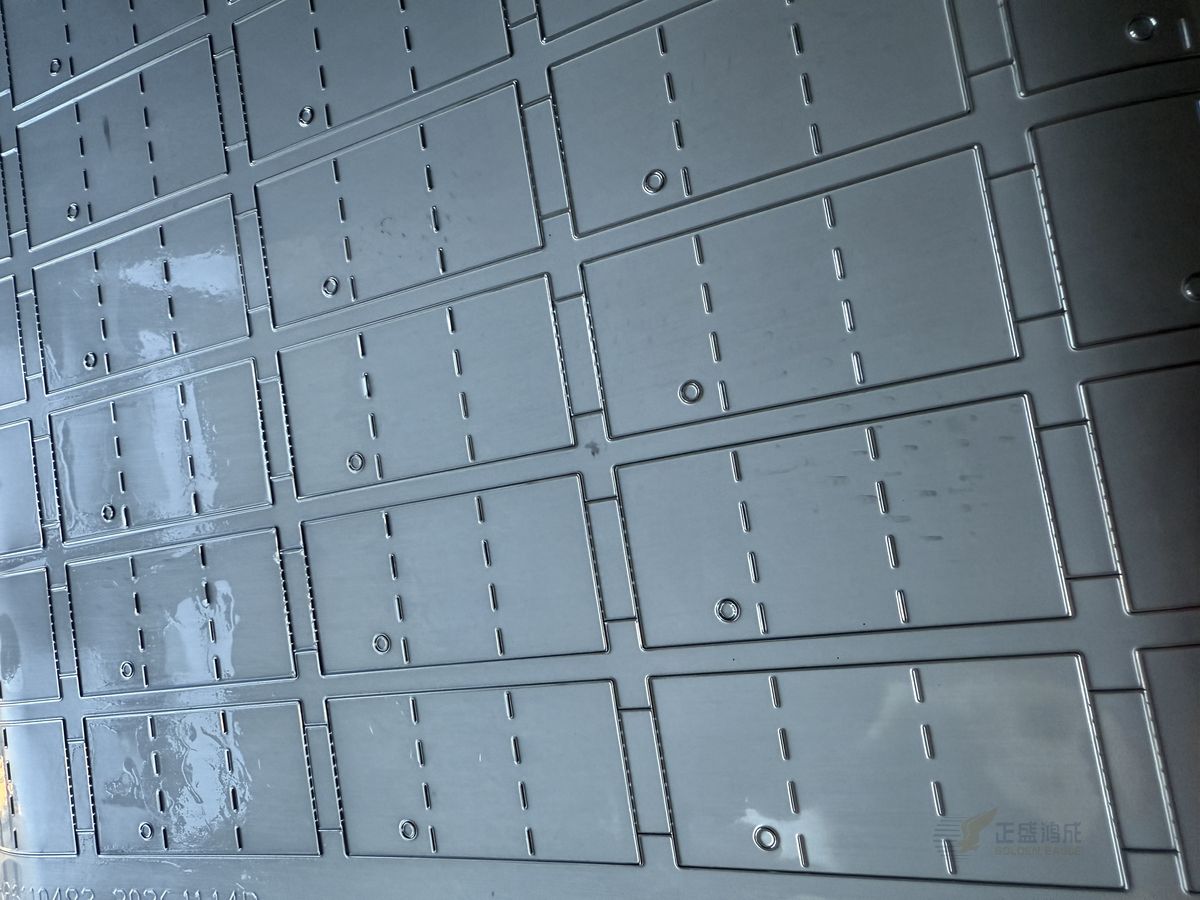
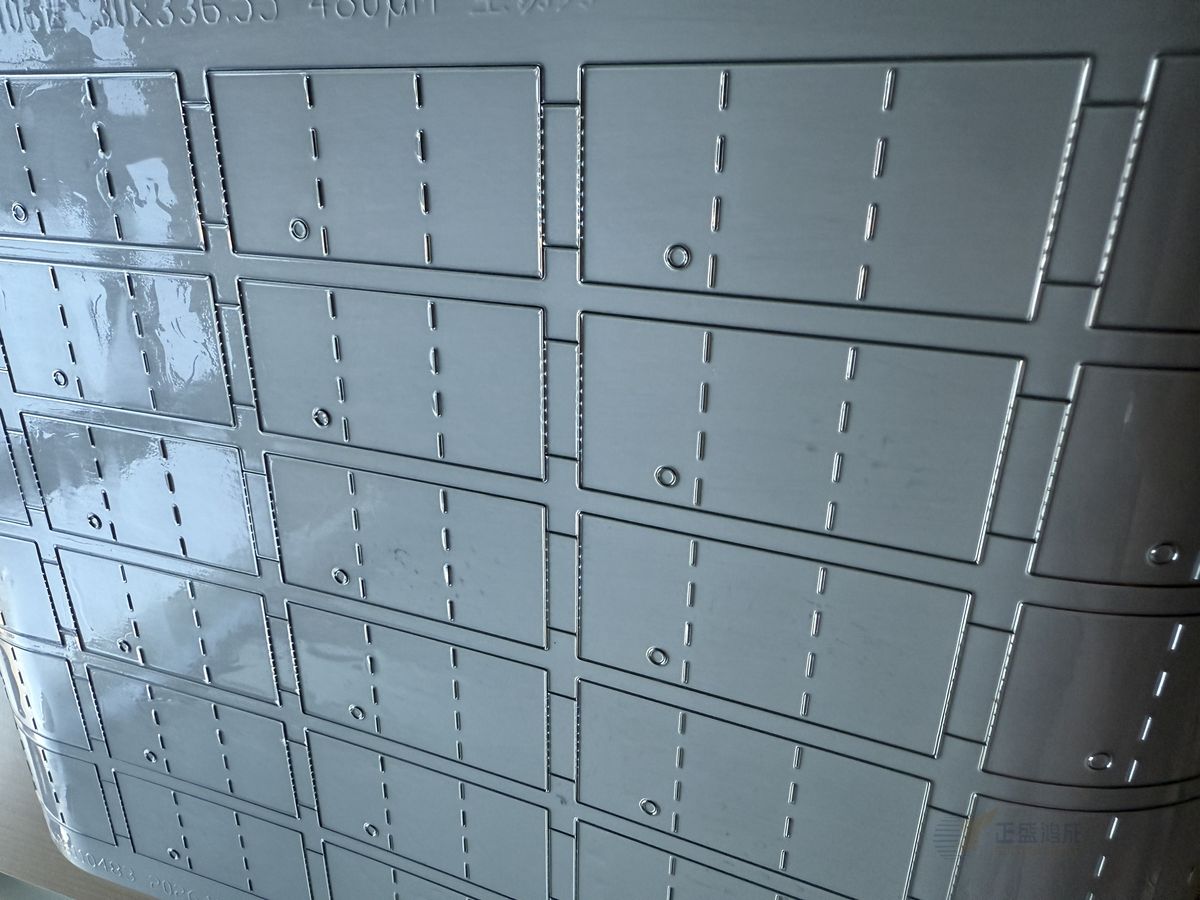
Scalloped and freehand contours with sharp internal corners. This is where a flexible die made by etching separates from one made by grinding: the blade follows the artwork exactly, whatever shape it is.
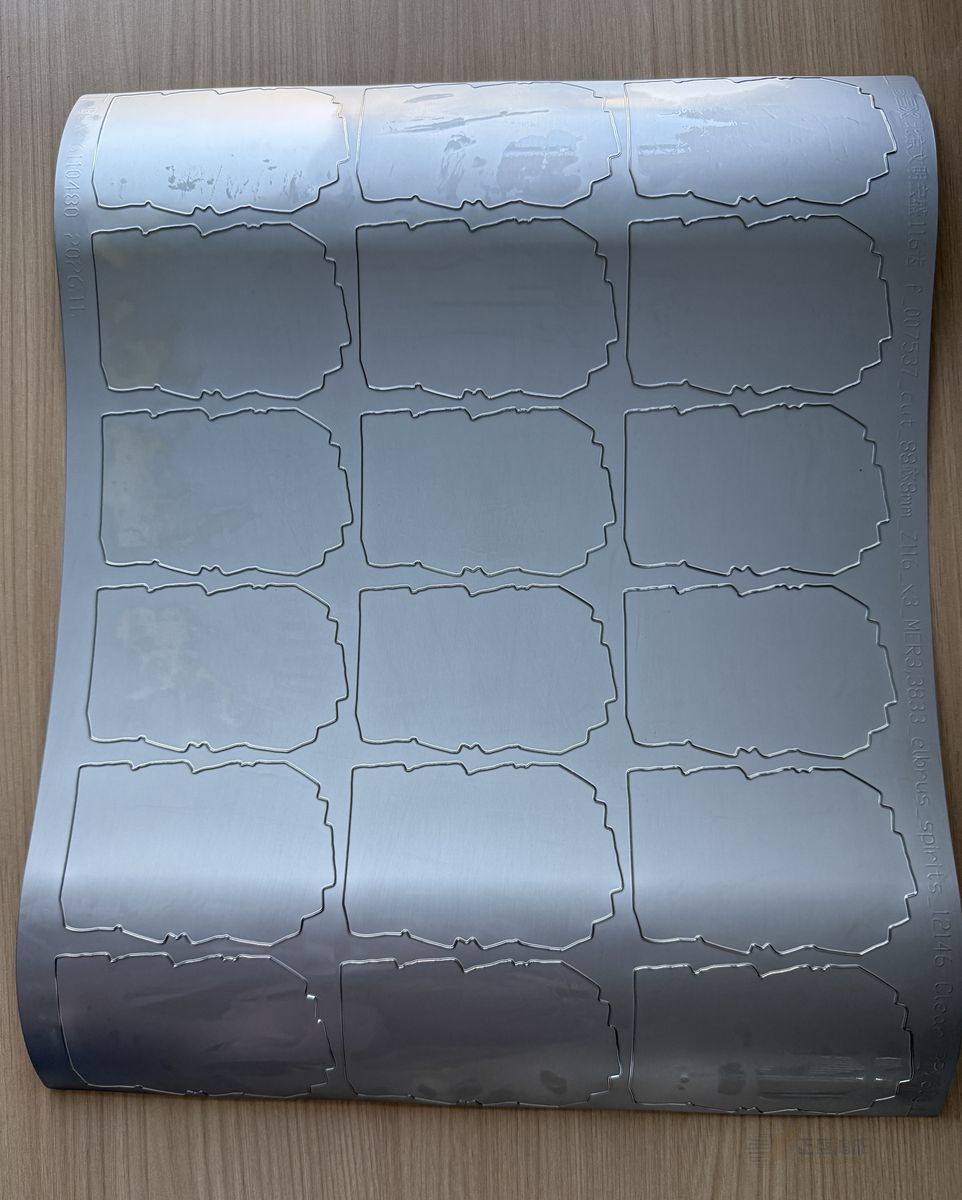
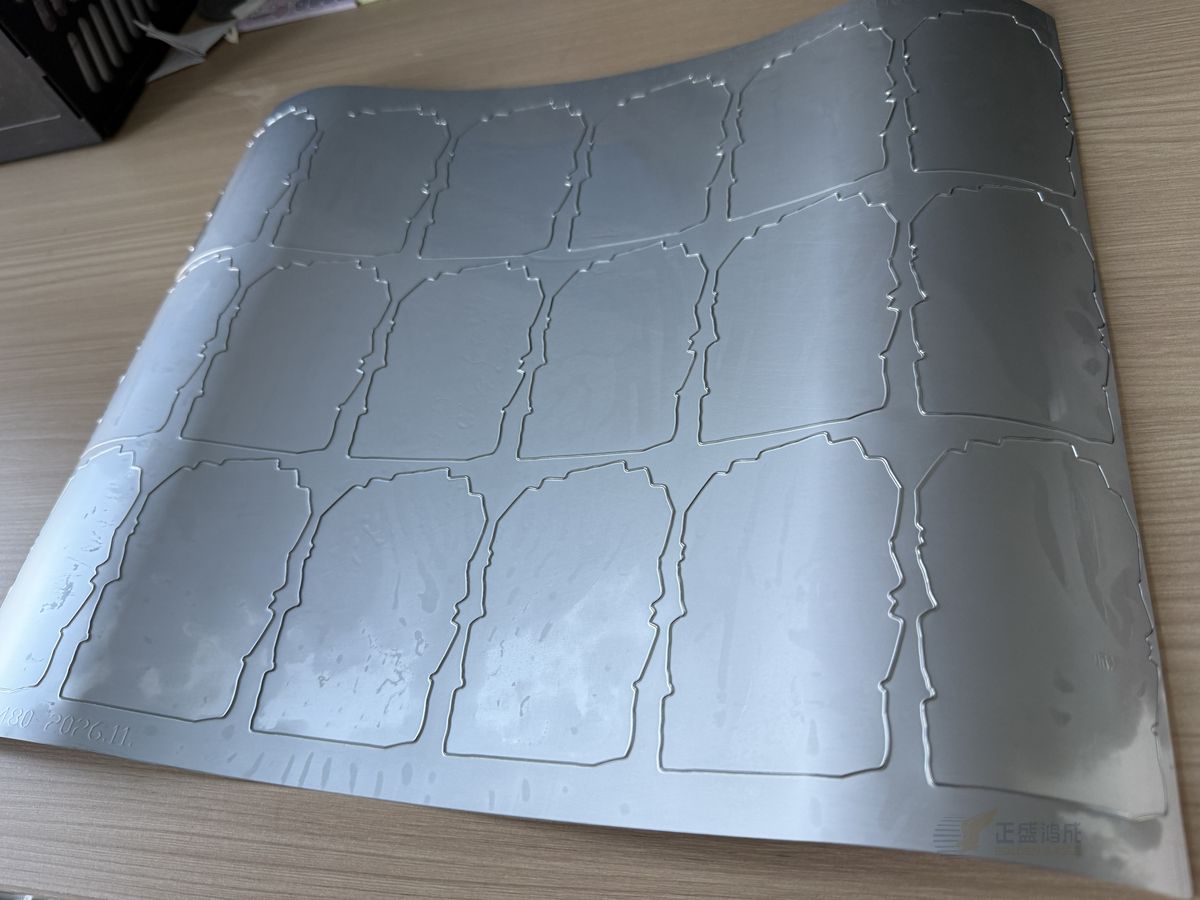
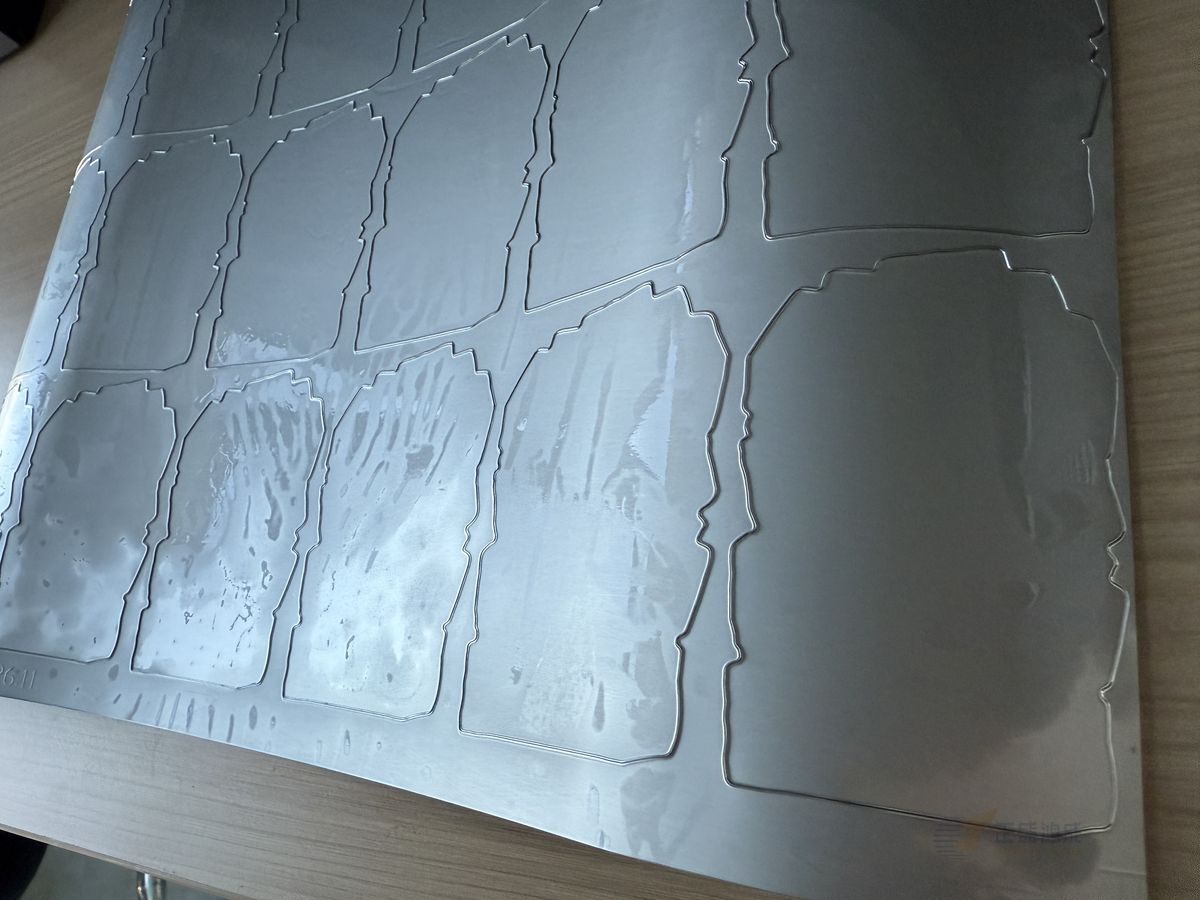
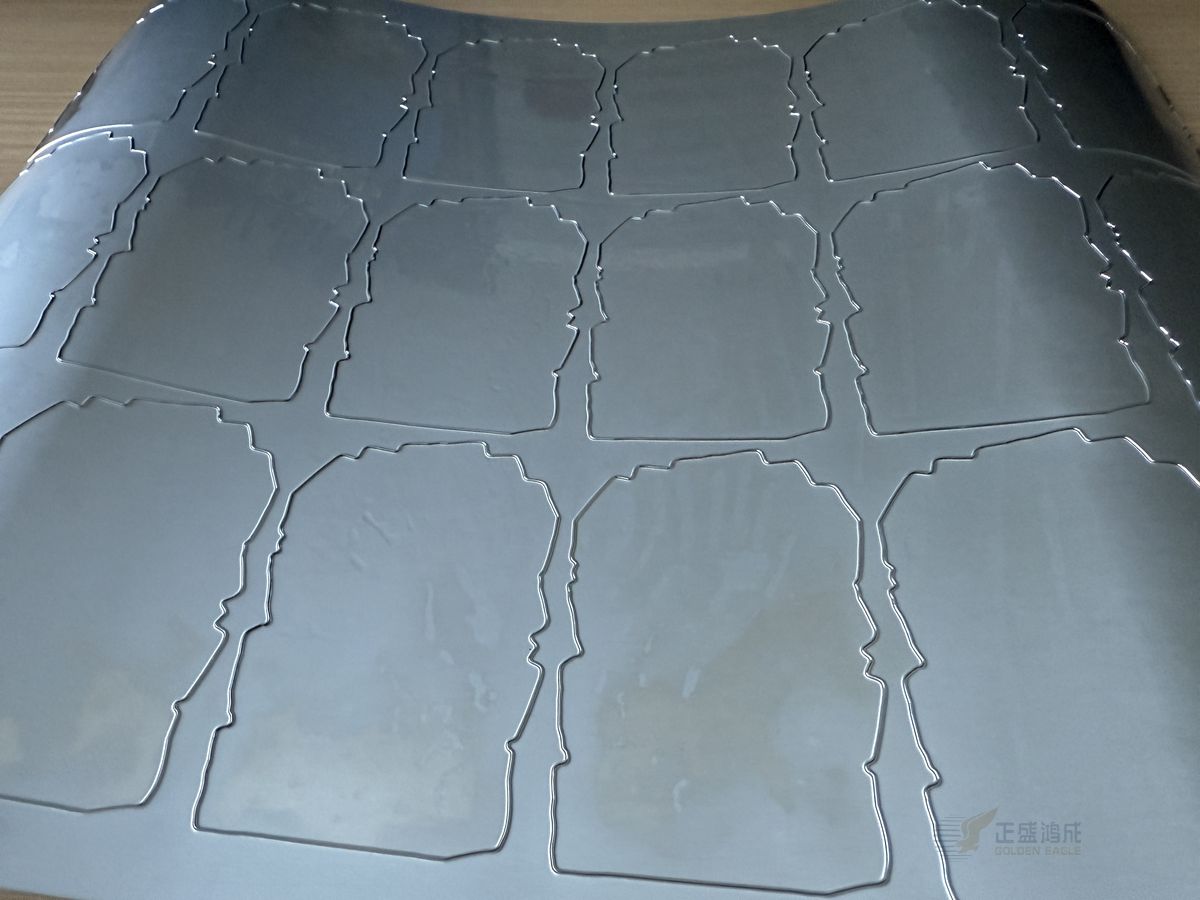
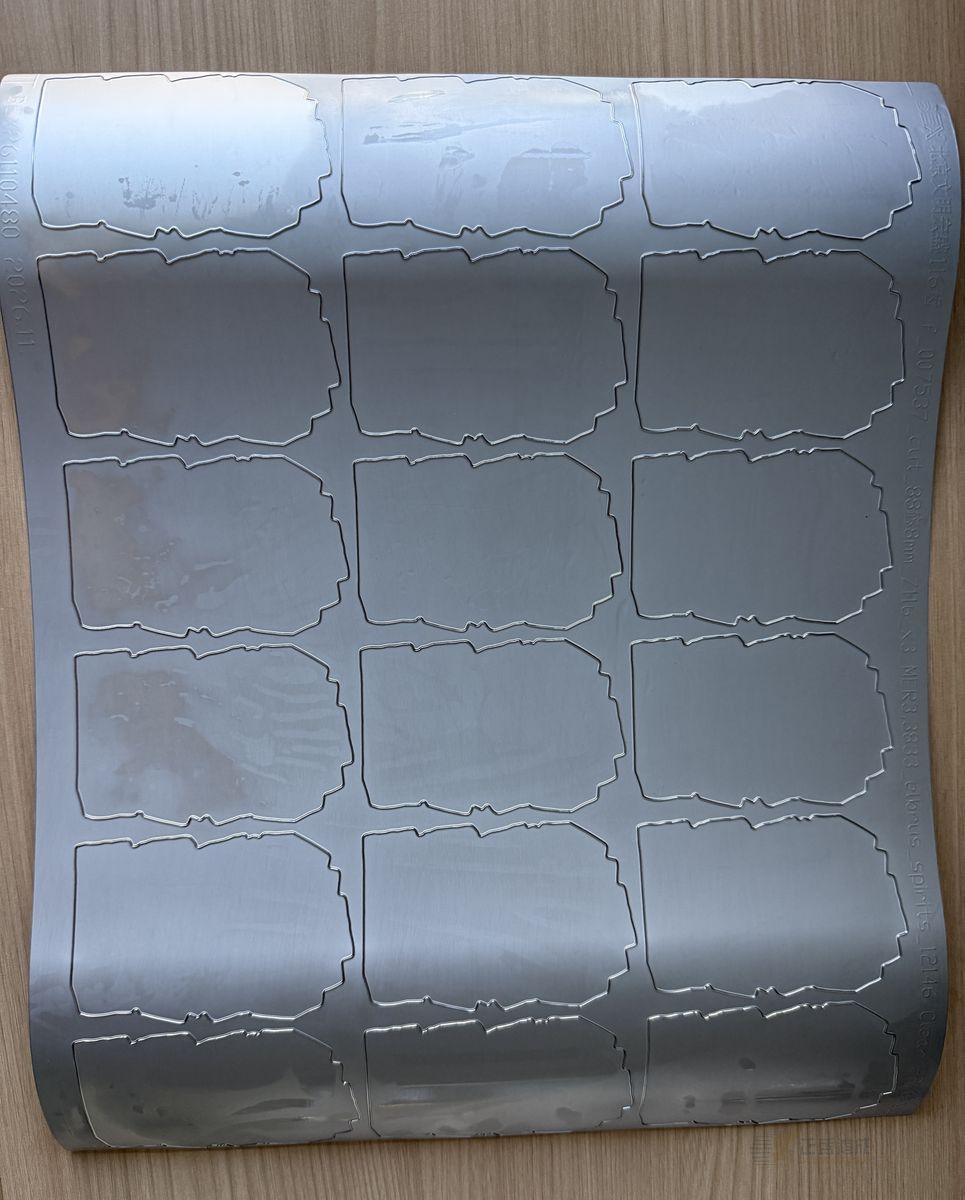
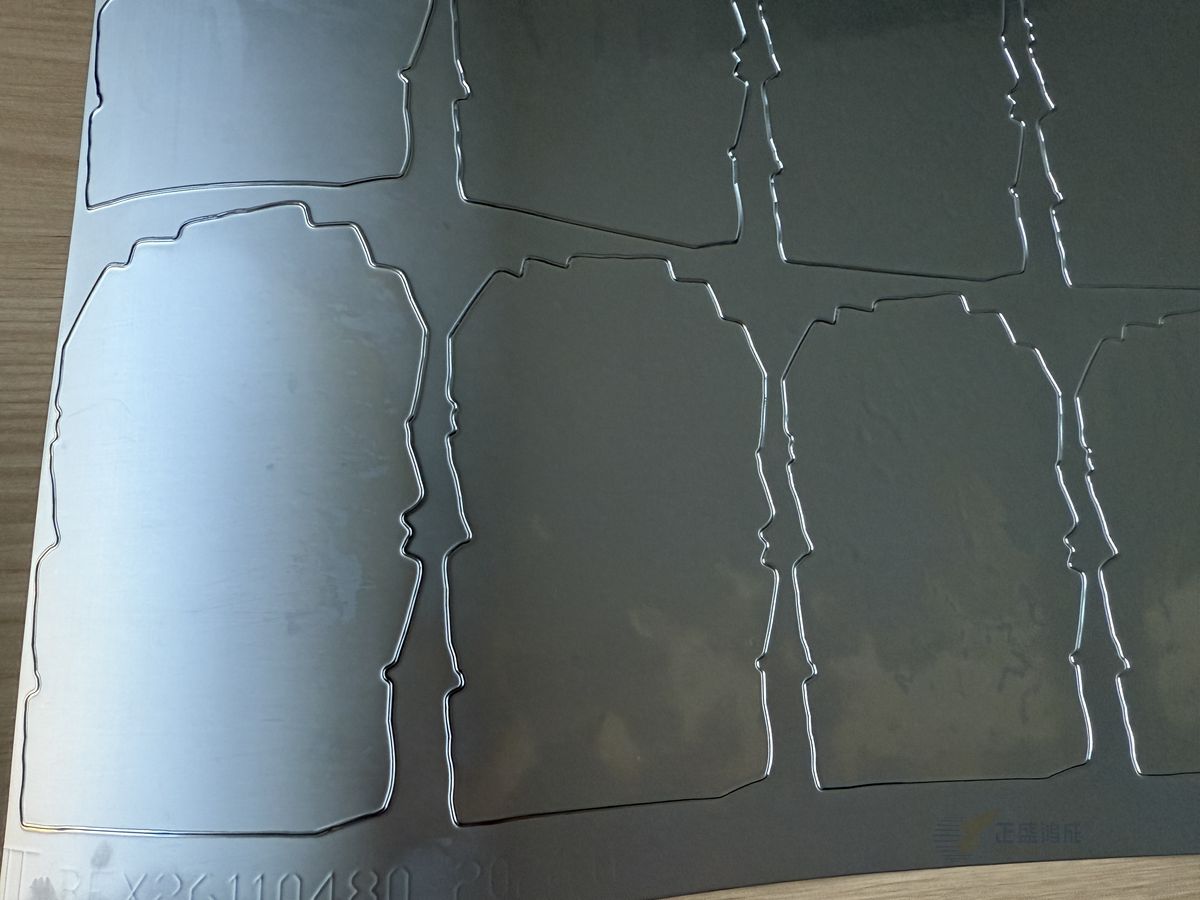
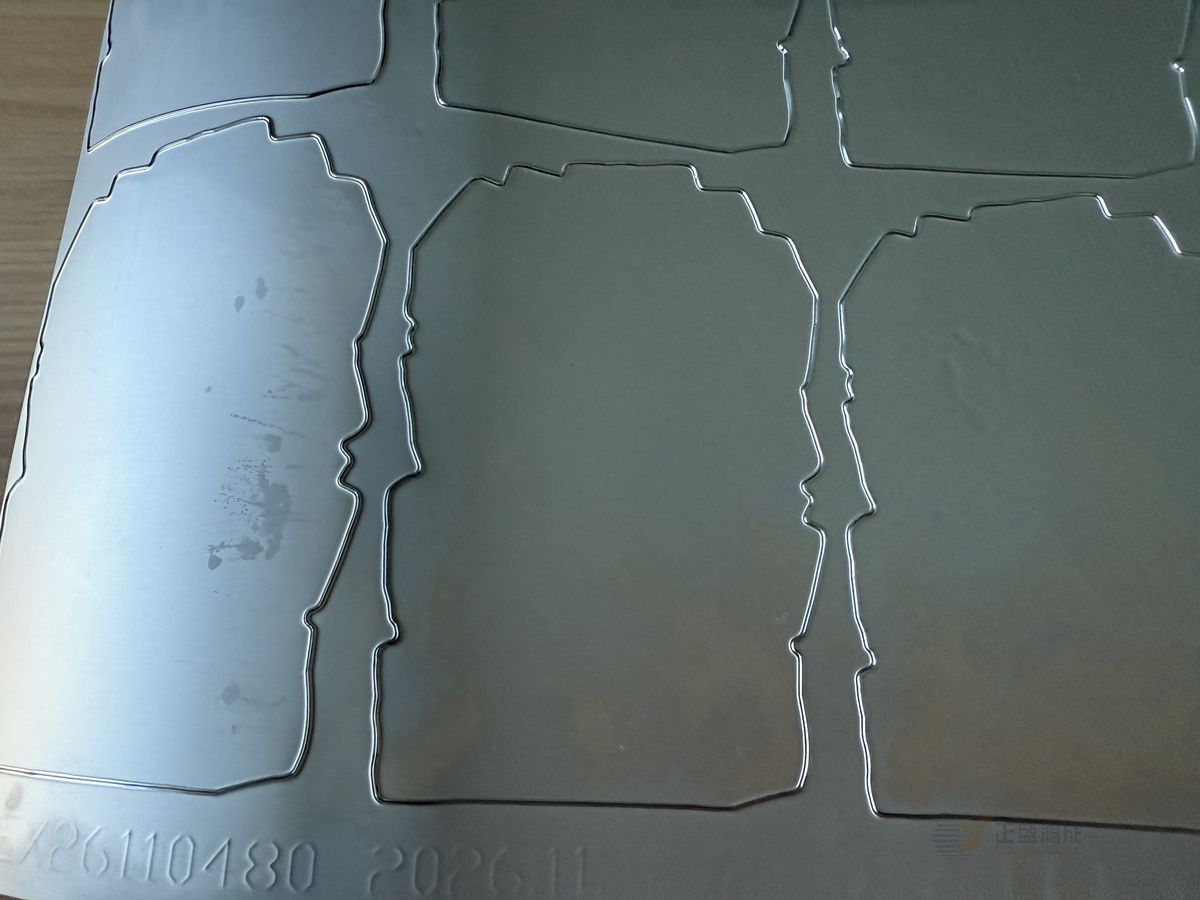
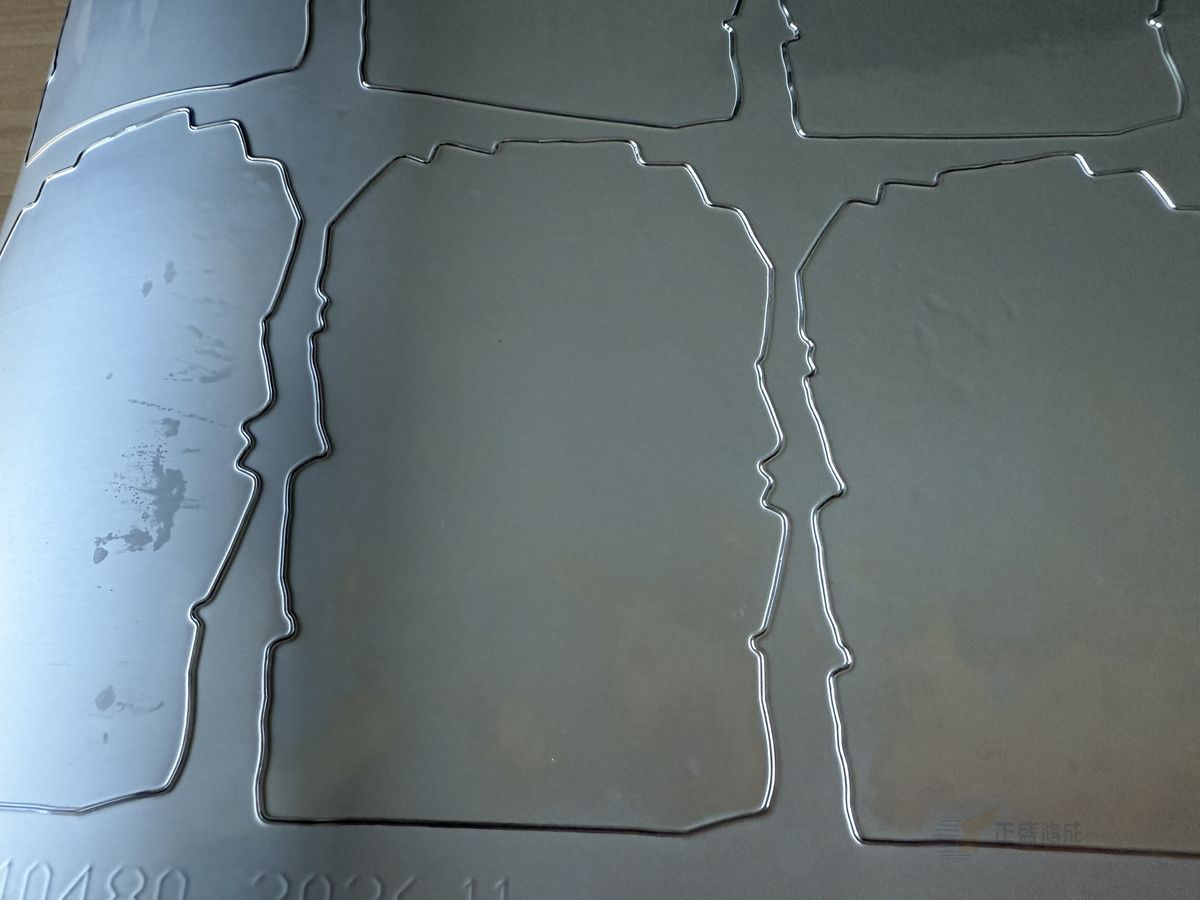
Circular and oval outlines with two rows of perforation teeth down the centre. The job data — repeat size, quantity and the 440 µm stock thickness — is etched into the margin of each sheet so the die can be identified years later.
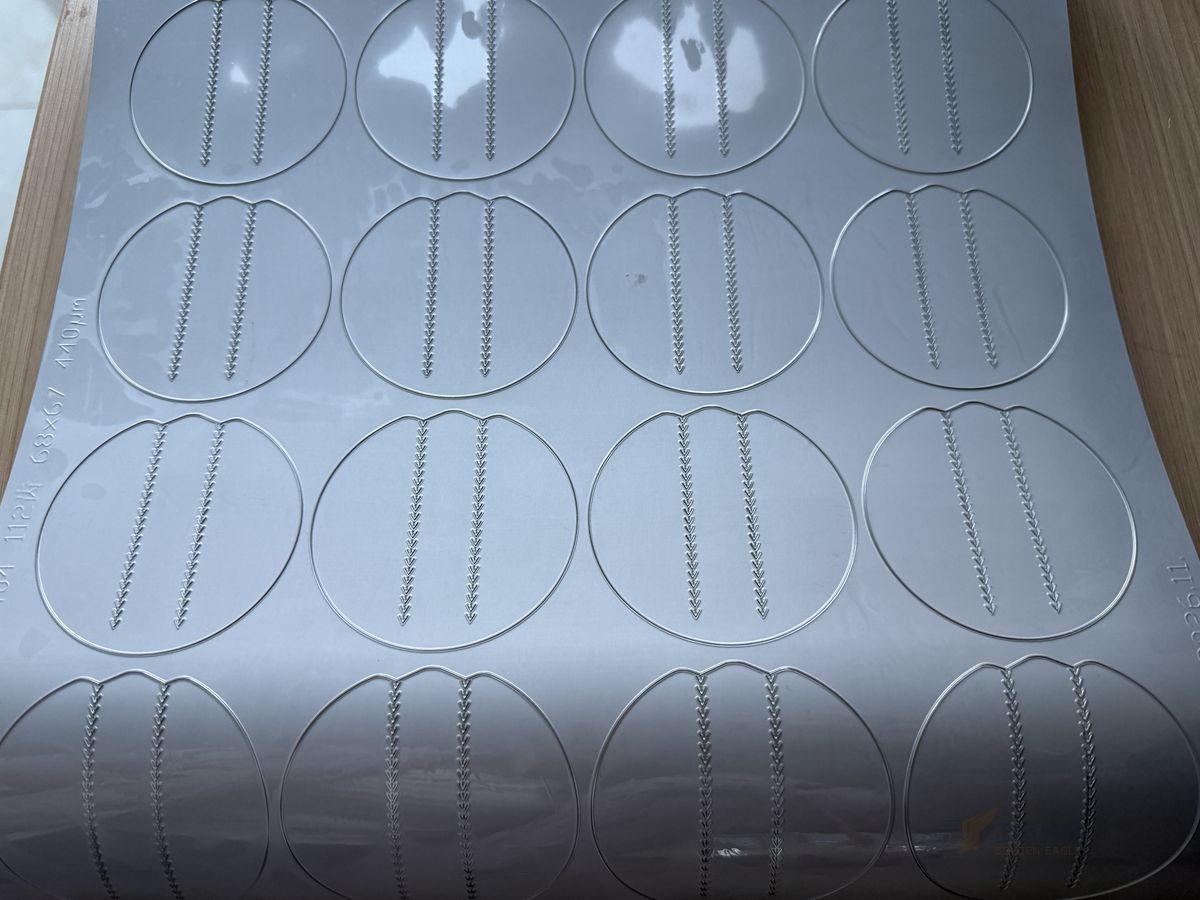
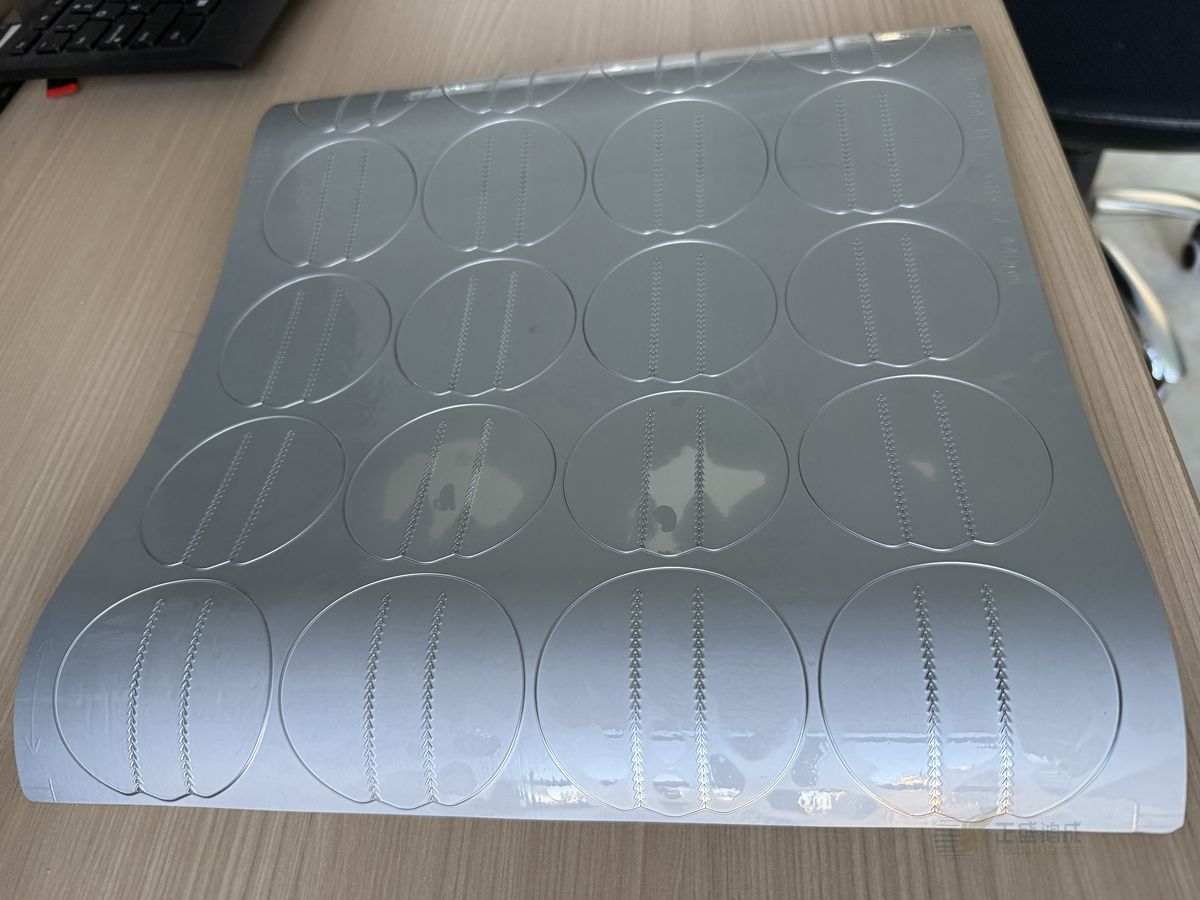
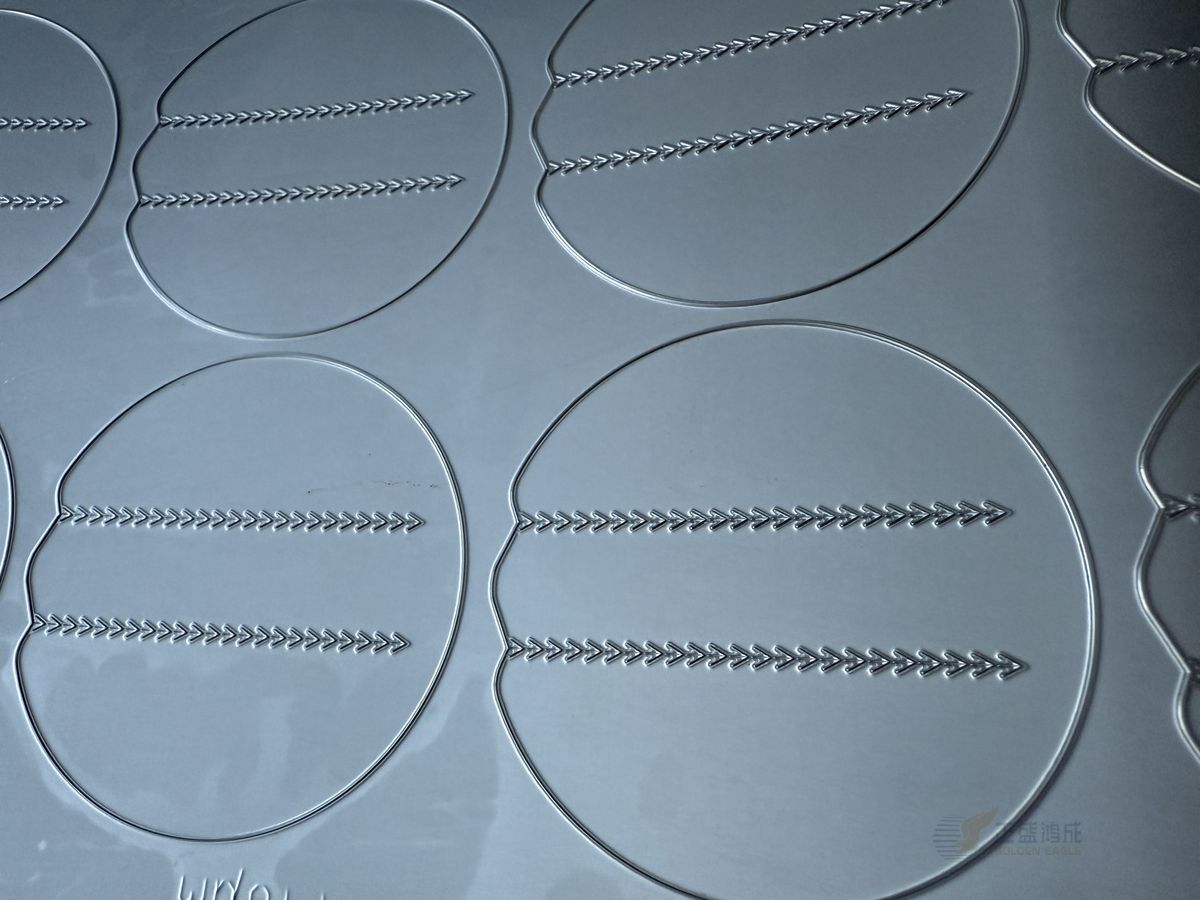
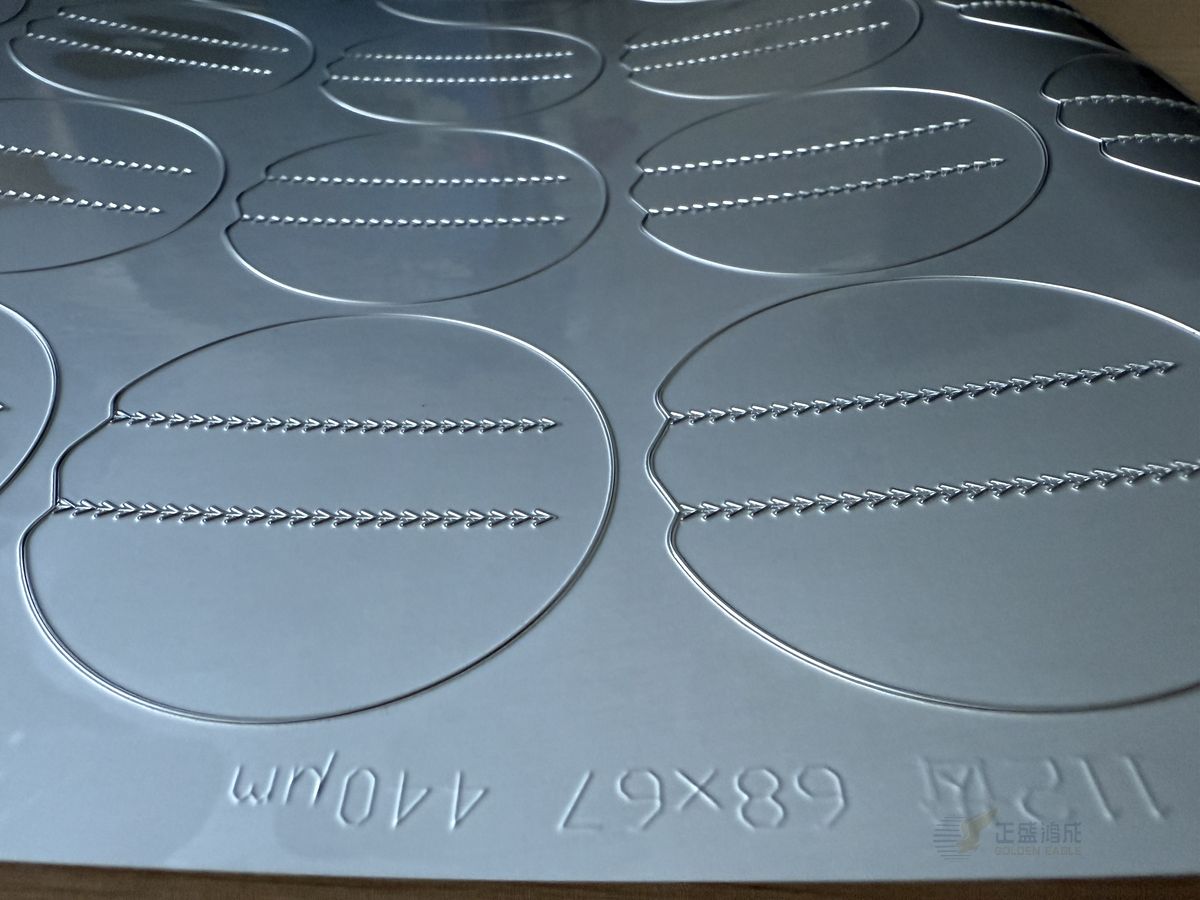
Long tapered strips cut nested, with almost no waste between them. Narrow nesting like this needs a blade that stays straight over the full length of the sheet.
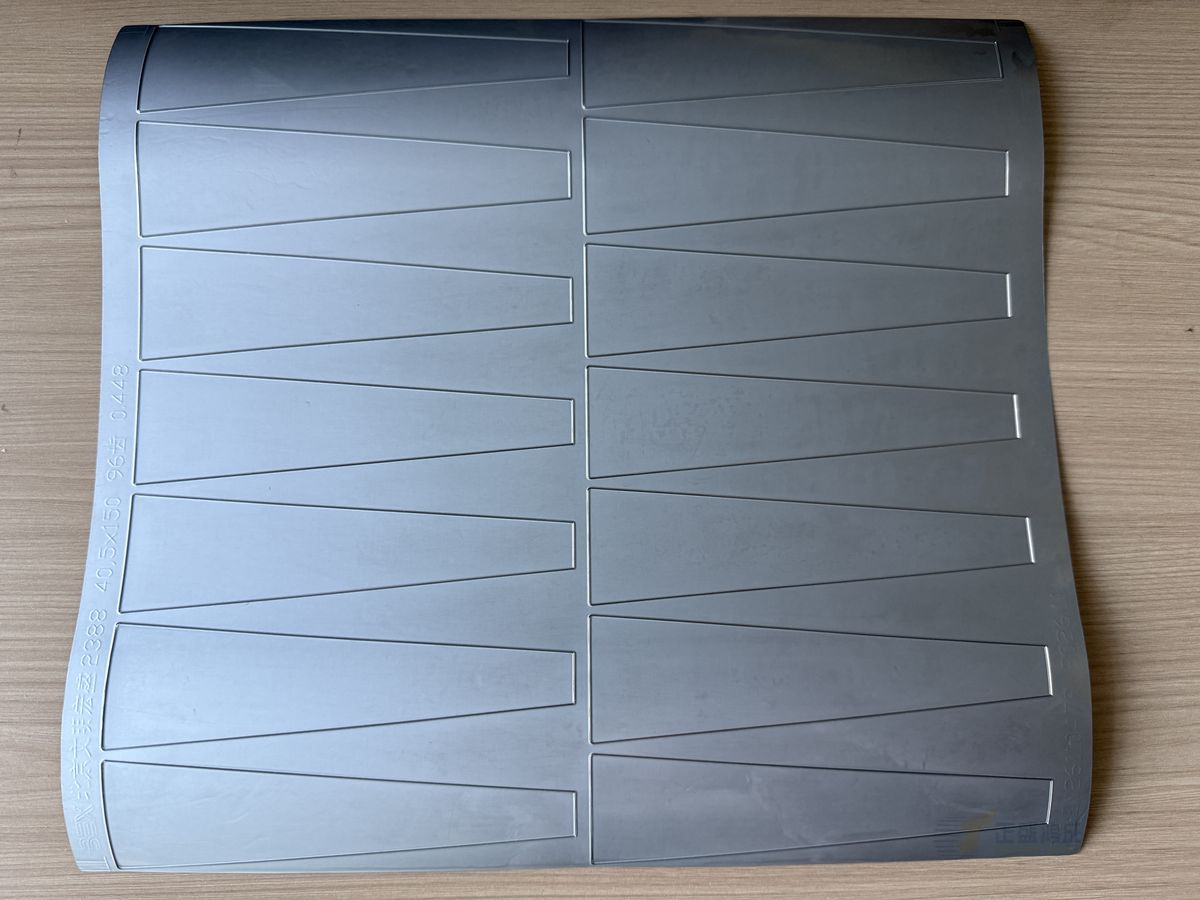
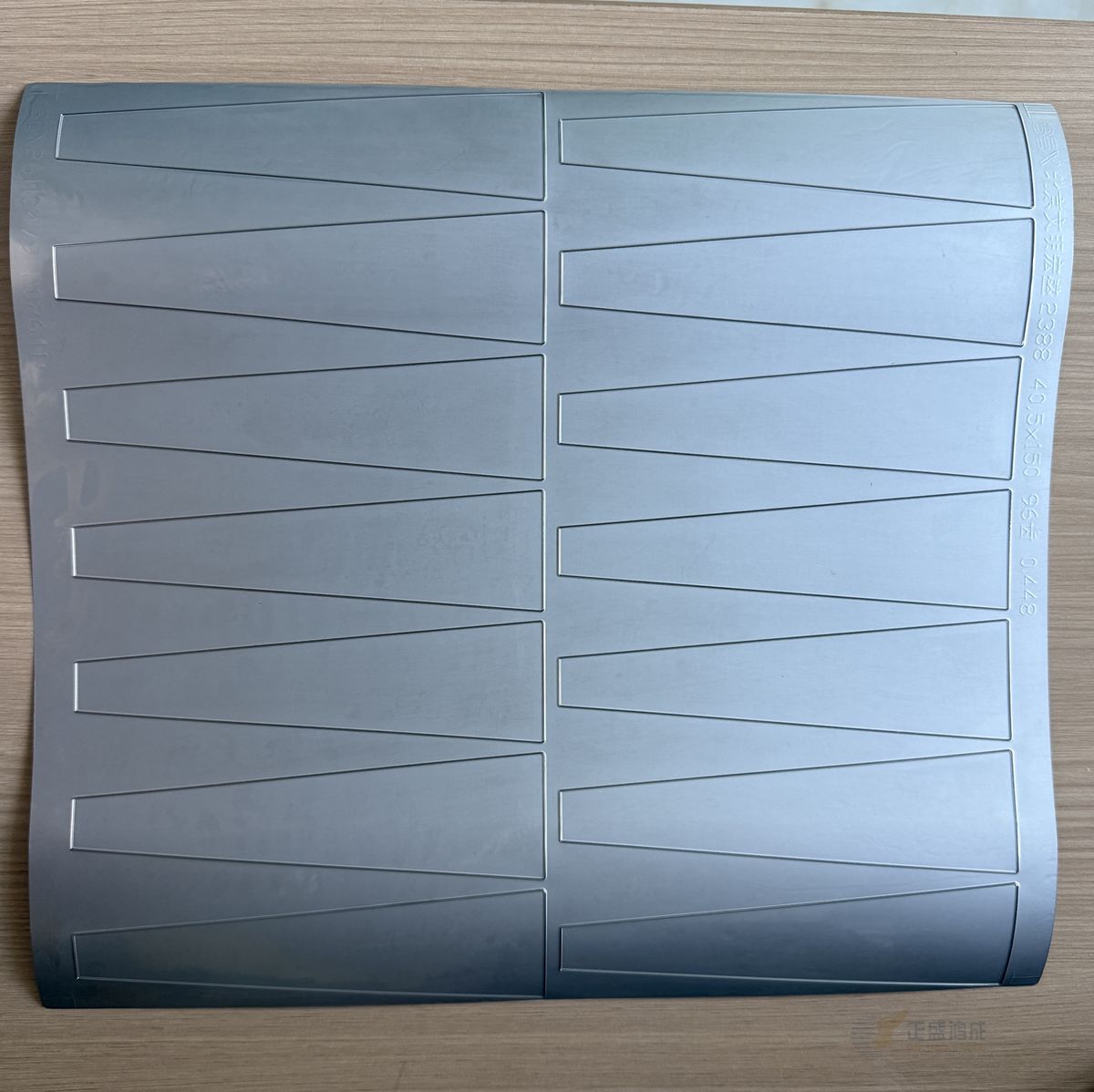
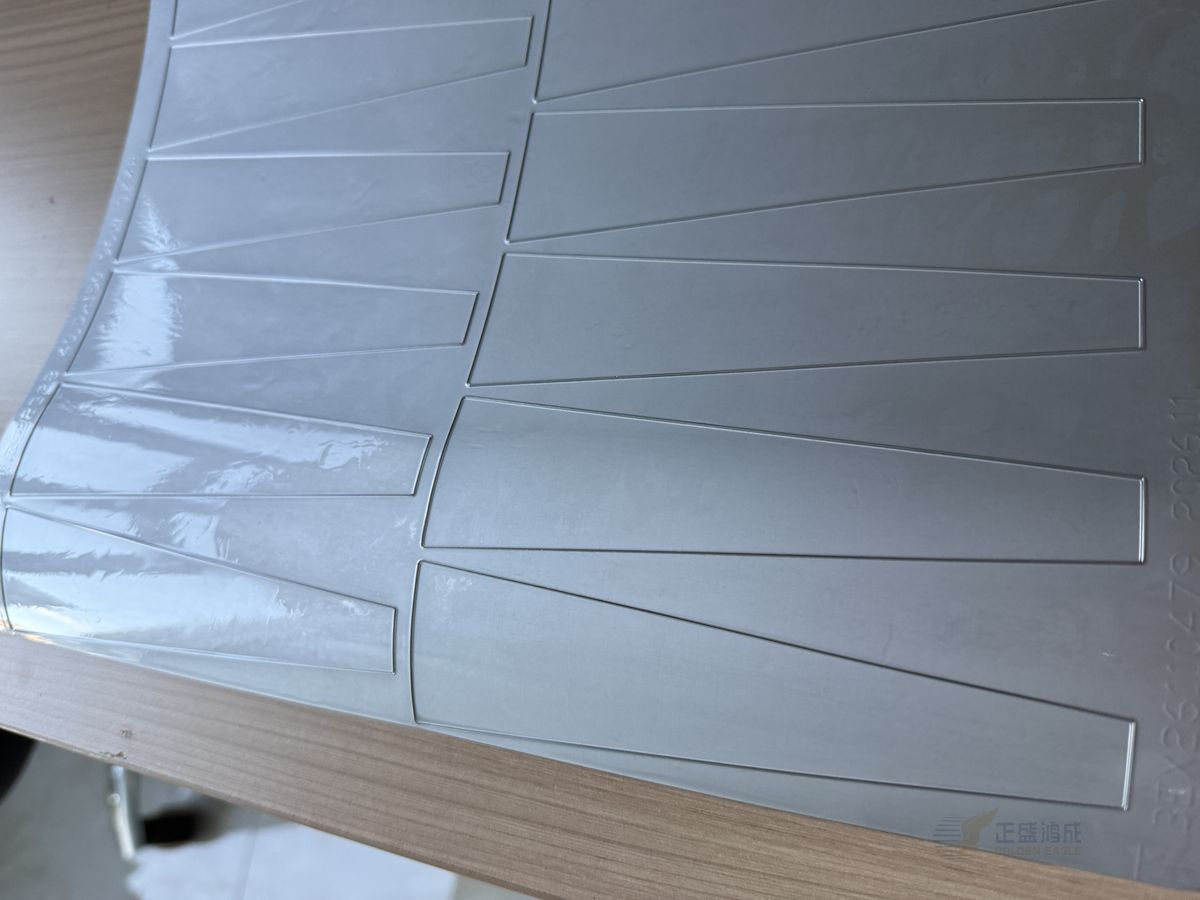
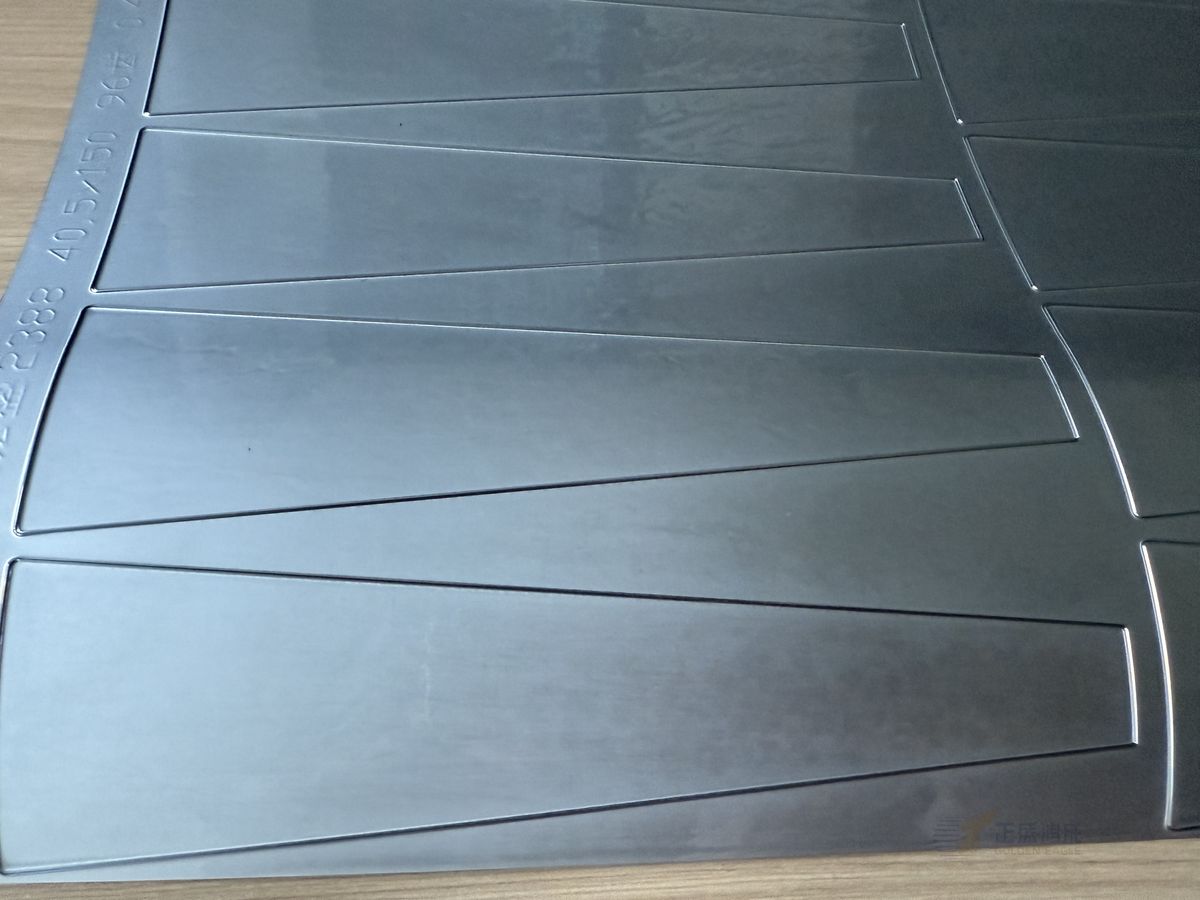
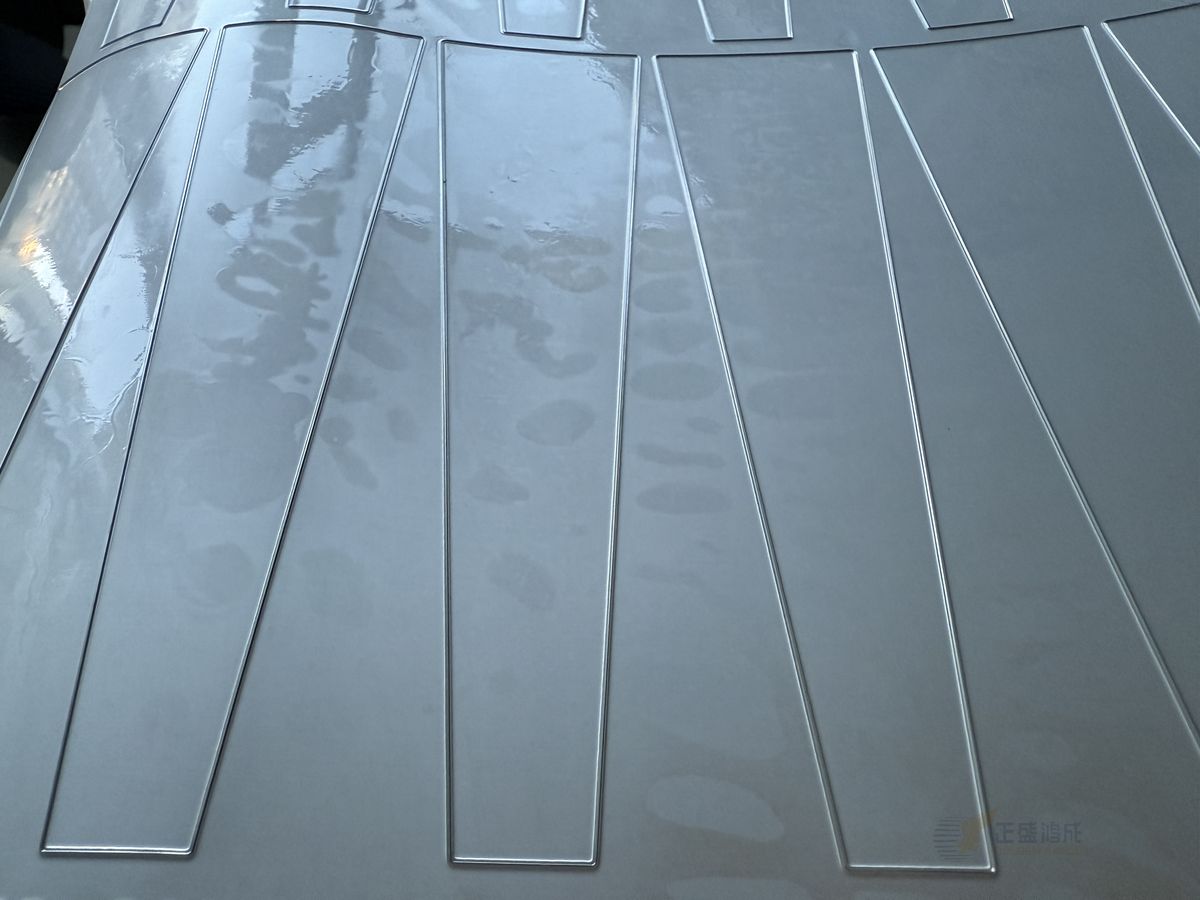
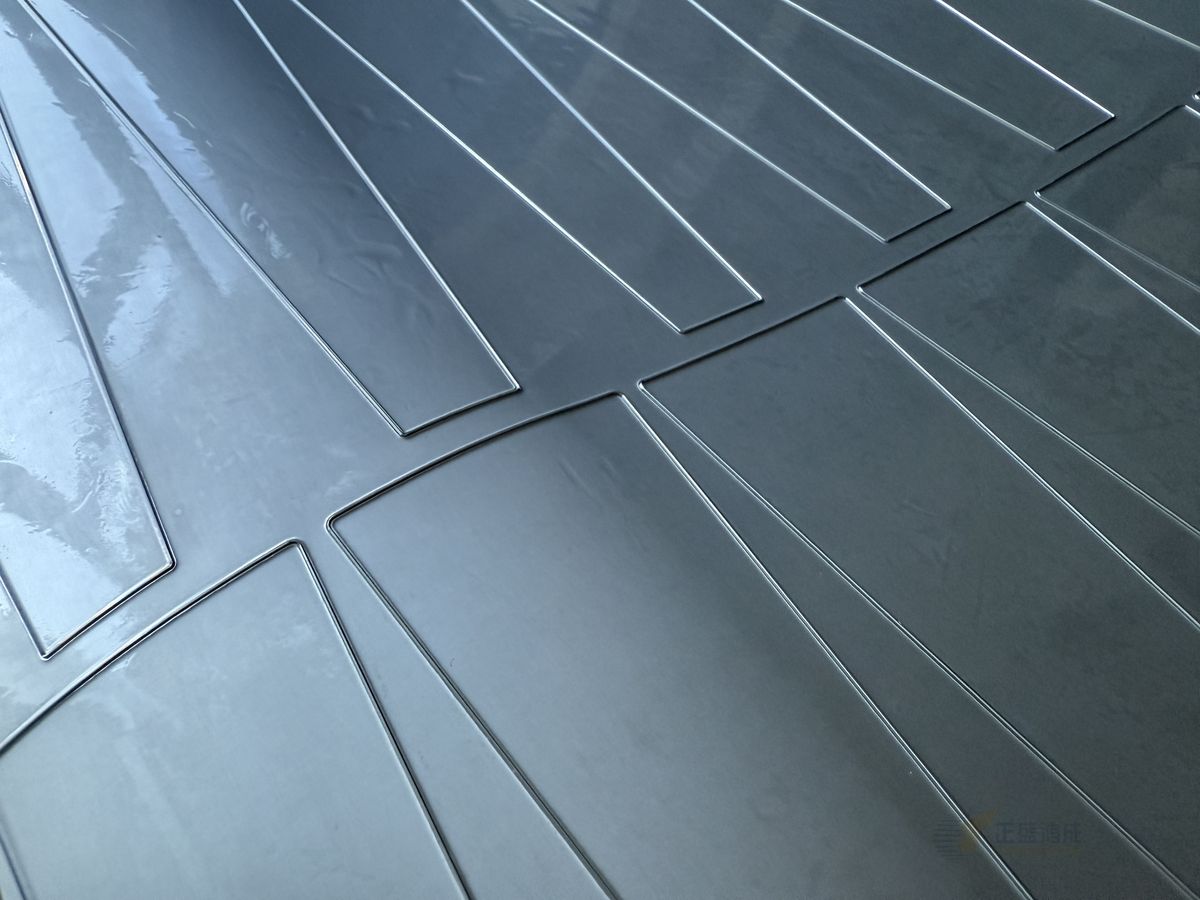
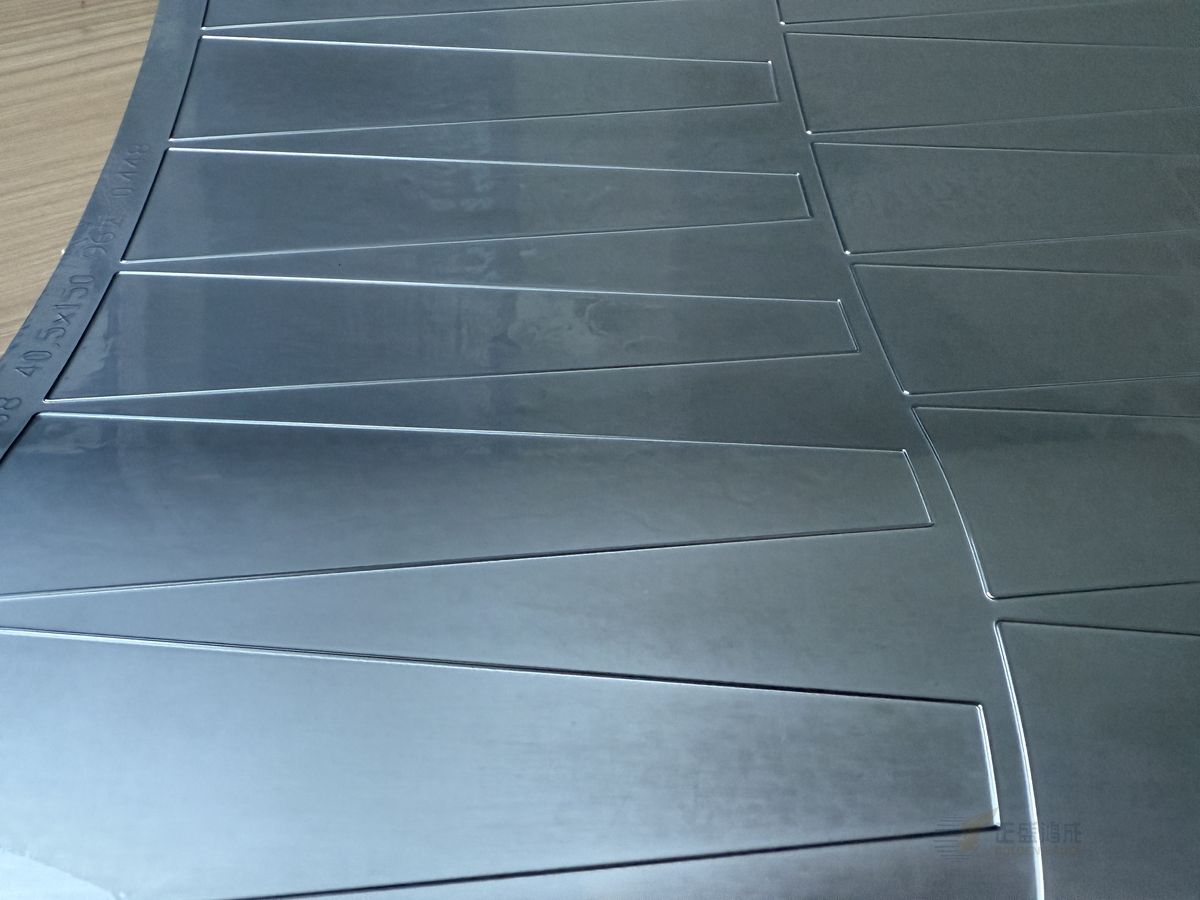
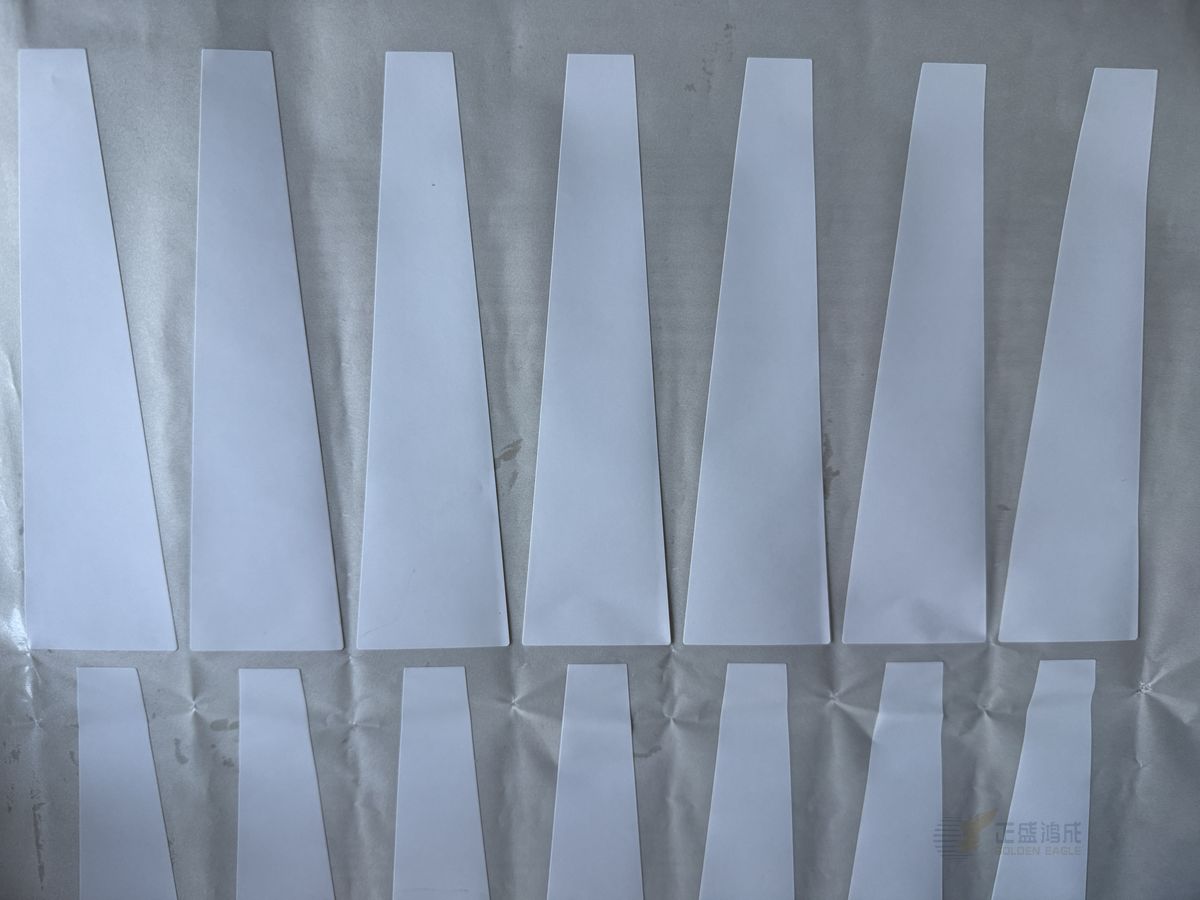
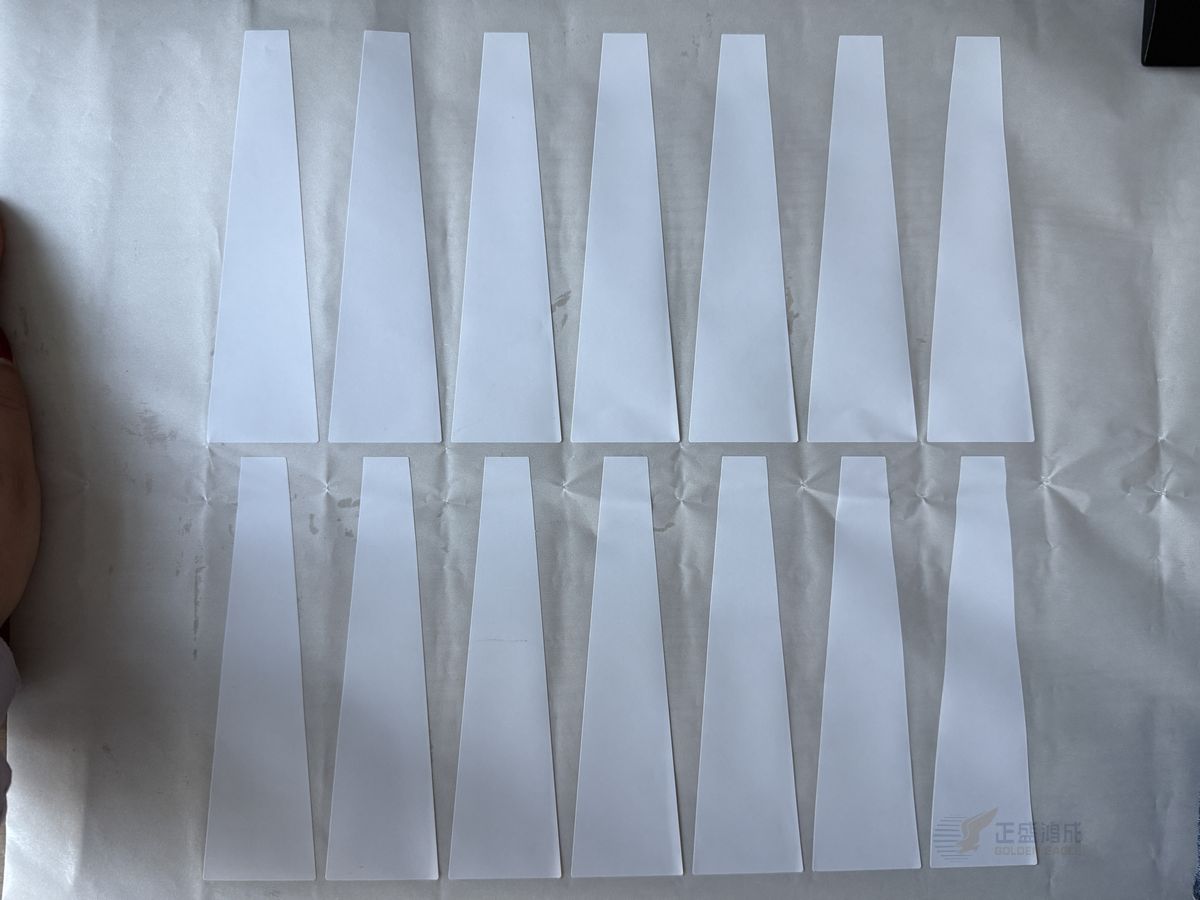
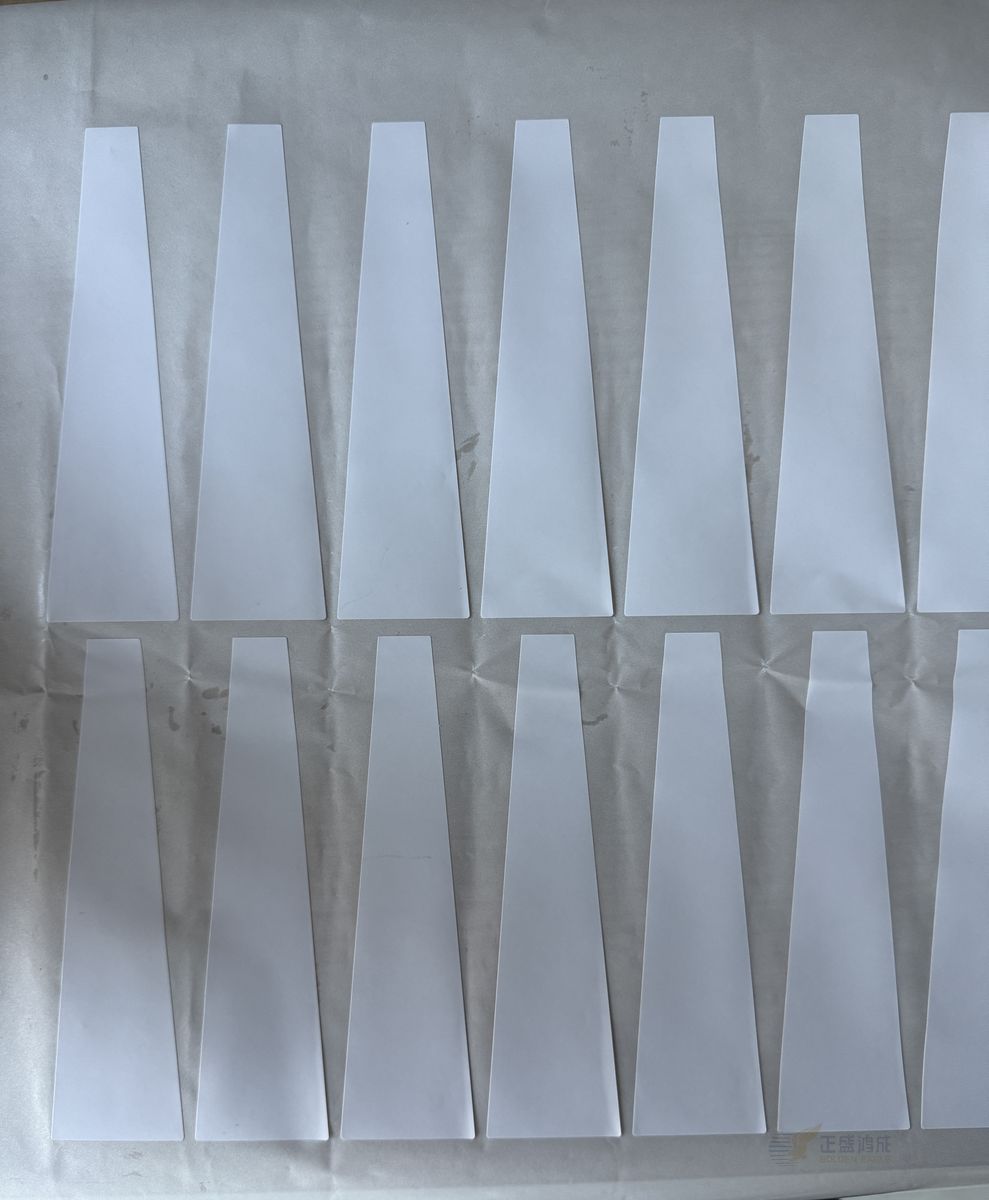
Parallelogram and chevron outlines where every corner is a point. The last two photographs put the die and the labels it cut side by side — the quickest way to judge any die maker.
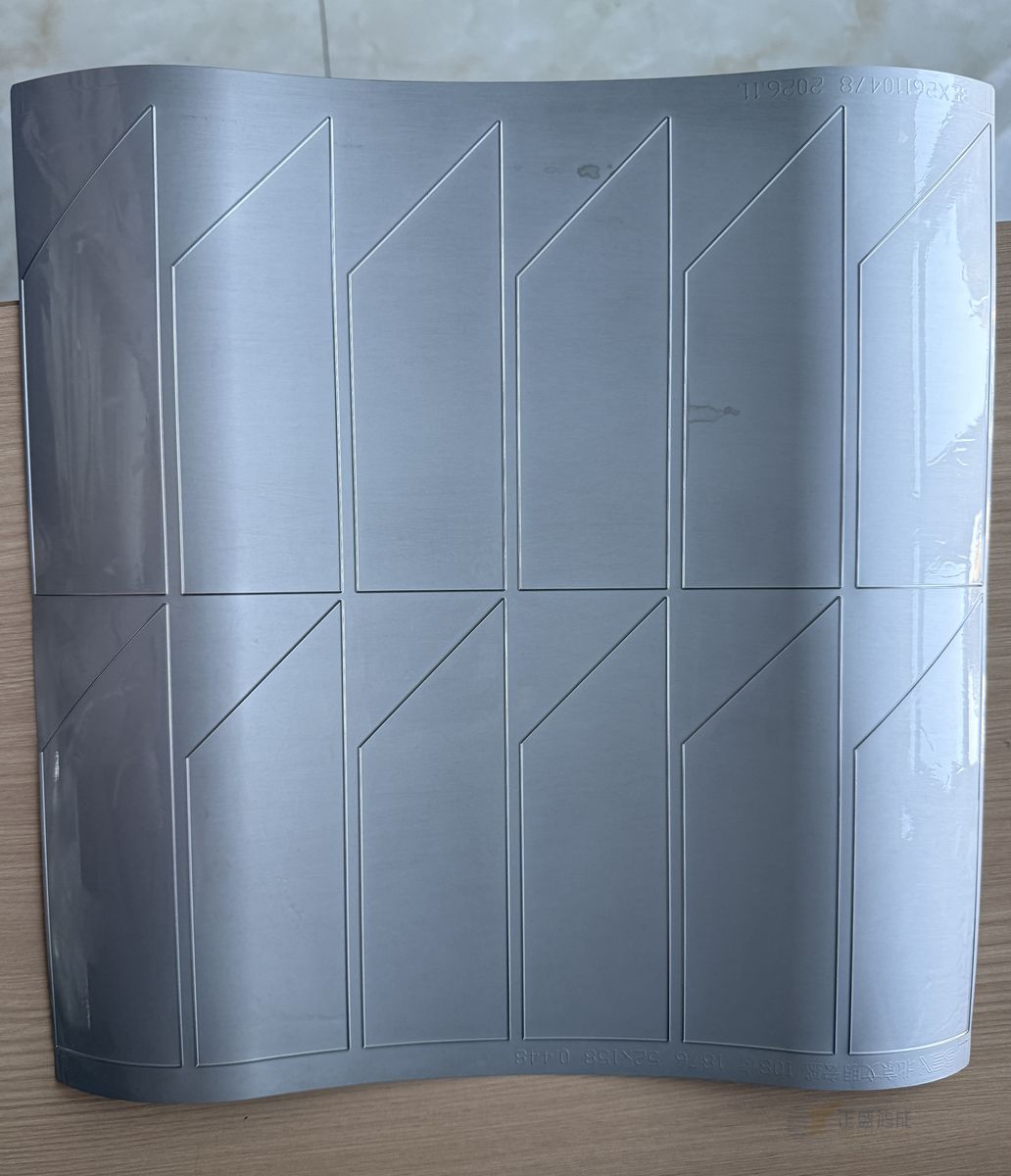
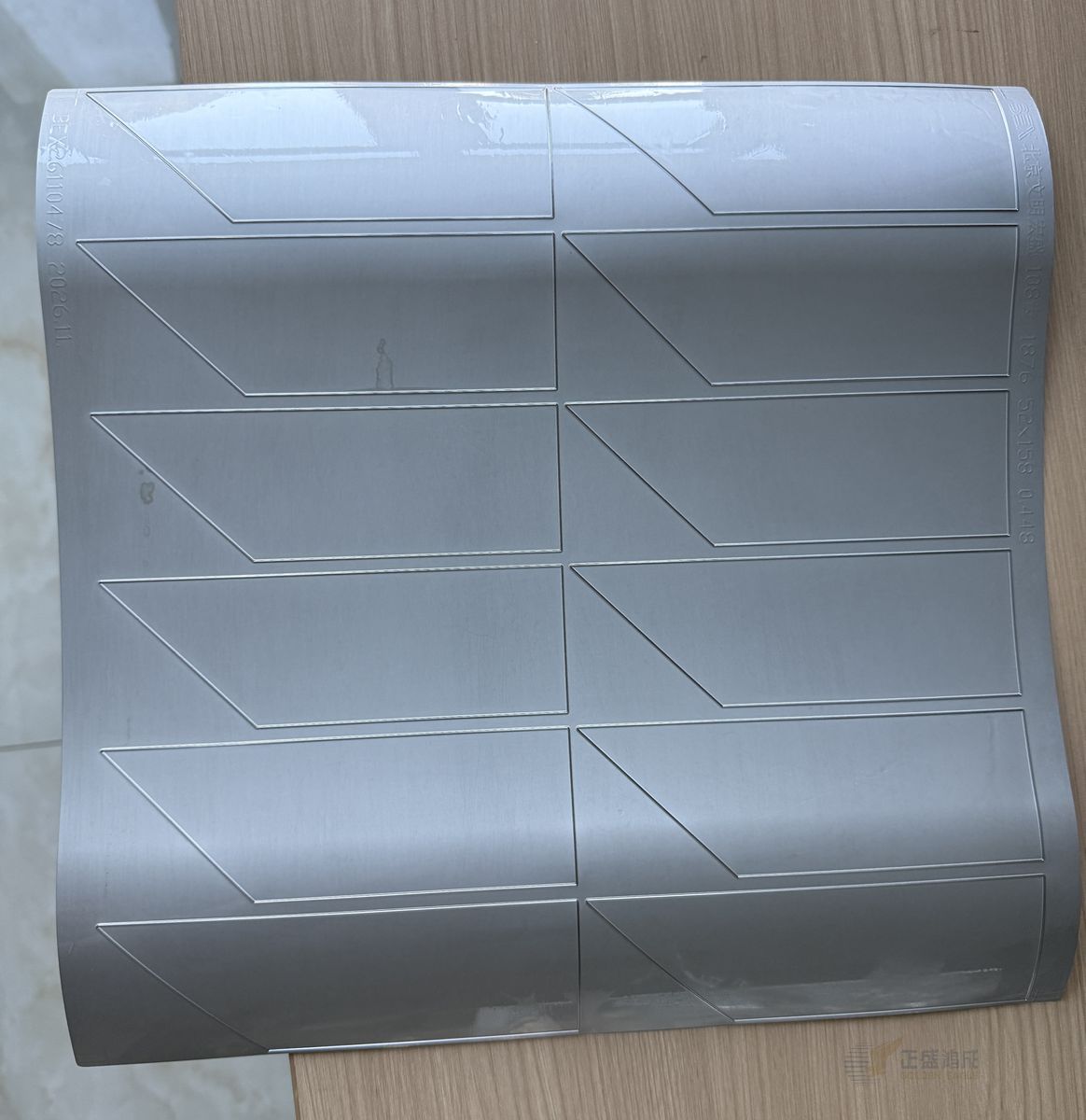
A flexible die is a thin steel sheet with the cutting blade etched into its surface. Because it is a sheet rather than a solid block, it wraps around a magnetic cylinder on a rotary label press and can be stored flat. Flexible dies are also sold as flexible cutting dies, flexible rotary dies or flexible die cutting tools.
The steel sheet is degreased, coated with photoresist, dried, exposed through the die artwork, developed, and then chemically etched so that the unprotected steel dissolves and leaves the blade standing. The resist is stripped, the blade is finished, and the die is usually nickel plated for wear resistance. Every die on this page was etched on a Golden Eagle GE-DB5060 cutting-die etching machine. Flexible die stock runs 0.4 to 1.5 mm; the dies shown here were etched from 0.44 mm (440 µm) stock.
Etching produces the whole die in one pass, so the outline blade, the perforation teeth and the micro-ties all reach the same height at the same time. On irregular contours and tight internal corners this is much easier to hold than with a mechanically ground die, and the cost does not rise with the complexity of the shape.
We build the equipment. The dies on this page are samples produced on our own machines in Beijing to prove what the line can do. If you are setting up as a flexible die maker, the relevant pages are the flexible dies etching machine and the full cutting-die etching equipment line.
Yes, though the process differs: hot stamping dies are etched in relief in magnesium, zinc or copper rather than cut as blades in steel. See the hot stamping dies etching machine page for that application.