
Equipment Range
What Is Industrial Etching Equipment?
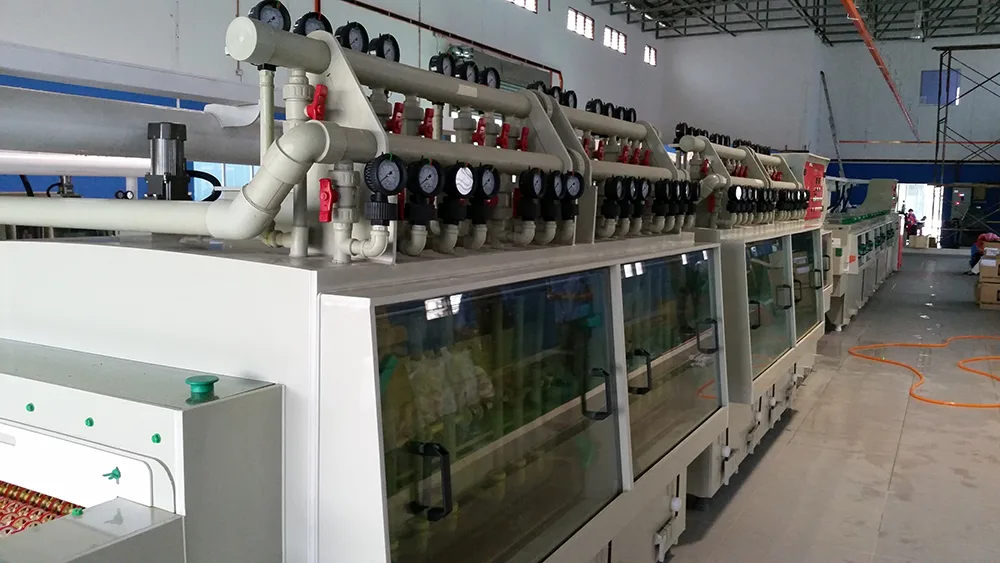
Etching equipment uses chemical etchants — ferric chloride (FeCl₃), cupric chloride (CuCl₂), alkaline ammonia or acidic peroxide sulphate — to selectively remove material from a substrate and build a precision pattern. The etchant reaches the workpiece through one of three mechanisms.
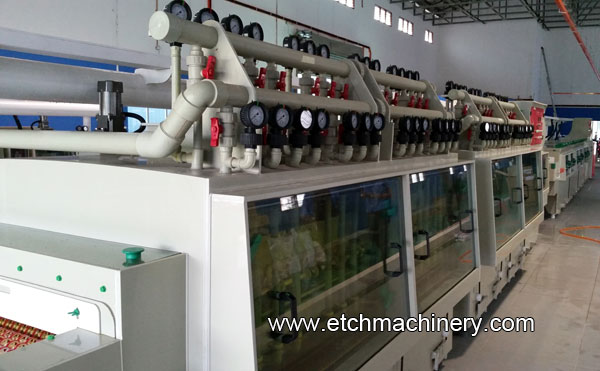
- Conveyor spray etching — pumped nozzles deliver fresh etchant to the workpiece surface. Double-side spray with oscillation keeps both faces etching at the same rate, and the workpiece moves through the chamber on a conveyor at a controlled speed.
- Immersion etching — the part is submerged in a static bath. It needs less capital and no pumping, but the bath does not refresh across the workpiece, so it is slower and the sidewall is more isotropic.
- Photochemical milling (PCM) — a photoresist mask defines the pattern and spray etching removes the exposed metal. It gives the finest feature size of the three and is used for thin foils, encoder discs and lead frames.
Category
PCB Etching Machine
Conveyor etchers, alkaline lines and DES lines for FR4, aluminium and flex boards.
Category
Metal Etching Machine
Spray etchers and photochemical milling systems for stainless steel, copper, brass and titanium.
Directory
All 50+ Products
Decoration plate, cutting die, press plate, filter mesh and laboratory etching machines.
Equipment Categories
The Full Golden Eagle Etching Equipment Range
Nineteen standard machines across five families. Every specification below is taken from the model page for that machine; where a figure is not published on the model page, the card says so rather than guessing.
PCB
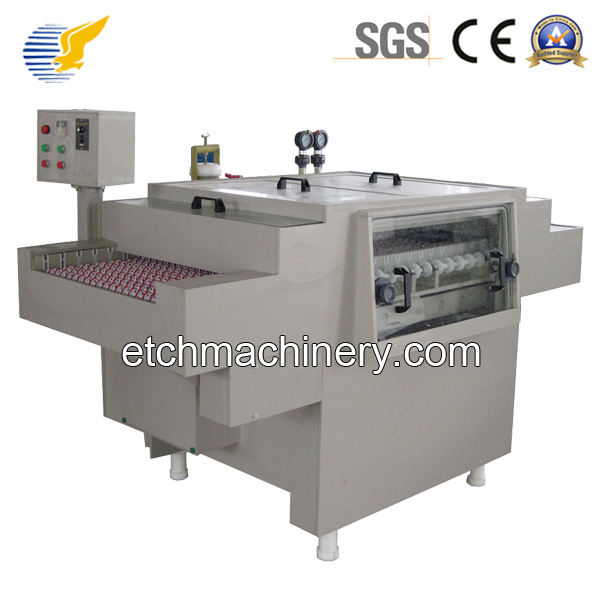
4 modelsPCB Etching Equipment
Conveyor spray etchers for FR4, aluminium and flex PCB, including alkaline ammonia chemistry for fine-line work.

METAL
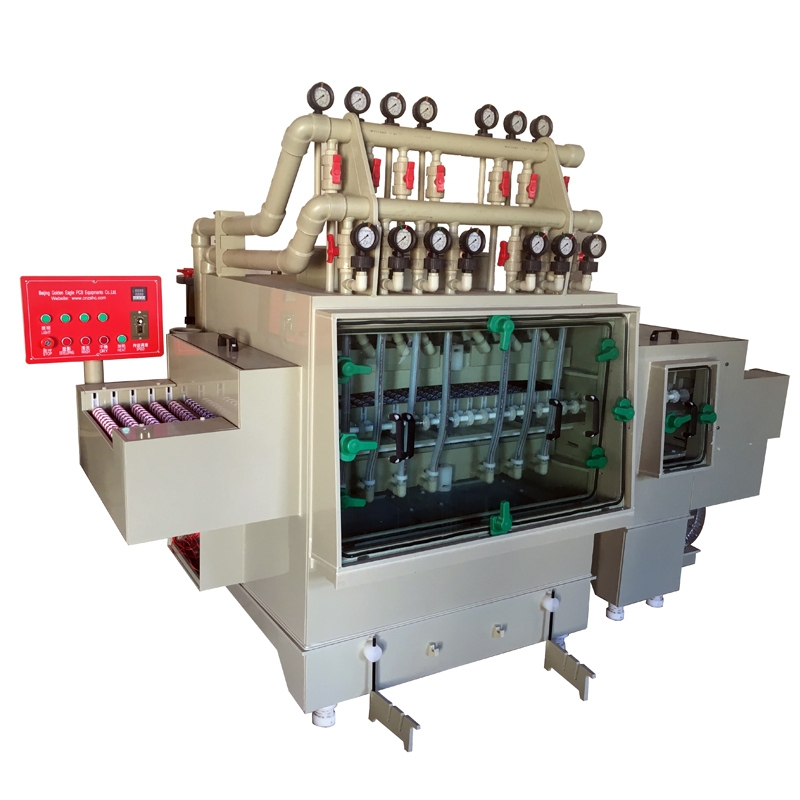
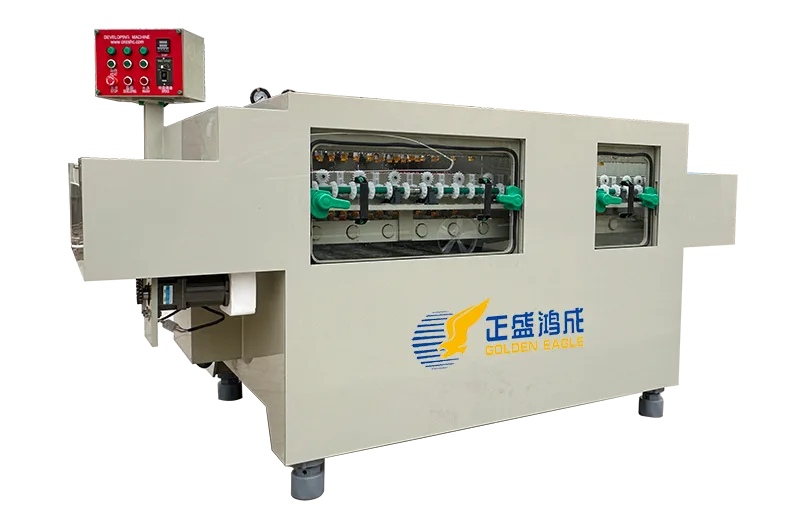
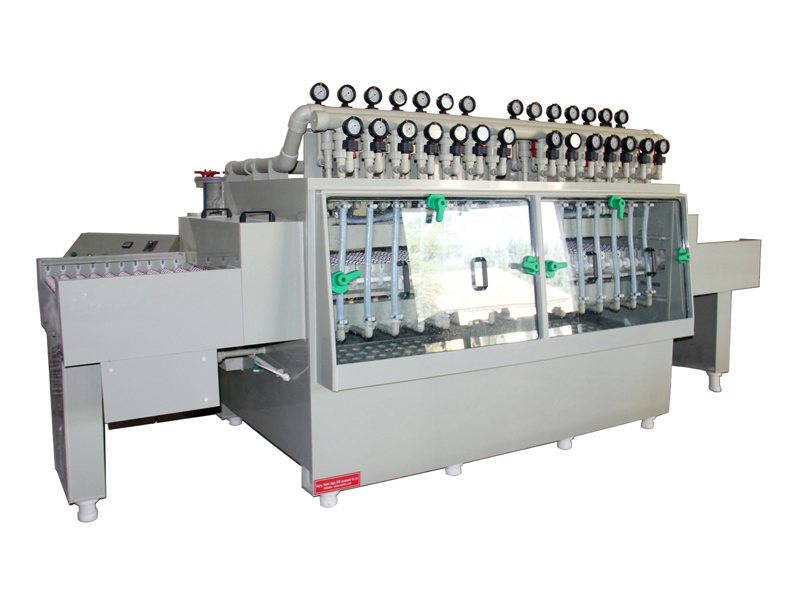
4 modelsMetal Etching Equipment
Spray etchers and photochemical milling systems for stainless steel, copper, brass, aluminium and titanium.

LINE
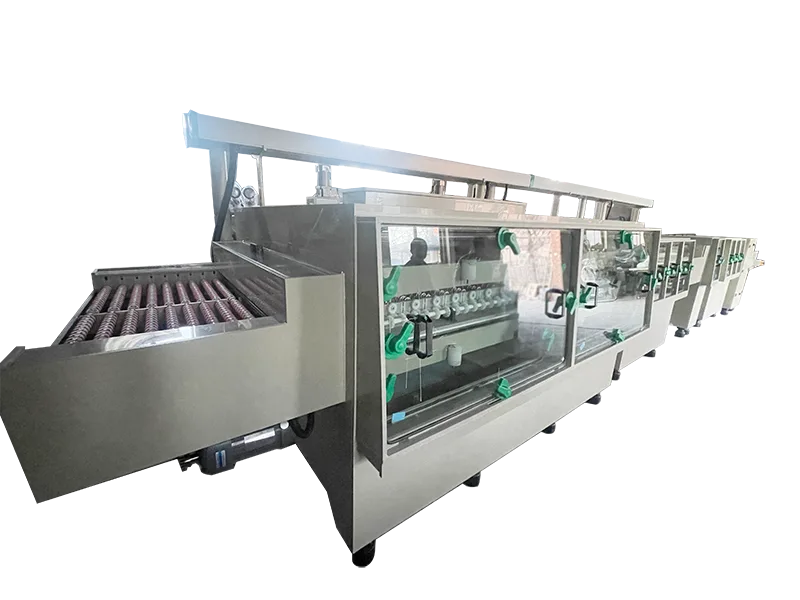
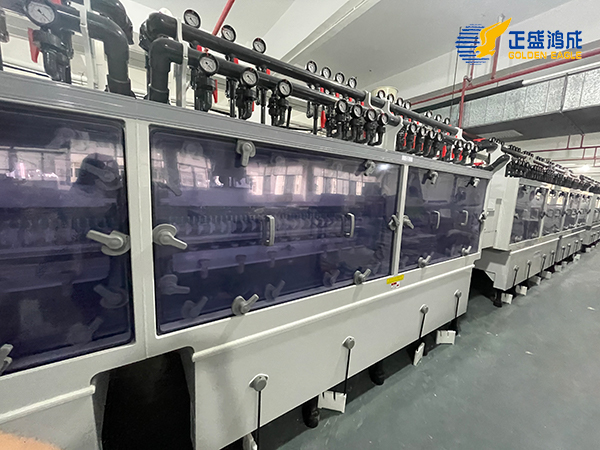
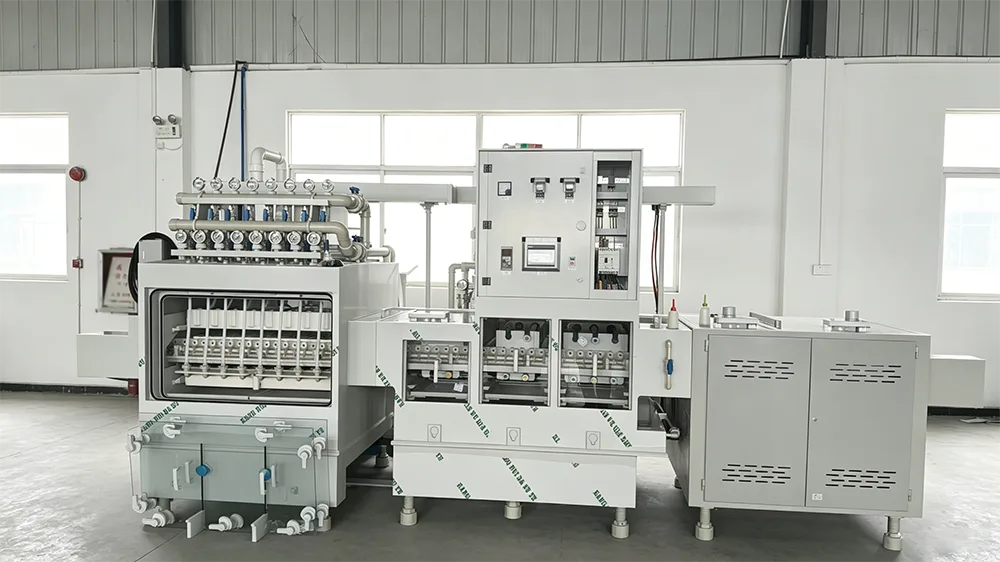
4 modelsFull Production Lines
Integrated lines that combine developing, etching, stripping, washing and drying in a single conveyor.



TOOL
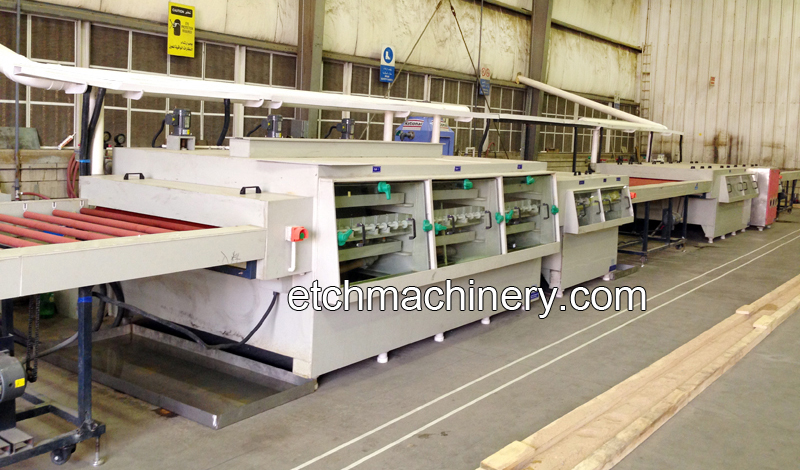
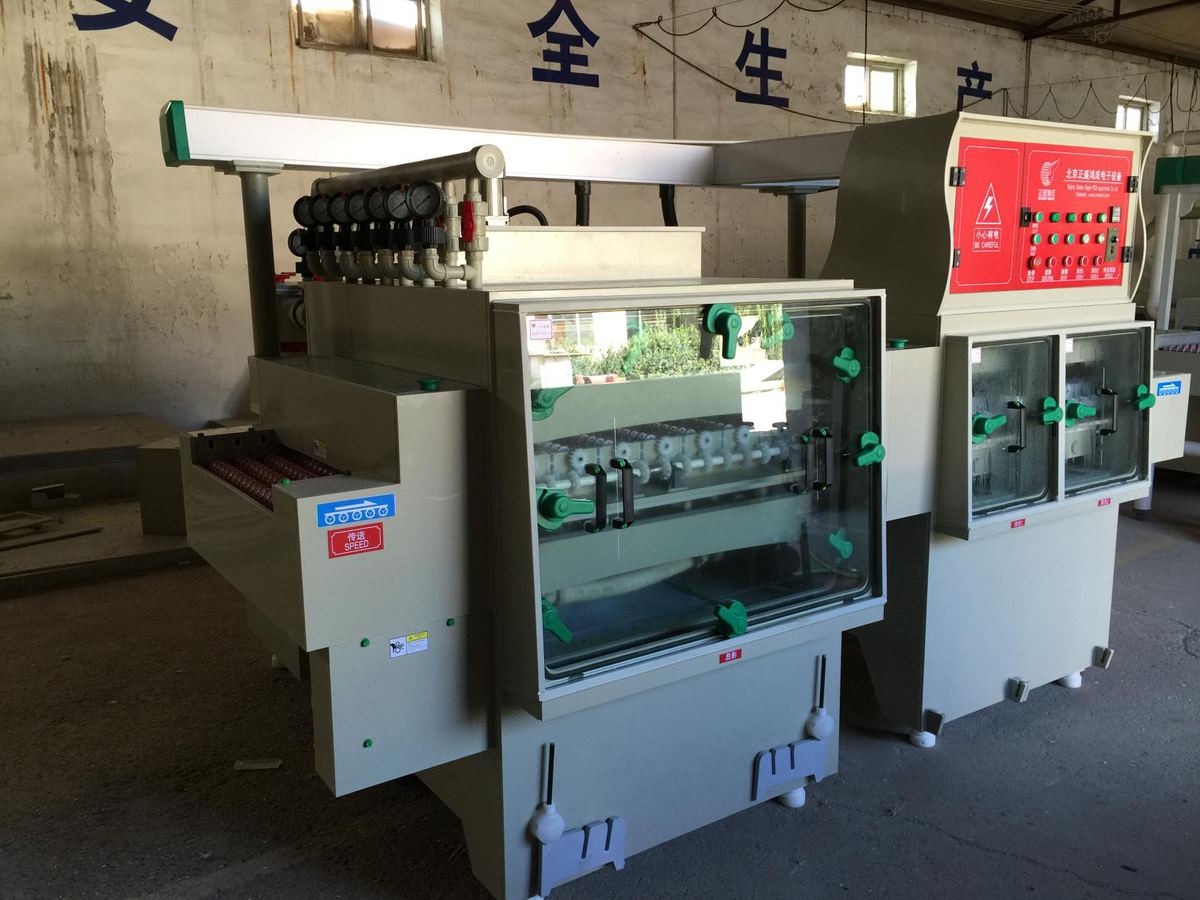
4 modelsDecoration, Tooling & Precision
Machines built for decorative panels, cutting dies, press plates and hot-foil stamping dies, where the workpiece is a finished part.

SUPPORT
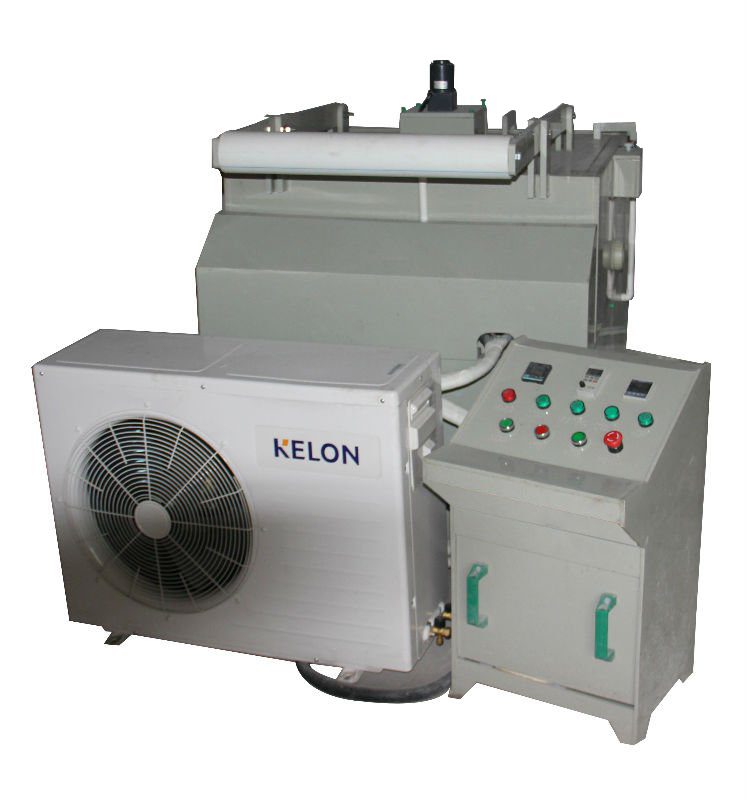
3 modelsLab, Etchant Management & Support
Bench-scale etchers, developing machines and the regeneration controls that keep a line's chemistry stable.


Comparison
Etching Equipment Model Comparison
Twelve of the most requested machines, side by side. Working width, chemistry, tolerance, power and machine size are taken verbatim from each model page.
| Model | Type | Working width | Chemistry / process | Precision | Power | Machine size |
|---|---|---|---|---|---|---|
| GE-JM650W | PCB conveyor spray | 650 mm × L | Etching → stripping → drying | Board 120×80–650×650 mm | not specified on model page | 2850×1280×1200 mm |
| GE-JM400 | Compact PCB spray | 400 mm × L | Double-side spray, oscillation | 50 μm line width | not specified on model page | 1350×1200×1280 mm |
| GE-AE650 | Alkaline ammonia PCB | 650 mm × L | NH₄Cl / NH₄OH + regeneration | Thickness 0.2–3.2 mm | 380 V / 50 Hz / 40 kW | 8000×1700×1850 mm |
| GE-S650 | Metal conveyor spray | 650 mm × L | Alkaline and acidic | Workpiece 80×120–650×650 mm | not specified on model page | not specified on model page |
| GE-SK9 | Wide-format PCM | 650 / 1000 / 1220 / 1550 mm | Acid or alkaline | Tolerance 0.02 mm, 0.05–2 mm | 16 kW / 380 V / 50 Hz | 3550×1650×1550 mm |
| GE-SX650 | Photo etching | 650 mm (customizable) | Photo etching process | not specified on model page | not specified on model page | 2550×1650×1550 mm |
| GE-ET1000 | Wide metal line | 1000 / 1220 / 1550 mm | Double spraying + oscillation | Tolerance ±0.02 mm, 0.05–8 mm | 48 kW / 380 V | 25550×1650×1550 mm |
| GE-DES650 | Full DES line | 650 mm | Developing → etching → stripping | Board 80×120–680×680 mm, 0.1–3.2 mm | 380 V / 50 Hz / 48 kW | 25000×1700×1850 mm |
| GE-JM650-12chamber | 12-chamber chemical milling | 650 mm | 12-chamber precision system | Tolerance ±0.01 mm | 80 kW | 28000×1700×1850 mm |
| GE-DB5060 | Single-side precision | 500×600 mm | Spraying + oscillate nozzles | Tolerance 0.02 mm, 0.05–2 mm | 7.5 kW / 380 V | 1850×1500×1550 mm |
| GE-TB3040 | Hot foil stamping dies | 300×400 / 500×600 mm | Zinc, brass, copper, magnesium | Thickness 0.05–4 mm | 3.5 kW / 380 V | not specified on model page |
| GE-FET500 | Fume-hood laboratory | 500×650 mm double side | Acid or alkaline | not specified on model page | 12 kW / AC 220 V / 50 Hz | 5500×1000×1900 mm |
Prices are quoted per configuration — working width, chemistry, line length, number of chambers and the attached treatment equipment all move the number. Send us your material, feature size and throughput and we will quote the machine that fits.
Materials
Materials We Process
The material and the feature size decide the chemistry. These are the substrates the machines in this range are built for.
FR4 / glass-epoxy PCB
Ferric chloride, cupric chloride or alkaline ammonia depending on the line width you need.
GE-JM650W, GE-AE650
Aluminium PCB
Ferric chloride and alkaline chemistry; the oxide layer is removed in a separate preparation step.
GE-AE650, GE-S400E
Flex PCB
Alkaline ammonia etching for fine copper circuits on flexible base film.
GE-AE650
Stainless steel 304 / 316
Ferric chloride at controlled temperature; back-side protection for through-etching.
GE-S650, GE-SK9
Copper
Ferric chloride or cupric chloride. Copper etchant can be regenerated in-circuit.
GE-S650, GE-ET1000
Brass
Ferric chloride chemistry, on the die and stamping etchers.
GE-TB3040, GE-DB5060
Aluminium
Ferric chloride and alkaline chemistry on the general metal lines.
GE-S650, GE-ET1000
Titanium
Dedicated titanium chemistry on the GE-JM650-T multi-stage line.
GE-JM650-T
Zinc and magnesium
Ferric chloride chemistry, used for hot foil stamping dies.
GE-TB3040
Nickel
Ferric chloride chemistry on the general metal and tool lines.
GE-ET1000, GE-DB5060
Applications
Industries and Applications Served
Etching equipment from this range is used across PCB, metal processing, tooling, electronics and laboratory production.
PCB manufacturing
Single-sided, double-sided, multilayer, HDI, flex and aluminium boards, from prototype quantities up to full DES lines.
Metal nameplates and signage
Stainless steel, brass, copper and aluminium plates engraved to a depth that keeps the lettering legible.
Precision filters and meshes
Etched screens and filter meshes with a uniform aperture pattern across the sheet.
Cutting dies and embossing tools
Rule dies, creasing matrices and flexible cutting dies etched to a repeatable tolerance.
Decorative panels and elevator interiors
Large decorative sheets, press plates and elevator decoration panels up to 1,550 mm width.
Lead frames, RFID antennas and shields
Copper lead frames, RFID antenna patterns and shielding parts for electronics.
Fuel cell and bipolar plates
Flow channels machined into graphite and metal bipolar plates.
Medical and laboratory
Laboratory etching stations and precision parts for medical device manufacturers.
Jewellery, watch cases and architecture
Fine decoration on stainless steel, brass and copper for jewellery and architectural metalwork.
Selection
How to Choose the Right Etching Equipment
Six decisions, in the order that actually narrows the machine down. Work through them and the model list above shrinks to one or two candidates.
1
Start with the material
PCB, stainless steel, copper, brass, aluminium or titanium. The material decides the chemistry and the tank material, so settle this before comparing machines.
2
Set the feature size
Above 100 μm ferric chloride is enough. 50–100 μm calls for cupric chloride. Below 50 μm needs alkaline chemistry or photochemical milling.
3
Decide panel or sheet
PCB panels, full-size metal sheets and thin foils need different conveyor lengths, workpiece handling and drying.
4
Calculate the throughput
Panels per shift or square metres per day determines how many chambers, pumps and how much line length you need.
5
Choose the line depth
A single conveyor etcher, a DES line that adds developing and stripping, or a multi-stage line with cascade washing and drying.
6
Plan the supporting equipment
Etchant regeneration, a developing machine and wastewater treatment are part of the line, not optional extras.
Read the full PCB etching machine buyer's guide and etching equipment capacity sizing guide for a detailed walkthrough, or compare the spray versus immersion etching trade-off in full.
Process
Etching Chemistry and the Production Flow
Three ways to deliver the etchant, and the sequence the workpiece actually follows through a Golden Eagle line.
Conveyor spray etching
Pumped nozzles deliver fresh etchant to the workpiece surface. Double-side spray with oscillation keeps both faces etching at the same rate.
- Fastest and most controllable etch rate
- Both faces see fresh chemistry at once
- The method behind every Golden Eagle production machine
- Suits panels and full sheets
Immersion etching
Parts are submerged in a static tank of etchant. It needs less capital and no pumping, but the bath does not refresh across the workpiece.
- Lower capital cost
- Slower than spray etching
- Sidewall is more isotropic
- Common in laboratory and prototype work
Photochemical milling (PCM)
A photoresist mask defines the pattern, then spray etching removes the exposed metal. Used for thin foils and the finest features.
- Finest feature size of the three
- Suited to thin metal foils and films
- Used for encoder discs and lead frames
- Needs masking and resist stripping
The production flow inside a Golden Eagle etching line
Each model carries the stages its process needs. A single PCB etcher runs a short flow; a DES line adds developing and stripping; a multi-stage metal line adds cascade washing. The common sequence is:
- Load — the panel or sheet enters the machine and is held by the conveyor or workpiece carrier.
- Etching — sprayed etchant removes the unmasked material; oscillation nozzles sweep across the surface where the model is fitted with them.
- Washing and rinsing — pressure water washing followed by city water rinsing removes the etchant film.
- Stripping — on lines that carry it, the resist or oxide layer is stripped after the etch.
- Drying and inspection — squeeze or blot-up, then cold and hot air drying, then checking before unload.
Manufacturer
Why Choose Golden Eagle Etching Equipment
Beijing Golden Eagle has manufactured etching lines since 2003, from bench-scale laboratory stations to multi-chamber industrial systems.
Complete line capability
Etchers, developing machines, etchant regeneration and wastewater treatment are engineered as one system. The whole line shares one control philosophy and one set of process parameters, instead of being assembled from unrelated machines.
Built for continuous production
Titanium heater and cooling pipes, PP tanks rated to 100 °C, and oscillation nozzles on the high-precision models. Every machine is assembled and tested in our own workshop before it ships.
Engineering support worldwide
Process recipes, operator training, English documentation and remote technical support, with spare parts supplied from Beijing. Machines are shipped to customers in more than 30 countries.

Videos
Etching Equipment in the Factory
Three videos from the factory floor showing the equipment on PCB and metal work, with the real formats and the real production flow.
chemical etching line for 1500*3000mm metal sheet etching ,press plate,decoration sheet for elevator
A chemical etching line built for 1500 × 3000 mm metal sheets, covering press plate and elevator decoration work.
PCB Etching Process in Factory -This is how professional etching & stripping works for PCB.
Professional etching and stripping running on PCB panels inside the factory, showing how the conveyor passes the board through each chamber.
decorative metal sheet etching machine for 1.5 meter by 3 meter full size stainless steel sheet
Decorative sheet etching on a full-size 1.5 m × 3 m stainless steel sheet, the format the 1,550 mm wide machines are built for.
FAQ
Frequently Asked Questions About Etching Equipment
What types of etching equipment does Golden Eagle manufacture?
We manufacture conveyor spray etchers for PCB and metal, alkaline ammonia etching lines, ferric and cupric chloride photochemical milling systems, compact 400 mm and bench-scale fume-hood etchers, complete DES lines, developing machines, and etchant regeneration and dosing systems. The full range is listed on this page, and the two category pages — PCB Etching Machine and Metal Etching Machine — go deeper on each family.
What is the difference between spray etching equipment and immersion etching equipment?
Spray etching equipment pumps etchant through nozzles onto the workpiece, so both faces of the part see fresh chemistry at the same time and the etch rate stays consistent across a large panel. Immersion etching equipment submerges the workpiece in a static tank; it needs less capital but is slower and produces a more isotropic sidewall. Every Golden Eagle production machine uses spray etching. Our guide to spray versus immersion etching covers the trade-off in more detail.
Which etchant chemistry should I use?
Ferric chloride (FeCl₃) is the general-purpose choice for copper and PCB work. Cupric chloride (CuCl₂) is regenerable and suits continuous high-volume lines. Alkaline ammonia (NH₄Cl / NH₄OH) is the standard for fine-line HDI and aluminium PCB work. Stainless steel is normally etched in ferric chloride at a controlled temperature. Each machine can be configured for the chemistry it will actually run, and the GE-AE650 carries an integrated regeneration system for ammonia lines.
What precision can etching equipment achieve?
Across the range, the standard models hold a tolerance of 0.02 mm: GE-SK9 and GE-DB5060 both specify 0.02 mm, and the 12-chamber GE-JM650-12chamber specifies ±0.01 mm. On the PCB side, GE-JM400 is specified for a 50 μm line width and the GE-JM650 family for etching down to 50 μm.
What working widths are available?
From 400 mm on GE-S400E, GE-JM400 and GE-DES400, through 650 mm on GE-JM650W, GE-S650, GE-SK9, GE-AE650, GE-DES650 and GE-JM650-12chamber, up to 1000 mm on GE-ET1000 and GE-PE1000, and 1220 mm or 1550 mm on GE-SK9, GE-ET1000 and GE-ED1500. Several models take an orderable conveyor length, so the machine can be matched to the sheet size you actually run.
How do I choose between a single etcher and a full production line?
A single conveyor etcher covers etching, washing and drying. A DES line adds developing and stripping, so the boards never leave the line between those steps, which removes a separate developing machine and cuts handling. Multi-stage lines add cascade washing, etching, stripping and drying for metal sheet work. Send us your material, feature size and throughput and we will map the line for you.
What documentation and support come with the machine?
Each machine ships with an English operation manual and maintenance guidance. Our machines are built against the Machinery Directive 2006/42/EC: we hold a Declaration of Conformity and technical file for the etching machine with waste gas treatment tower and wastewater treatment machine. Engineering support covers process set-up, operator training, remote assistance and spare parts supplied from Beijing.
Do you supply etchant regeneration and wastewater treatment?
Yes. GE-ECD650 is an automated etchant regeneration control that monitors copper concentration from 0.01 to 5.5 g/L and etching concentration from 0.01 to 50 g/L at 0.01 g/L resolution, with PLC control and ORP monitoring. On the wastewater side we supply the treatment train for copper-, nickel- and chromium-bearing etch wastewater. Both are designed to be integrated with the etching line rather than added afterwards.
Get a quotation
Tell Us What You Need Etched
Send us the material, the feature size and the throughput you need, and our engineering team will map the line — etcher, developing, regeneration and treatment — and quote the configuration that fits.
- Reply with a machine recommendation and a quotation within 24 hours
- Specification sheet drawn from the model page for that machine
- Layout, line length and utility requirements included
- FOB Beijing, CIF and DAP terms available
Talk to an engineer
Request a Quotation etchmachinery@163.com +86 150 1060 8128Office 701, B Building, Greenland Group, Xinghua Street, Daxing District, Beijing, China.
Mentioned in These Articles
This equipment is referenced in the following Golden Eagle technical guides:
- Titanium Etching Process
- Chemical Etching Process
- Etching vs Stamping
- Etching Machine Maintenance Guide
- Etching Machine for RFID Antenna
- Etching Machine Wastewater Treatment
- Etching Line Facility Planning
- Etching vs Laser Cutting
- Aluminium Etching Process
- Conveyor Etching Production Guide
- Etching Wastewater Treatment Guide
- How Does a Chemical Etching Machine Work