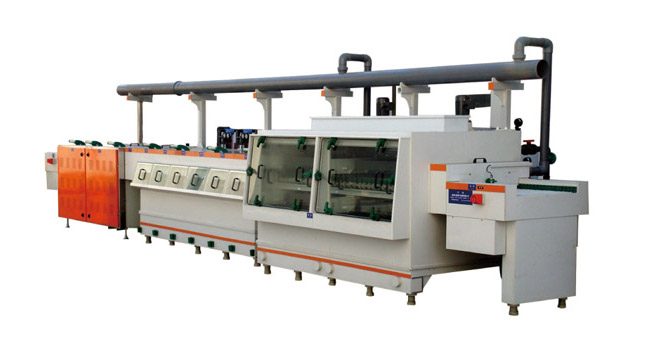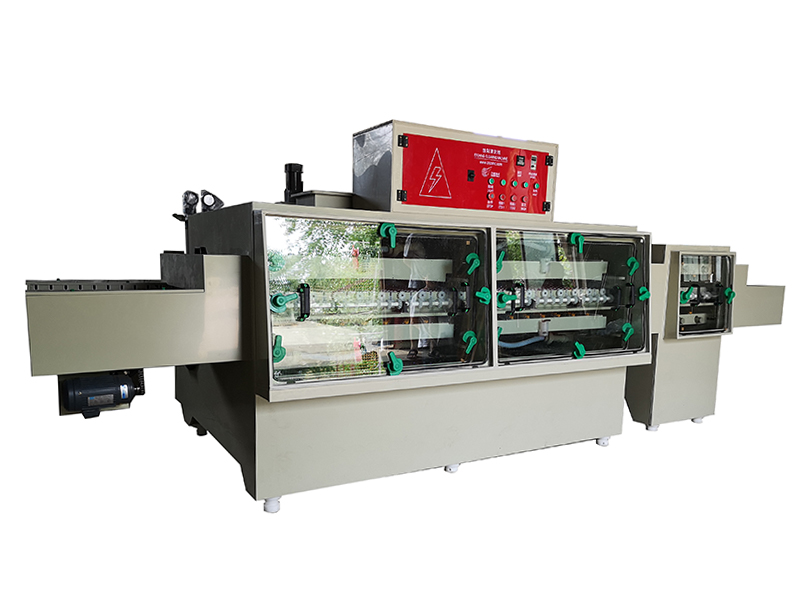
Etching Machine for Aluminum: Alkaline Etch Process & Equipment
Aluminum is the third most common metal in chemical etching, after stainless steel and copper. The aluminum etching machine is built around an alkaline chemistry (NaOH, KOH) rather than the acidic chemistry used for steel and copper — which means different equipment, different safety, and different process discipline. The trade-off is that aluminum parts are light, cheap, and have excellent thermal and electrical conductivity, so aluminum etching shows up in a long list of products from LED heat sinks to decorative panels.
Aluminum is the third most common metal in chemical etching, after stainless steel and copper. The aluminum etching machine is built around an alkaline chemistry (NaOH, KOH) rather than the acidic chemistry used for steel and copper — which means different equipment, different safety, and different process discipline. The trade-off is that aluminum parts are light, cheap, and have excellent thermal and electrical conductivity, so aluminum etching shows up in a long list of products from LED heat sinks to decorative panels.
This guide covers the aluminum etching chemistry, the process flow, the machine specifications that matter, and the high-volume applications where aluminum etching is the right process.
Quick Answer
- An aluminum etching machine is a conveyorised spray line running sodium hydroxide (NaOH) at 40–70 °C, with PP or PVC construction and a hot alkaline bath.
- Etch rate: 25–40 µm/min at 50 °C in 10–15% NaOH, depending on alloy and temperature.
- The reaction is exothermic — the bath temperature rises during the etch and must be controlled.
- Key applications: LED heat sinks, aluminum PCB, decorative panels, nameplates, electronic enclosures, inlay work, automotive trim.
Why Aluminum Etching Is Different
Aluminum is etched with an alkaline chemistry rather than the acid chemistry used for steel and copper. The reasons:
- Aluminum oxide (Al2O3) is not attacked by FeCl3 or cupric chloride. The standard acid etchants do nothing to aluminum. The alkaline chemistry works because NaOH dissolves the Al2O3 layer and keeps the underlying metal dissolving.
- Aluminum is amphoteric — it dissolves in both acid and alkali. The alkaline etch is preferred because the etch rate is controllable and the byproducts are water-soluble.
- The etch reaction is fast and exothermic. Without temperature control, the bath temperature climbs and the etch rate runs away. A production line must have a heater (for startup) and a chiller (for steady-state temperature control).
- Hydrogen gas is evolved. NaOH + Al produces sodium aluminate and hydrogen. The line needs adequate fume extraction and a vented bath to prevent hydrogen buildup in the chamber.
The Aluminum Etching Chemistry
The standard aluminum etchant is sodium hydroxide (NaOH, also called caustic soda) in water, sometimes with a small addition of sodium gluconate or other chelator. The reaction:
2 Al + 2 NaOH + 6 H2O → 2 Na[Al(OH)4] + 3 H2↑
The aluminum dissolves as sodium aluminate, hydrogen is given off, and the bath gets progressively loaded with dissolved aluminum. The etch rate depends on:
- NaOH concentration. Higher concentration = faster etch. Typical 5–20% by weight.
- Temperature. Higher temperature = much faster etch. The rate roughly doubles for every 10 °C. Production lines run at 40–70 °C.
- Aluminum alloy. Pure aluminum (1xxx series) etches faster than the alloys (3xxx, 5xxx, 6xxx). Cast aluminum alloys (A356, A380) etch slower than wrought.
- Dissolved aluminum concentration. As the bath loads, the etch rate drops. A bath with 50 g/L of dissolved aluminum etches about 50% slower than a fresh bath.
What an Etching Machine for Aluminum Must Do
A conveyorised spray etcher for aluminum is built around the alkaline chemistry, with a few specific things that acid lines do not need.
1. Heated bath with temperature control
The bath runs at 40–70 °C, well above room temperature. A quartz or titanium heater brings the bath up to temperature at the start of a shift. A chiller (or cooling coil) removes the heat of reaction during the etch. Without both, the bath either runs too cold (slow etch) or too hot (uncontrolled etch).
2. Construction compatible with hot NaOH
PP, PVC, and CPVC all handle hot NaOH. Stainless steel is NOT suitable — the alkaline bath attacks the grain boundaries and causes stress corrosion cracking. Aluminum itself is fine for the bath (it dissolves anyway), but pump casings, spray bars, and nozzles must be plastic.
3. Bath management for dissolved aluminum
As the bath loads with dissolved aluminum (as sodium aluminate), the etch rate slows. A production line has two options: dump and replace the bath periodically, or use a chelator (sodium gluconate) to keep the aluminum in solution and maintain etch rate. The chelator option is the standard for high-volume lines.
4. Spray and even coverage
The spray system is the same as for steel — flat-fan nozzles, oscillating bar, top and bottom spray. The nozzle material is PP, and the spray pressure is the same.
5. Strip chemistry
The standard liquid photoresist stripper (10% NaOH) does not work on aluminum — the stripper is the same chemistry as the etchant. A separate strip bath is required, typically using a nitric / chromic acid blend or a proprietary stripper that does not attack the aluminum substrate. Dry film is stripped with the same NaOH used for steel and copper; liquid resist is the issue.
The Aluminum Etching Process
- Pre-treatment. Degrease and deoxidise. Aluminum forms an oxide layer in air that must be removed before the resist is applied. A short NaOH pickle (30–60 seconds) or a commercial aluminum etch / deoxidiser is standard.
- Photoresist. Dry film laminated on both sides, or photosensitive ink spray-coated. The resist must be fully cured to survive the hot alkaline etch.
- Exposure and development. UV exposure through a phototool, then develop in dilute Na2CO3.
- Etching. Conveyorised spray with NaOH at 40–70 °C. Etch time is short (often 1–10 minutes) for the typical 0.3–1.0 mm sheet used in decoration and LED PCB work.
- Rinse. Multiple water rinses to remove residual NaOH. The rinse water must be checked for pH — a residual alkaline film on the part will continue to etch after the conveyor.
- Strip. Remove the resist in a separate bath (nitric / chromic or a proprietary stripper).
- Optional anodising. Anodising after etch is common for aluminum nameplates, decorative panels, and LED heat sinks. The etch gives the pattern, the anodising gives the colour and corrosion resistance.
Key Applications for Etched Aluminum
- LED heat sinks and LED PCB. Aluminum heat sinks and aluminum-core PCBs are the largest application by volume. The metal conducts heat away from the LED; the etched pattern gives the cosmetic or functional feature.
- Aluminum PCB substrate. MCPCB (metal core PCB) uses an aluminum base with a copper circuit layer on top. The aluminum base is sometimes etched to form cavities, vias, or thermal management features.
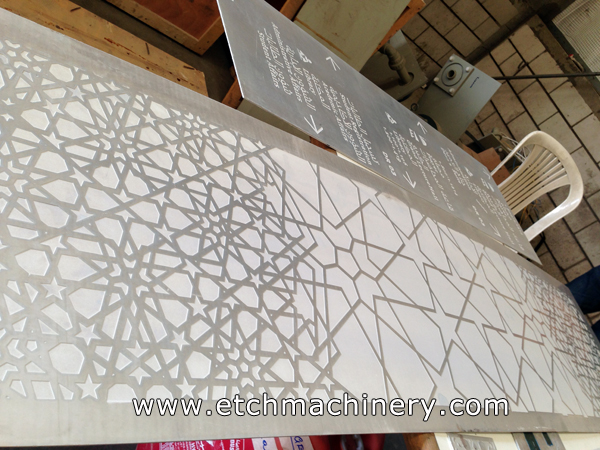
- Decorative panels. Architectural panels, elevator interiors, ceiling panels, lighting fixtures. Anodised after etch for colour and durability.
- Nameplates and signage. Industrial nameplates, machine serial plates, outdoor signage. Anodised for outdoor durability.
- Electronic enclosures. RF shields, EMI/RFI gaskets, laptop cases, mobile phone housings, control panel covers.
- Automotive trim. Decorative inserts, gear surrounds, dashboard trim, nameplates.
- Reflective components. Light reflectors, LED backlight components, optical parts.
Aluminum Etching vs Other Metals
A practical comparison of aluminum, stainless steel, copper and titanium etching:
| Factor | Aluminum | Stainless steel | Copper / Brass | Titanium |
|---|---|---|---|---|
| Etchant | NaOH (alkaline) | FeCl3 (acid) | FeCl3 or cupric chloride | HF / HNO3 |
| Etch rate | 25–40 µm/min | 25–40 µm/min | 30–50 µm/min | 15–25 µm/min |
| Equipment material | PP / PVC | PP / PVC | PP / PVC | PVDF / PTFE |
| Operating temperature | 40–70 °C | 45–55 °C | 40–55 °C | 20–30 °C |
| Fume hazard | Caustic mist + H2 | Acid mist | Acid mist | HF — very high |
| Capital cost of line | Lower (mild steel OK for frame) | Moderate | Moderate | Highest |
| Weight of finished part | Lightest | Heaviest | Moderate | Moderate |
| Thermal conductivity | Best | Poor | Good | Poor |
Aluminum is the cheapest metal to etch in terms of equipment (no exotic materials) but requires more bath management because the etch reaction is fast and the bath loads with dissolved metal quickly. The volume of aluminum etching is in LED PCB and heat sink production, where aluminum's thermal conductivity is the key advantage.
Setting Up an Aluminum Etching Line?
Send us your aluminum alloy (1xxx, 3xxx, 5xxx, 6xxx), your part geometry, your annual volume and the application. Golden Eagle will configure an alkaline conveyorised etching line with the chemistry, temperature control and bath management to match.
Configure a LineConclusion
An aluminum etching machine is a conveyorised spray line running NaOH at 40–70 °C, with PP or PVC construction, tight temperature control, and bath management for dissolved aluminum. The chemistry is different from steel and copper, but the equipment is simpler (no exotic HF-rated materials). The volume of aluminum etching is dominated by LED PCB and heat sink production, where aluminum's thermal conductivity is the key advantage. The line will run profitable aluminum production for many years with the right setup.