
Etching Machine for Filter Mesh: Precision Metal Filter Etching
Precision metal filter mesh is one of the highest-volume photochemical etching applications outside of PCB. The same conveyorised spray etcher that makes nameplates can also make filter elements — with a tighter artwork tolerance, a finer mesh / spray setup, and a chemistry optimised for the slot widths the application needs. Etched filter mesh is everywhere: in fuel injectors, in coffee machines, in speaker grilles, in oil filters, in medical filtration, in industrial process filters.
Precision metal filter mesh is one of the highest-volume photochemical etching applications outside of PCB. The same conveyorised spray etcher that makes nameplates can also make filter elements — with a tighter artwork tolerance, a finer mesh / spray setup, and a chemistry optimised for the slot widths the application needs. Etched filter mesh is everywhere: in fuel injectors, in coffee machines, in speaker grilles, in oil filters, in medical filtration, in industrial process filters.
This guide covers how etched filter mesh is made, what specifications matter, and how the right etching machine is configured for filter mesh production.
Quick Answer
- An etching machine for filter mesh is a conveyorised spray etcher running FeCl3 on thin (0.05–0.5 mm) stainless steel foil, with fine flat-fan nozzles and tight temperature control.
- Slot width: 50 µm to 1 mm depending on the application; slot tolerance ±5–10 µm.
- Etch factor: 4:1 to 6:1; channel sidewalls close to vertical.
- Throughput: 0.5–2 m²/min on a 600 mm line — millions of filter elements per year per line.
What Is Etched Filter Mesh?
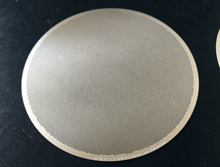
An etched filter mesh is a flat sheet of thin metal (almost always stainless steel, sometimes titanium or nickel) with a regular pattern of slots or holes photochemically etched through the full thickness. The slots are typically:
- Long parallel slots, the simplest and most common pattern. Easy to design, easy to etch, easy to wash.
- Slot arrays in a herringbone or chevron pattern, for higher open area at the same slot width.
- Round holes in a hex or square grid, for screen-type applications.
- Custom patterns designed for a specific filter performance curve.
The slot width, slot length, slot density, open area and material thickness are all chosen together to give the required flow rate, pressure drop, dirt-holding capacity and mechanical strength. The etching process is the same regardless of pattern — the artwork is what changes.
How Etched Filter Mesh Is Made
The flow below is a standard photochemical etching process, but the parameters are tuned for filter-mesh precision rather than decorative etching.
- Pre-treatment. The SS foil is degreased, lightly pickled and rinsed. The foil is thin and flexible, so handling is done on a flat carrier or with rollers.
- Photoresist. Dry film laminated on both sides, or photosensitive ink spray-coated. The resist must hold the fine slot pattern without pinholes — one pinhole = one slot with the wrong dimensions = one reject.
- Exposure. UV exposure through a phototool on a fine-mesh exposure unit. For sub-100 µm slots, the phototool is high-resolution film with tight line-width control.
- Development. Dilute Na2CO3 for liquid resists. The unexposed resist washes out, leaving the slot pattern open.
- Etching. Conveyorised spray with FeCl3 at 45–55 °C. The slot depth is the foil thickness, so the etch time is short (often less than a minute) and the conveyor speed is correspondingly high.
- Strip, rinse and dry. 10% NaOH to lift the resist, then rinse and dry. The thin foil is rolled onto a take-up reel.
What Etching Machine Specifications Matter for Filter Mesh
A conveyorised spray etcher for filter mesh production is built around a few things that ordinary decorative etching does not need as much. Here is what to look for.
Fine, even spray
The slots are 50–500 µm wide. A nozzle that delivers 0.5 ml/s at the wrong angle can over-etch one side of a slot and under-etch the other. Flat-fan nozzles with a controlled pattern, a small nozzle pitch (10–20 mm), and an oscillating spray bar are the standard.
Tight temperature control
Etch rate doubles for every 10 °C. A drift of 2 °C over a 30-second etch time changes the slot depth by 10%. The line needs proportional heater control with a tolerance of ±0.5 °C.
Inline regeneration
Filter mesh production is high volume. The bath concentration drifts faster than in a low-volume line. A regeneration system with specific gravity and ORP control is necessary, not optional.
Thin-foil handling
Filter mesh foil is often 0.05–0.1 mm. A standard conveyor with wide roller pitch will dent the foil. The conveyor needs close roller pitch, low roller pressure, and (for very thin foil) a magnetic or vacuum hold-down.
Slot inspection
Filter mesh is sold by slot dimension. Every metre of foil should be inspected for slot width, slot density, and open area. A vision inspection system downstream of the etch gives the right data without slowing the line.
Etched Filter Mesh vs Other Filter Manufacturing Methods
Three methods compete in precision metal filter mesh:
- Etched filter mesh — photochemical process, vertical sidewalls, complex patterns, economical from a few hundred m² to millions of m². The standard for industrial filtration.
- Woven wire mesh — wires woven in warp and weft. The slot width is the wire diameter, not a designed feature, so the slot is irregular. Common for screens, less common for precision filters.
- Welded wire mesh — wires resistance-welded at the intersections. Strong and dimensionally stable, but the slot is also a wire gap, with the same irregularity as woven mesh.
- Laser-cut mesh — laser cuts each slot. Slow, expensive for high volume, and leaves a heat-affected zone. Used for very thick mesh where etching is too slow.
Etched mesh wins on slot precision, on pattern flexibility, and on cost at almost any production volume. It is the default process for stainless steel precision filter mesh.
Common Applications
Etched filter mesh is used across a long list of industries:
- Automotive. Fuel injector baskets, oil filter screens, fuel filter elements, fuel pump strainers.
- Coffee. Reusable coffee filter baskets, group head shower screens, espresso puck screens.
- Audio. Speaker grilles, microphone grilles, earphone mesh, hearing-aid mesh.
- Medical. Blood filter screens, surgical suction filters, drug-delivery filters.
- Industrial. Process filters, hydraulic filter elements, water treatment screens, chemical process strainers.
- Consumer. Kettle filter spouts, vacuum cleaner filters, water filter cartridges.
Design Tips for Etched Filter Mesh
A few design rules that consistently give good results on a conveyorised etching line:
- Match slot width to foil thickness. A 100 µm slot in 100 µm foil etches cleanly. A 100 µm slot in 300 µm foil etches slowly with a wide under-etch. A 50 µm slot in 100 µm foil is at the limit of the process.
- Keep slot length to no more than 10× slot width. A long thin slot will etch with a wider etch at the middle than at the ends. For longer features, break them into a series of shorter slots.
- Use a herringbone or chevron pattern for high open area. A regular parallel slot array has a theoretical maximum open area of about 30%. A herringbone or chevron can hit 40–50%.
- Always add a frame or border. Etched mesh with no border is hard to handle after etch. A 2–3 mm un-etched border around the mesh pattern gives the foil rigidity and a place to hold the part.
Etching Precision Filter Mesh?
Send us your foil grade and thickness, your slot pattern and dimensions, and your target throughput. Golden Eagle will configure a high-precision conveyorised etching line with fine spray, regeneration and a vision inspection station.
Configure a LineConclusion
An etching machine for filter mesh is a high-precision conveyorised spray line running FeCl3 on thin stainless steel foil, with fine spray nozzles, tight temperature control, regeneration, and gentle thin-foil handling. Etched filter mesh is the standard for industrial filtration because the slot dimensions, pattern flexibility, open area and unit cost are all better than the alternatives. The line will run profitable filter production for many years with the right setup.