PCB Cleaning & Drying Line — Double-Sided Spray for Through-Hole and Surface-Mount Panels
A horizontal conveyor cleaning and drying line for PCB pre-treatment, post-etching, and pre-HASL/ENIG rinsing. Double-sided oscillating spray removes flux, dry-film residue, and oxide from both sides of the panel in a single pass, with PP-bodied tanks, titanium heaters, and German-made spray nozzles rated to 100 °C. Available in 650 mm and 800 mm working widths and 0.5–6 m/min variable speed.
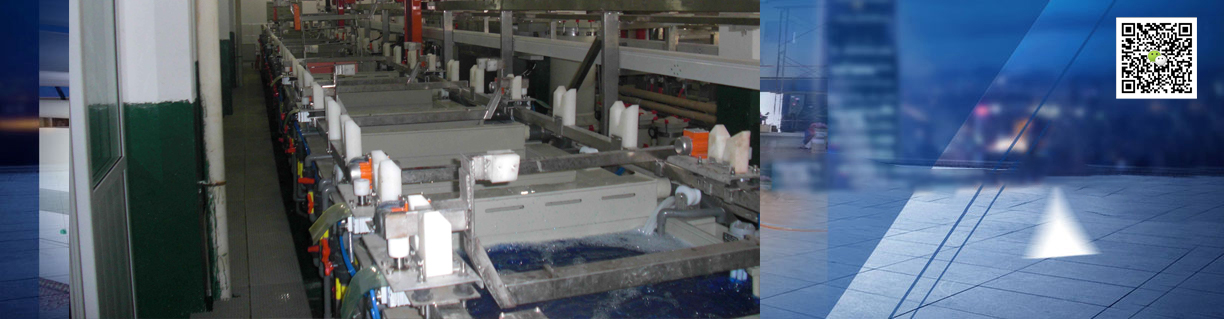
GE-QX6 PCB cleaning & drying line, 650 mm working width, double-side spray with oscillation.
What Is a PCB Cleaning & Drying Line?
A PCB cleaning & drying line is a wet-processing conveyor that combines alkaline wash, acid wash, multiple rinses, and hot/cold air drying in a single horizontal pass. It is used after etching or developing to remove residual chemistry and dry-film debris, and before HASL/ENIG/OSP to prepare a clean copper surface. The double-sided oscillating spray design ensures that both the top and bottom of the panel are cleaned in the same pass — critical for through-hole work where drilling debris and chemistry residue collect on the hole walls.
Compared to hand-spray booths or single-sided conveyor cleaners, the GE-QX6 line cuts cleaning time from 8–10 minutes to 90–120 seconds per batch, reduces water consumption by ~40% with the counter-flow cascade, and delivers a consistent surface finish that downstream HASL and ENIG lines can build on without rework. For more on the upstream etching step see our PCB etching machine page, and for downstream HASL see the Hot Air Leveling line.
8-Stage Cleaning & Drying Process
Panels travel on a horizontal PP conveyor through eight sequential stages. The first three are chemistry stages, the next three are rinses, and the last two are drying and cooling.
01
Load.
Operator loads PCB panels onto the horizontal conveyor; throughput 80–120 panels/hour depending on size.
02
Alkaline wash.
5% NaOH at 50–60 °C, double-sided oscillating spray, dwell 30–45 s to remove flux and dry-film residue.
03
Recycle-water rinse.
Recovered RO water fed back from stage 5 to reduce fresh-water consumption by ~30%.
04
Acid wash.
10% sulfuric acid or HCl at 35–45 °C to neutralize residual alkaline and deoxidize copper.
05
Recycle-water rinse.
Second counter-flow rinse cascade, conductivity-controlled to trigger auto dump at >50 µS/cm.
06
Final DI rinse.
18 MΩ·cm DI water cascade; final resistivity check before drying.
07
Hot & cold air dry.
Air-knife drying with 60–80 °C hot air followed by ambient cooling; spot-free finish.
08
Unload.
Automatic rack-off or direct inline feed to the next process (HASL, ENIG, or OSP).
Technical Specifications
Item
Specification
Model
GE-QX6 (650 mm) / GE-QX8 (800 mm)
Power supply
380 V / 50 Hz / 3-phase (60 Hz optional)
Working width
650 mm (GE-QX6) / 800 mm (GE-QX8)
Working height
850 mm (±50 mm adjustable)
Workpiece thickness
0.2–3.2 mm
Cleaning type
Double-side oscillating spray, German PP nozzles
Working temperature
35–55 °C (alkaline) / 35–45 °C (acid)
Conveyor speed
0.5–6 m/min, variable frequency
Heater / cooling
Titanium pipe, indirect steam or electric
Tank material
Welded PP (German), 100 °C rated
Control system
PLC + 7″ HMI, automatic dosing & pH control
Water consumption
2–4 m³/day (with counter-flow cascade)
Machine dimension
8000 × 1700 × 1850 mm (L × W × H)
Why Choose Golden Eagle PCB Cleaning Line?
Same supplier as your etching and developing lines. The cleaning line, the etching machine, the developing machine, and the exposure machine are all from Golden Eagle. One commissioning engineer, one warranty, one set of spare parts, one shipping container.
Double-side oscillating spray. The oscillating spray header moves 200 mm back and forth at 30 cycles/min, ensuring the spray jet hits the panel at all angles. Single-side headers leave the bottom of the panel under-cleaned, especially on through-hole boards.
PP tank body rated to 100 °C. Welded German PP, not glued, with reinforced steel frame. Most competitors use PVC tanks that deform at 60 °C and have a service life of 3–5 years; our PP tanks run 10+ years.
Titanium heater & cooling pipes. No corrosion from chloride chemistry, no scaling from hard water. Heater life 8+ years vs. 2–3 years for stainless steel.
Counter-flow water cascade. 3-stage counter-flow rinse reduces fresh DI water consumption by 60% and keeps discharge conductivity below 50 µS/cm automatically.
Frequently Asked Questions
What is the difference between a cleaning line and a developing machine?
A developing machine uses a 1% sodium carbonate spray to dissolve unexposed dry-film resist from the panel after exposure. A cleaning line is a separate, higher-volume wash system used after etching, developing, or before HASL/ENIG to remove residual chemistry, dry-film debris, and copper oxide. The two are complementary: the developing machine is part of the imaging step, while the cleaning line is part of the surface-preparation step. For most PCB shops the cleaning line runs 3–4 shifts and the developing machine runs only 1–2 shifts.
Can the line clean both sides of the panel in one pass?
Yes — the GE-QX6 and GE-QX8 both have top and bottom oscillating spray headers. The panels ride on a roller conveyor with 30 mm gaps; the top and bottom headers spray simultaneously, so both sides are cleaned in a single pass. This is critical for through-hole work where drilling debris collects on the inner hole wall and cannot be removed by top-side-only spray. For double-side flexible PCB or thin copper-clad, a reduced-pressure (<0.2 MPa) variant is available to prevent warping.
What chemistry is used in the alkaline and acid stages?
The alkaline stage uses 5% NaOH or a proprietary alkaline cleaner (e.g. Atotech Securiganth XP) at 50–60 °C. The acid stage uses 10% sulfuric acid or HCl at 35–45 °C to neutralize and deoxidize. Both stages are PLC-controlled with automatic dosing pumps that maintain pH at 13.0±0.5 (alkaline) and 0.5±0.2 (acid). For lead-free or high-reliability work, a peroxide-sulfuric microetch can be added as a 9th stage to improve copper surface roughness. For details on chemistry supply see our chemicals catalogue.
How much water does the line consume per day?
A standard GE-QX6 line consumes 2–4 m³ of fresh DI water per day on a 2-shift operation, with the counter-flow cascade reusing 60% of the rinse water. Without the cascade, water consumption rises to 6–8 m³/day. The conductivity sensor on the final rinse triggers an automatic dump-and-refill when the rinse water exceeds 50 µS/cm, so chemistry carry-over is bounded. For high-volume shops running 3 shifts, a separate RO/EDI water system is recommended to keep the discharge within the local environmental limits.
Can the cleaning line feed directly into a HASL or ENIG line?
Yes — the GE-QX6 is designed for inline connection to the HASL line or the ENIG line. The output conveyor of the cleaning line matches the input height of the HASL pre-heat and the ENIG load station, so panels transfer without manual handling. For the ENIG line specifically, a final DI rinse cascade with resistivity >15 MΩ·cm is mandatory; this is included as standard on the cleaning line. For HASL, a 9th stage of hot-air drying at 80–100 °C is recommended; this is available as an upgrade.