
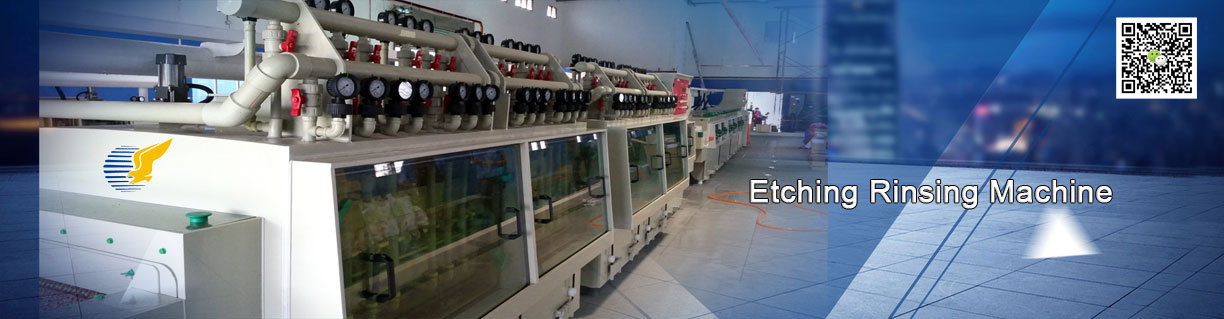
Etching Machine for Titanium: Process, Chemistry & Equipment
Titanium is one of the most useful but most demanding metals in chemical etching. The same passivation that makes titanium biocompatible, corrosion resistant and aerospace-grade also makes it one of the hardest metals to etch — the oxide layer shrugs off most conventional etchants, and the chemistries that do work (HF-based blends) require full safety discipline. A titanium etching machine is built around those two facts.
Titanium is one of the most useful but most demanding metals in chemical etching. The same passivation that makes titanium biocompatible, corrosion resistant and aerospace-grade also makes it one of the hardest metals to etch — the oxide layer shrugs off most conventional etchants, and the chemistries that do work (HF-based blends) require full safety discipline. A titanium etching machine is built around those two facts.
This guide covers what titanium is doing inside the etch chamber, what chemistry and process give clean results, what machine specifications matter, and the high-value applications where titanium etching has no real alternative.
Quick Answer
- A titanium etching machine is a conveyorised spray line running HF-based etchant (typically HF / HNO3 blends) on titanium sheet or foil, with full HF safety discipline and HF-rated fume handling.
- The oxide layer (TiO2) is the challenge: most etchants cannot attack it. The HF chemistry works because fluoride ions break the oxide layer and keep the etch running.
- Etch rate: ~15–25 µm/min at room temperature in a typical HF / HNO3 blend, depending on concentration and grade.
- Key applications: foldable phone hinges and decorative parts, medical implants, aerospace brackets, bipolar plates for PEM fuel cells, chemical processing equipment.
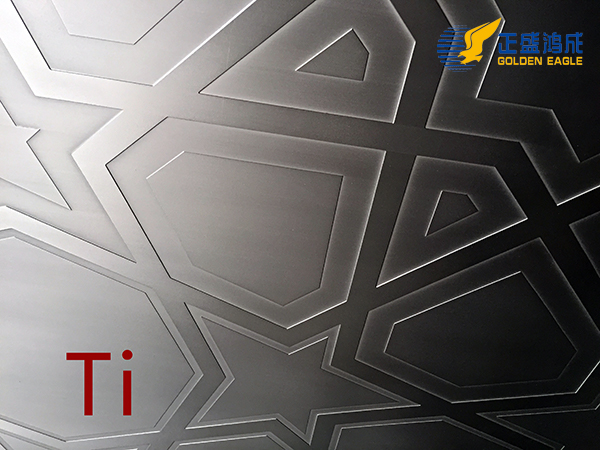
Why Titanium Is Harder to Etch Than Steel or Copper
Titanium is hard to etch for the same reason it is corrosion resistant: a thin, hard, chemically inert layer of titanium dioxide (TiO2) forms on the surface within milliseconds of exposure to air. The oxide layer is what makes titanium biocompatible, what makes it survive in the human body, what makes it resist seawater and chemical processing fluids — and what makes it shrug off most conventional etchants.
Three things follow from this:
- The etchant must break or dissolve the oxide layer before it can attack the underlying metal. Hydrofluoric acid is the standard tool for this because fluoride ions complex the titanium oxide.
- The etch reaction is fast once the oxide is gone, which means temperature control and exposure time matter more than with steel or copper.
- The titanium oxide re-forms instantly if the etch is stopped and the surface is exposed to air or water without proper rinsing. A poorly rinsed titanium part will quickly develop a thin oxide haze that affects downstream processing.
The Titanium Etching Chemistry
The standard titanium etchant is a blend of hydrofluoric acid (HF) and nitric acid (HNO3), sometimes with a small amount of hydrochloric acid (HCl) or a surfactant. The roles of the two main acids:
- HF (hydrofluoric acid). The active ingredient. The fluoride ions break the TiO2 layer and keep the etch running. Typical concentration 2–10% by volume.
- HNO3 (nitric acid). The oxidiser. Maintains the oxidising power of the bath and slows the etch to a controllable rate. Typical concentration 10–30% by volume.
- HCl or surfactant (optional). Improves the wetting of the surface, which keeps the etch uniform across the sheet.
The etch is typically run at room temperature (20–30 °C). Heating the bath speeds the etch but also speeds the volatilisation of HF, which is a serious fume-handling problem. Most production lines run cool and accept the slower etch rate as a trade-off for better safety and bath life.
What an Etching Machine for Titanium Must Do
A conveyorised spray etcher for titanium is built around the safety and process requirements of HF chemistry, with a few specific things that ordinary FeCl3 lines do not need.
1. HF-resistant construction
Every wetted part must be HF-rated. Pumps, spray bars, nozzles, sump, fume hood and ductwork should be PVDF, PTFE or polypropylene. Stainless steel is attacked by HF and cannot be used. Even small amounts of residual SS in the system will contaminate the bath and cause rough etching.
2. Closed fume hood with HF-rated scrubber
HF fumes are toxic and corrosive at very low concentrations. The fume hood on the etch chamber must be fully enclosed, with a duct that runs directly to a packed-tower scrubber. The scrubber is filled with NaOH or Ca(OH)2 solution to neutralise the HF. Routine leak testing of the ductwork is mandatory.
3. Calcium gluconate on hand
HF burns are serious because fluoride ions penetrate the skin and continue to attack underlying tissue. Every titanium etching line must have calcium gluconate gel on hand for first aid. Operators handling HF must wear HF-rated gloves (not standard nitrile), an apron, a face shield, and a respirator with an HF-rated cartridge.
4. Spray system matched to the chemistry
PVDF or PTFE flat-fan nozzles with HF-resistant seals. The nozzle pitch and oscillation pattern are the same as for a steel line — 10–20 mm pitch, oscillating bar, full coverage. The key is the material of construction, not the geometry.
5. Bath control
The titanium etch bath is consumed in two ways: HF is consumed by the etch reaction, and HNO3 decomposes slowly at room temperature. A small in-line dosing system that titrates HF and HNO3 and tops up automatically keeps the etch rate constant through a shift. Without it, the etch slows and the etch factor drifts.
The Titanium Etching Process
The flow below is the standard for thin Ti sheet or foil in the 0.05–1.0 mm range, which is the most common titanium etching work.
- Pre-treatment. Degrease and rinse. Some lines do a short HF pickle (1–2% HF, 30–60 seconds) to ensure the oxide is broken before the resist is applied.
- Photoresist. Dry film laminated on both sides, or photosensitive ink spray-coated. The resist must hold up to HF chemistry; standard liquid resists work, but the pre-bake and cure schedule has to be tighter to avoid under-cure that HF will attack.
- Exposure and development. UV exposure through a phototool, then develop in dilute Na2CO3. For Ti foil under 0.1 mm, the handling is delicate — vacuum or magnetic hold-down on a flat carrier is standard.
- Etching. Conveyorised spray with HF / HNO3 at room temperature. The etch time is short (often 1–5 minutes) because the Ti is thin.
- Rinse, neutralise and dry. Multiple water rinses to remove residual acid, then a dilute NaOH neutralisation bath, then a final rinse and air-knife dry.
- Passivation (optional). A short nitric acid passivation leaves a clean TiO2 layer on the surface for downstream use.
Key Applications for Etched Titanium
Titanium etching is a niche but high-value business. The applications that justify the cost of the equipment and the safety overhead:
- Foldable phone hinges and decorative parts. Foldable smartphones (Galaxy Z series, Mate X series) use etched titanium for the hinge plate and decorative trim. The combination of thin Ti foil, complex 2D geometry, and high cosmetic quality is exactly what etching does well.
- Medical implants. Bone plates, cranial mesh, dental implants, and other implants are made from grade 5 (Ti-6Al-4V) or grade 2 (commercially pure) titanium. Etching gives burr-free, biocompatible parts with no mechanical stress on the metal.
- Aerospace structural brackets and panels. Aerospace Ti alloys (Ti-6Al-4V, Ti-3Al-2.5V) are etched for weight reduction, complex geometry, and tight tolerance. The Ti-3Al-2.5V grade is the standard for hydraulic tubing and aircraft structural parts.
- Bipolar plates for PEM fuel cells. Titanium bipolar plates give the best corrosion resistance and do not always need a coating. The flow-field channels are etched on Ti foil, similar to stainless steel BP production but with HF chemistry. The fuel cell industry is the fastest-growing Ti etching market in 2026.
- Chemical processing equipment. Etched Ti mesh, filters and screens are used in chlor-alkali, chlorine, and other aggressive chemistry plants. Titanium survives where stainless steel would fail.
- Jewellery and watch parts. Modern lightweight titanium watches, hypoallergenic earrings and pendants, and titanium inlay work all start with etched Ti sheet.
Titanium Etching vs Other Metals
A practical comparison of titanium, stainless steel, copper and aluminium etching:
| Factor | Titanium | Stainless steel | Copper / Brass | Aluminium |
|---|---|---|---|---|
| Etchant | HF / HNO3 | FeCl3 | FeCl3 or cupric chloride | NaOH (alkaline) |
| Etch rate | 15–25 µm/min | 25–40 µm/min | 30–50 µm/min | 25–40 µm/min |
| Equipment material | PVDF / PTFE | PP / PVC | PP / PVC | PP / mild steel |
| Fume hazard | HF — very high | Acid mist — moderate | Acid mist — moderate | Caustic mist — moderate |
| Strip chemistry | 10% NaOH | 10% NaOH | 10% NaOH | Nitric / chromic |
| Etch factor (typical) | 3:1 to 5:1 | 4:1 to 6:1 | 4:1 to 6:1 | 3:1 to 5:1 |
| Capital cost of line | Highest (HF safety) | Moderate | Moderate | Lower |
Titanium is the most expensive metal to etch per square metre because of the safety overhead and the cost of the metal itself. It is also the highest value per square metre because the parts it makes (medical implants, aerospace brackets, fuel cell bipolar plates) sell for many times the cost of the metal.
Setting Up a Titanium Etching Line?
Send us your titanium grade, your part geometry, your annual volume and the application. Golden Eagle will configure an HF-rated conveyorised etching line with the chemistry, safety, fume handling and passivation to match.
Configure a LineConclusion
A titanium etching machine is a conveyorised spray line running HF / HNO3 on thin Ti sheet or foil, with full HF safety discipline, HF-rated construction, and a closed fume system. The chemistry is more demanding than for steel, copper or aluminium, and the safety overhead is real, but the parts it makes — foldable phone hinges, medical implants, aerospace brackets, fuel cell bipolar plates — sell for many times the cost of the metal. The line will run profitable titanium production for many years with the right setup.