
CCD vision alignment screen printing machine for PCB solder mask, photoresist and SMT solder-paste printing. Cameras read the panel and the screen before every pass, so the squeegee stroke lands where the artwork says it should — ±0.02mm registration accuracy, full-automatic cycle, no operator nudging the frame.
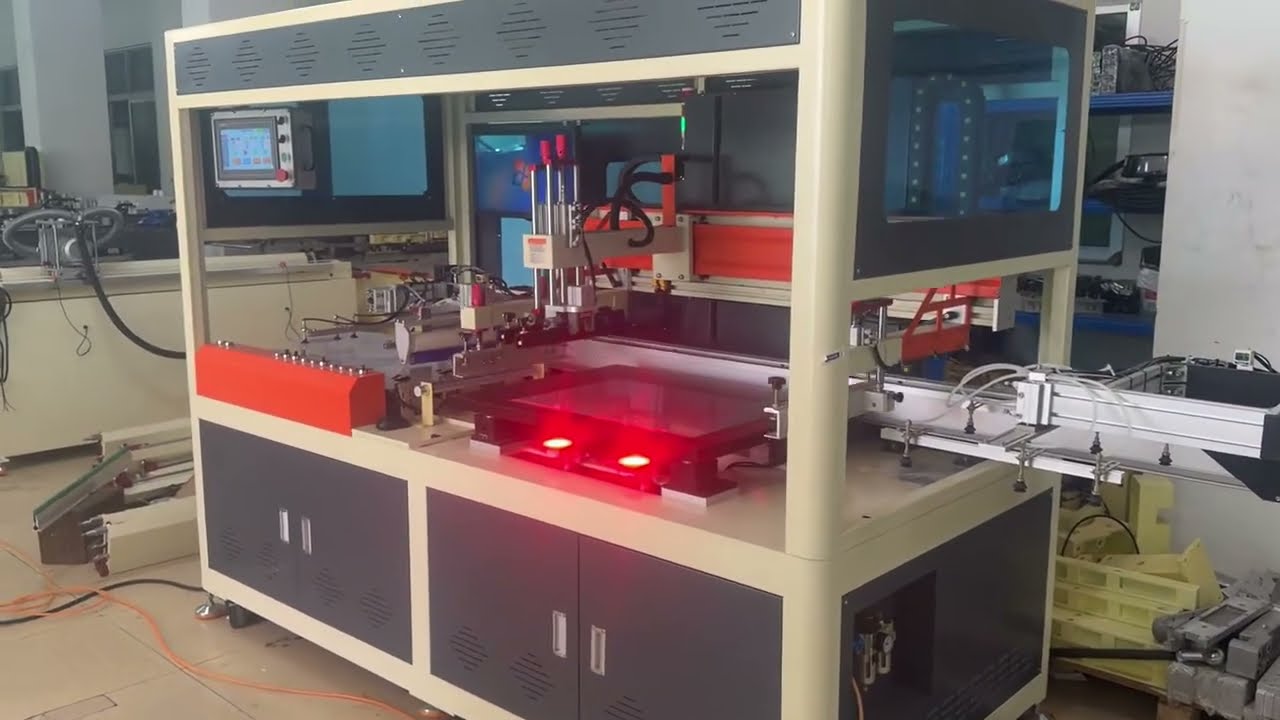
Watch the full-automatic printing cycle on our CCD vision alignment screen printing machine: the camera reads the panel and the screen, the alignment offsets are applied automatically, the squeegee makes its print stroke and flood stroke, and the screen lifts for inspection. The demo also shows the registration result against the ±0.02mm accuracy band.
For a complete PCB screen-printing line, pair this printer with a UV LED exposure unit, a dry film photoresist laminator, a developing machine, and a UV curing machine. Each stage is available as a separate machine or as an integrated line.
A CCD vision alignment screen printing machine uses industrial CCD cameras to align the screen stencil to the substrate before the ink is deposited. On a conventional manual or semi-automatic screen printer, the operator sets the frame by eye and fine-tunes the X, Y and theta offsets at the HMI until the print lands. On a CCD vision printer, the camera captures the panel and the screen registration marks, the software computes the offset, and the machine applies it — the operator only loads the panel and starts the cycle.
That difference matters most on fine-pitch work. The ±0.02mm registration accuracy of this machine is what allows double-sided PCB solder-mask registration and dense SMT stencil printing without the drift you normally have to correct by hand between batches. Because alignment is measured rather than judged, repeatability holds across shift changes and across different operators — the screen is not aligned by whoever happens to be on shift.
Note on naming: the CCD cameras here belong to the screen printing machine, where they are used to align the print to the artwork. This is a different function from the CCD imaging used on our 4CCD and 8CCD LED exposure machines, where the cameras verify the mask against the panel during UV exposure.
Scope of application: PCB, FR4, solder mask, photoresist, SMT solder paste, glass, optical disc, nameplate, film switch and other planar electronic substrates.
Beijing Golden Eagle manufactures the CCD vision screen printing machine in Beijing. CE-certified, 12-month machine warranty, 24-month PLC/HMI warranty.
| Parameter | Specification | Notes |
|---|---|---|
| Machine type | CCD vision alignment screen printing machine | Full-automatic printing cycle |
| Registration accuracy | ±0.02 mm | CCD camera alignment, demonstrated in the working video |
| Alignment method | CCD camera, automatic X / Y / theta | Offset computed and applied without operator adjustment |
| Cycle operation | Full automatic | Operator loads the panel and starts the recipe |
| Control | HMI with stored recipes | Print parameters recalled per job |
| Print method | Screen printing, print stroke + flood stroke | Pneumatic squeegee drive |
| Substrates | PCB, FR4, solder mask, photoresist, SMT solder paste, glass, optical disc, nameplate, film switch | Other planar substrates on request |
| Machine protection | Enclosed cabinet with safety interlocks | Guards against accidental access during the cycle |
| Certification | CE | 12-month machine warranty, 24-month PLC/HMI warranty |
Print area, throughput and frame size are configured to your substrate. Send us your panel dimensions and layer count and we will confirm the machine specification for your production line.
A manual screen printer aligns the screen frame by eye and the operator corrects the offset at the control panel. A CCD vision screen printer uses cameras to read the panel and the screen registration marks, computes the X, Y and theta correction, and applies it automatically. That removes the manual adjustment step and makes the registration repeatable between batches and between operators.
±0.02 mm registration accuracy, as demonstrated in the working video above. This is what makes double-sided PCB solder-mask registration and fine-pitch SMT stencil printing practical on a production line.
No. Here the CCD cameras belong to the screen printing machine and are used to align the screen stencil to the substrate before printing. On our 4CCD and 8CCD LED exposure machines the cameras are used for a different job — verifying the mask against the panel during UV exposure. Two separate pieces of equipment, two separate imaging tasks.
Yes. Panel handling is manual; everything after loading is automatic. The operator loads the panel, starts the recipe, and the machine performs alignment, the print stroke, the flood stroke and the screen lift on its own, then the panel is unloaded and inspected.
PCB and FR4, solder mask, photoresist, SMT solder paste, glass, optical disc, nameplate, film switch and other planar electronic substrates.
CE-certified with a 12-month machine warranty and a 24-month PLC/HMI warranty. Standard ship time is 25–35 working days from order; print area and throughput are confirmed against your panel format before the order is placed.
Golden Eagle builds a full range of screen printing equipment. The CCD vision printer is the fully automatic, camera-aligned option — the models below cover other formats, automation levels and substrate families.

Benchtop semi-automatic printer — 600×1200 mm print area, pneumatic squeegee drive, HMI recipe control. The manual-alignment counterpart to the CCD vision machine.

GE-VKP6090 / GE-VKP70100 / GE-VKP90120 flatbed series for PCB, packaging and label printing. Oblique-arm squeegee geometry suits flat and flexible substrates.
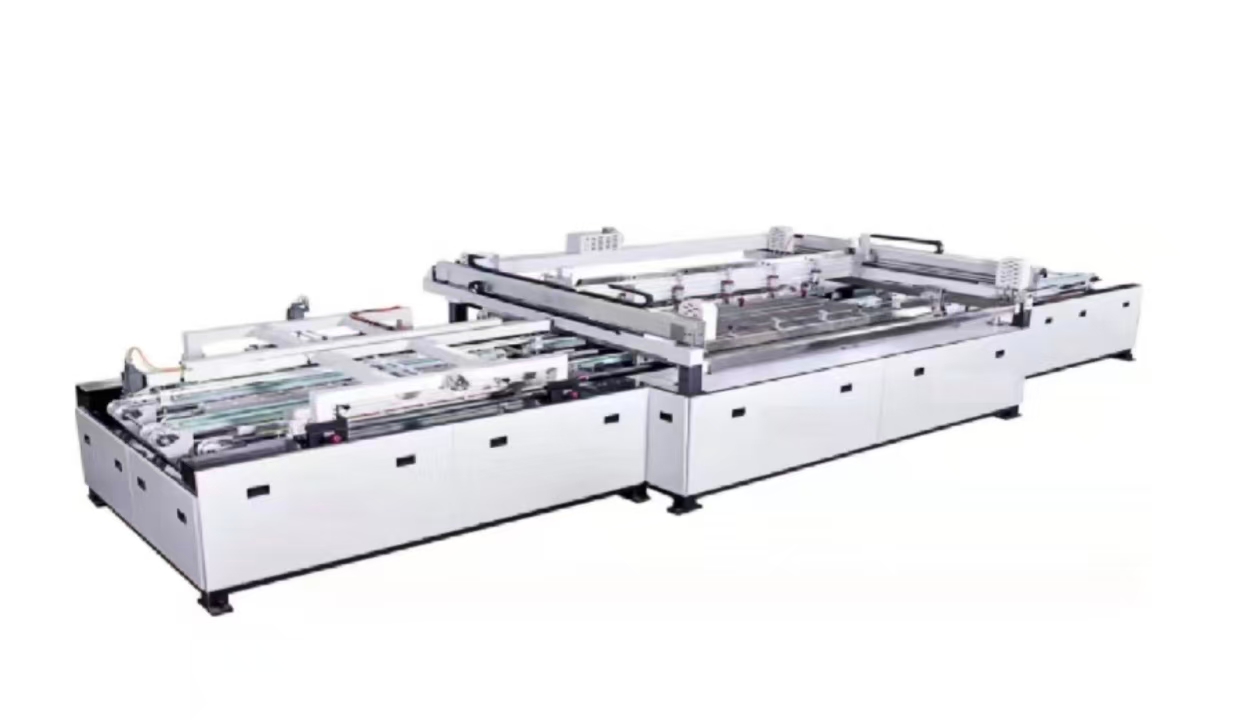
Inline multi-column screen printing line for stainless steel sheet and large-format panels. Four-pillar frame rigidity holds registration across long strokes.

1500×2500 mm print area for architectural metal plate, signage and decorative panel printing. For volumes above what a 600 mm benchtop unit can absorb.